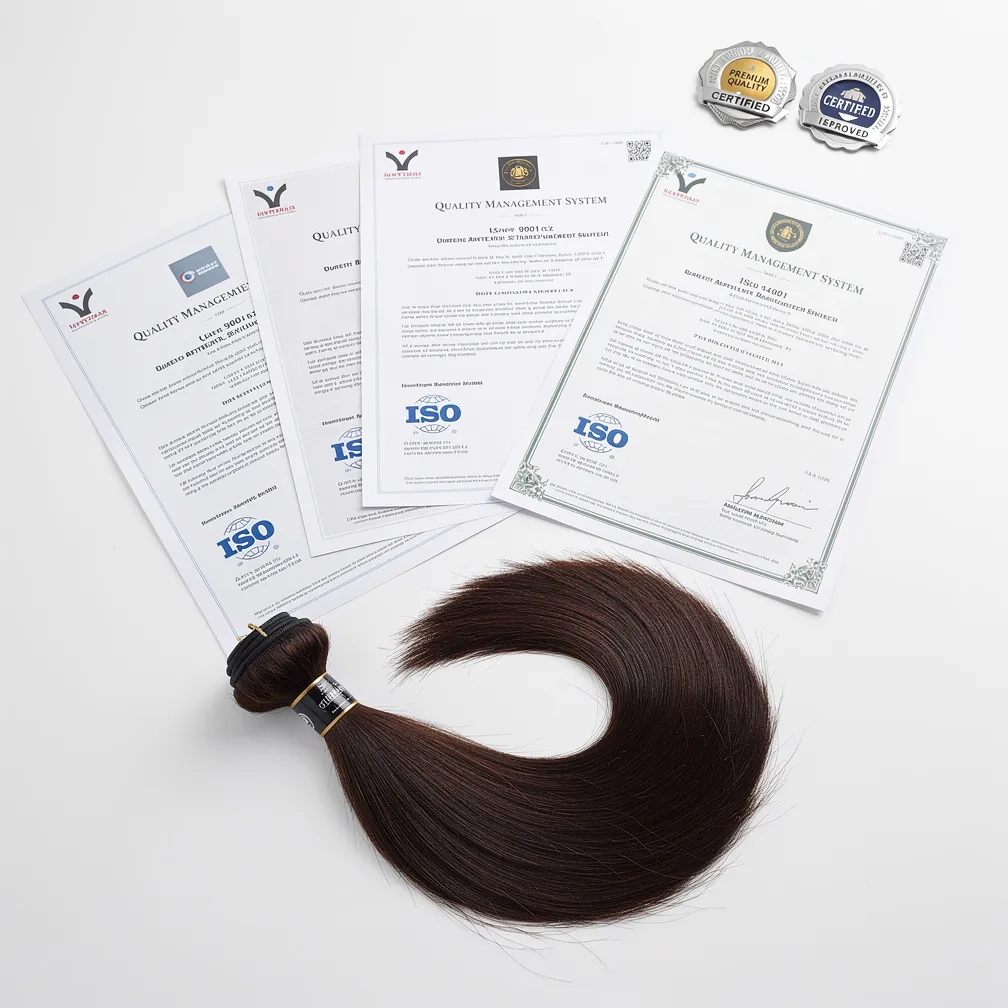
Hair Extension Certifications
Hair extension certifications — including ISO 9001, CE marking, GMP, and fair trade — are increasingly relevant for wholesale buyers sourcing from India for sale in regulated markets. European distributors, UK importers, and quality-focused brands in the USA and Australia regularly ask their Indian suppliers about certification status before placing orders. But not all certifications apply equally to hair extension products, and some certification claims in the industry are misrepresented. This guide explains what each major certification means, which are genuinely relevant for hair extensions, and which markets require or prefer which certifications.
Hair Extensions By Nature manufactures and exports Remy human hair extensions from our Faridabad, India facility. We ship to buyers across the EU, UK, USA, Australia, Canada, and 30+ other countries. For related compliance information relevant to importing hair extensions, see our guide on hair extension import regulations and for quality verification, see our guide on verifying hair extension quality.
The Certification Landscape for Hair Extensions
Hair extensions occupy an unusual regulatory position. They are not food, not pharmaceuticals, and not electrical devices. In most markets, they fall into a category of personal accessories or cosmetic-adjacent products. This means:
Most certifications that buyers assume are required for hair extensions are not legally mandated for the hair itself. However, several certifications are highly relevant from a quality assurance, market access, and brand trust perspective. Understanding which apply, which are mandatory in specific markets, and which are voluntary but commercially valuable is the foundation of intelligent procurement in this space.
ISO 9001: Quality Management System Certification
ISO 9001 is the world’s most widely recognized quality management standard, published by the International Organization for Standardization. It certifies that a manufacturer has implemented and maintains a documented quality management system (QMS) that consistently delivers products meeting customer and regulatory requirements.
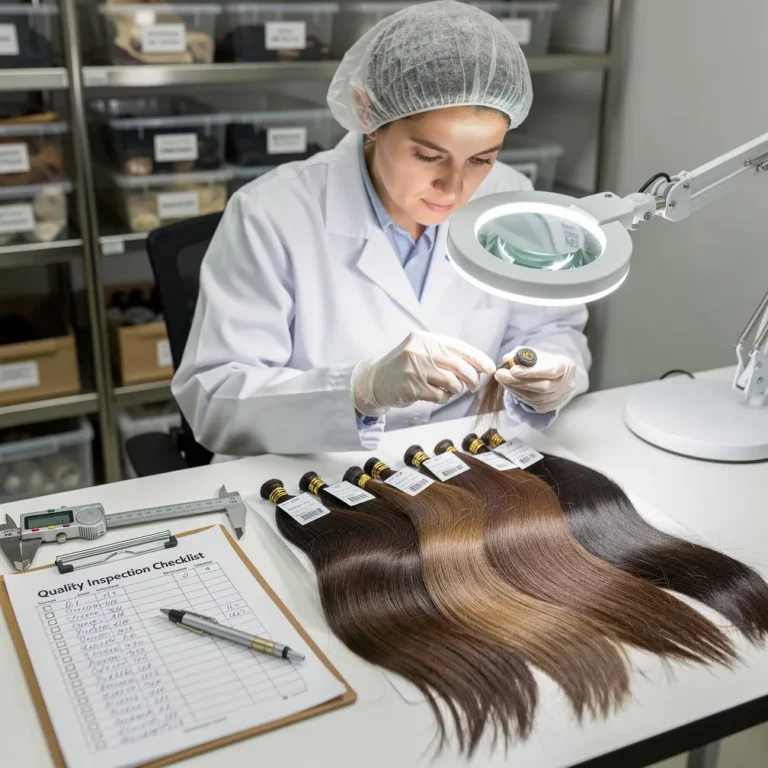
Critically: ISO 9001 does not certify a specific product. It certifies the manufacturer’s system and processes. A factory with ISO 9001 certification has demonstrated that its ordering, production, quality control, documentation, and corrective action processes meet international standards. This does not guarantee that every product produced will be perfect — but it does mean that the manufacturer has structured systems to catch and correct defects.
For hair extension buyers, ISO 9001 certification from a supplier is a meaningful quality signal. It indicates the manufacturer operates with documented processes rather than ad hoc practices, maintains records of quality checks, and has a structured response procedure when defects occur. European buyers in particular — especially those in Germany, Italy, and France — frequently include ISO 9001 in their supplier qualification criteria.
ISO 9001 certification is audited and renewed every three years by accredited third-party certification bodies. Buyers should ask to see the current certificate and verify its validity date.
CE Marking: What It Is and What It Is Not
CE marking (Conformité Européenne) is a mandatory conformity marking for products sold in the European Economic Area (EEA). It indicates that a product meets EU safety, health, and environmental protection requirements. CE marking is required for product categories defined by specific EU directives, including electrical equipment, medical devices, PPE (personal protective equipment), toys, and machinery.
Human hair extensions, in their standard form, do not fall under any EU directive that requires CE marking. Hair extensions are neither medical devices nor electrical equipment, and the EU Cosmetics Regulation (EC No 1223/2009) — which would apply to chemical treatments applied to hair — primarily governs cosmetic products marketed as such, not raw or semi-processed hair fiber.
However, certain hair extension accessories that accompany products may have CE marking relevance. Electrical heating tools sold alongside extensions (heat guns, steam appliances) would require CE marking. Adhesive bonds marketed with specific clinical claims could fall under cosmetics or medical device regulation depending on their formulation and claims.
Buyers should be skeptical of suppliers who prominently advertise “CE certified hair extensions” without explanation — the claim is likely either irrelevant to the actual product or misapplied.
Contact our team to discuss compliance requirements for your market — WhatsApp +91 9289358222
GMP (Good Manufacturing Practice) Standards
Good Manufacturing Practice (GMP) is a set of guidelines ensuring products are consistently produced and controlled according to quality standards. Originally developed for pharmaceutical and food manufacturing, GMP principles have been adapted for cosmetics manufacturing — primarily through ISO 22716 (Cosmetics GMP), which is recognized globally.
For hair extension manufacturers, GMP is relevant primarily for manufacturers who also produce or apply chemical processing agents (coloring, waving, relaxing treatments) to hair. A manufacturer applying chemical coatings or treatments to hair in a factory environment should be able to demonstrate GMP compliance in those processing steps.
For raw or minimally processed hair products (raw temple hair, virgin Remy hair), GMP is less directly applicable than for cosmetics, but buyers in markets such as the EU and Australia may still ask for evidence of good manufacturing hygiene practices. Documentation of factory cleanliness standards, worker hygiene protocols, and storage conditions for raw materials is reasonable evidence of GMP-aligned practice even without formal ISO 22716 certification.
Fair Trade and Ethical Sourcing Certifications
Fair trade certifications are issued by bodies such as Fairtrade International and Fair Trade USA, and verify that raw material producers and workers in the supply chain receive fair compensation and safe working conditions. For hair extensions specifically, fair trade certification is relevant at the temple donation level and at the manufacturing factory level.
Demand for ethically sourced hair is growing among Western buyers, driven by increased consumer awareness of supply chain ethics. Buyers serving markets in the USA, UK, Germany, Netherlands, and Australia increasingly ask about fair trade practices and ethical sourcing when qualifying suppliers.
Formal fair trade certification for hair extension suppliers remains relatively rare because the certification process is complex and costly for individual manufacturers. However, buyers can assess ethical sourcing through factory audits, SMETA (Sedex Members Ethical Trade Audit) reports, or supplier self-declaration documentation of wage levels, working hours, and worker welfare practices.
Hair Extensions By Nature operates our Faridabad factory in full compliance with Indian labor regulations, including minimum wage compliance, regulated working hours, and worker health and safety standards. We welcome factory visits and audits from prospective wholesale partners.
OEKO-TEX Standard 100
OEKO-TEX Standard 100 is a testing and certification system for textile products. It certifies that a textile product or textile component has been tested for harmful substances and found to be harmless to human health. The standard covers over 100 chemical substances including pesticides, heavy metals, formaldehyde, and pH levels.
For hair extensions, OEKO-TEX is most relevant for synthetic components: the weft band material, clip components, elastic bands, packaging materials, and any synthetic blend fibers if present. The standard is specifically designed for textiles and is applied by some premium hair extension manufacturers to their weft materials as a demonstration of product safety.
Buyers targeting the European market — particularly Germany, Switzerland, and the Netherlands, where textile safety standards are strictly observed by quality-conscious consumers — may find OEKO-TEX certification of weft materials a useful differentiator in their product marketing.
Certification Requirements by Market: Reference Table
| Certification / Standard | Applies to Hair Extensions? | Required in EU? | Required in UK? | Required in USA? | Required in Australia? | Commercial Value |
|---|---|---|---|---|---|---|
| ISO 9001 (QMS) | Manufacturer process quality | Not mandatory, but widely required by buyers | Not mandatory, buyer-driven | Not mandatory, buyer-driven | Not mandatory, buyer-driven | High — major buyer qualification criterion |
| CE Marking | Not applicable to hair extensions | Not required for hair extensions | UKCA equivalent not required | N/A | N/A | Low — may mislead if incorrectly applied |
| ISO 22716 (Cosmetics GMP) | Relevant for chemically processed products | Recommended for cosmetic products | Recommended | Recommended | Recommended | Medium — growing relevance for processed hair |
| Fairtrade / SMETA Audit | Yes — factory and supply chain | Not mandatory, high demand | Not mandatory, high demand | Not mandatory, growing demand | Not mandatory, growing demand | High — significant brand differentiator |
| OEKO-TEX Standard 100 | Yes — weft and synthetic components | Not mandatory, premium market | Not mandatory, premium market | Not mandatory, boutique market | Not mandatory, boutique market | Medium — niche but growing differentiation |
| REACH Compliance (EU chemicals) | Relevant for chemical processing agents | Mandatory for chemical substances | UK REACH equivalent | N/A (TSCA governs) | Industrial chemicals regulation | High — mandatory for EU chemical compliance |
| BIS Certification (India) | Some textile categories | N/A | N/A | N/A | N/A | Low for international buyers |
Request our certification and compliance documentation — WhatsApp +91 9289358222
REACH Compliance for European Hair Extension Buyers
REACH (Registration, Evaluation, Authorisation and Restriction of Chemicals) is an EU regulation governing the use of chemical substances in products sold in the European Union. For hair extension importers in the EU, REACH is relevant in the following ways:
If any chemical substances — adhesives, coatings, dyes, preservatives — are present in or on the hair extension product and those substances exceed threshold concentrations defined by REACH, the supplier must be able to demonstrate compliance. This applies most directly to chemical bond adhesives, hair dyes used in processed hair, and any chemical coating agents.
For virgin or minimally processed Remy hair extensions, REACH compliance is less complex — natural human hair itself is not a chemical substance under REACH. However, buyers importing chemically processed hair (colored, waved, coated) should request a Safety Data Sheet (SDS) or Compliance Declaration from their supplier covering any chemical inputs used in production.
Practical Guidance for Buyers: Due Diligence on Certifications
When evaluating a new Indian hair extension supplier for certification claims, apply the following due diligence steps:
Request the actual certificate, not just the badge: Any reputable certified manufacturer can provide a copy of their current certificate with the certification body name, certificate number, scope of certification, and expiry date. Verify the certificate is current (not expired).
Verify with the certification body: Most certification bodies operate public online registers where you can verify a certificate by number. For ISO 9001, check against the issuing body’s database.
Distinguish process certification from product certification: ISO 9001 certifies the manufacturer’s process quality. It does not certify any specific product. A manufacturer can hold ISO 9001 and still produce products that fail your specific quality requirements. Use ISO 9001 as a baseline qualification, not a substitute for product-level quality verification.
Ask for audit reports rather than just certificates: For ethical sourcing, a recent SMETA audit report provides far more information than a generic “ethical sourcing” claim. Similarly, factory visit reports from previous buyers or third-party auditors are valuable due diligence tools.
Understand market-specific requirements before ordering: If you are importing to Germany, France, or the Netherlands, consider consulting with a local import compliance advisor to understand the specific requirements that apply to your product classification. See our guide on hair extension suppliers for Europe for market-specific guidance.
Frequently Asked Questions
Q: Do hair extensions need CE marking for sale in Europe?
No. Human hair extensions do not fall under any EU directive requiring CE marking. Be cautious of suppliers making this claim without explanation — it is typically a misrepresentation.
Q: What does ISO 9001 actually prove?
It certifies the manufacturer’s quality management system — not the product. It shows the factory operates with documented processes and structured quality controls. Use it as a baseline qualification, not a substitute for product sampling and testing.
Q: What certifications should European buyers request from Indian suppliers?
ISO 9001 certificate (verify it is current), REACH compliance declaration for any processed products, and a SMETA audit report for ethical sourcing documentation.
Request Certification Documentation from Hair Extensions By Nature
Hair Extensions By Nature manufactures Remy human hair extensions from our Faridabad, India factory with a commitment to quality management and transparent business practices. We provide certification and compliance documentation to qualifying wholesale buyers on request.
- WhatsApp / Phone: +91 9289358222
- Email: info@hairextensionsbynature.com
- Factory: Booth No 71, Sector 16 Huda Market, Faridabad, Haryana, India – 121002
WhatsApp us to request compliance and certification documentation — +91 9289358222
Start Your Hair Extensions Dropship Business
Zero inventory. Premium Indian Remy hair. Ship worldwide under your brand. MOQ as low as 5 pieces.