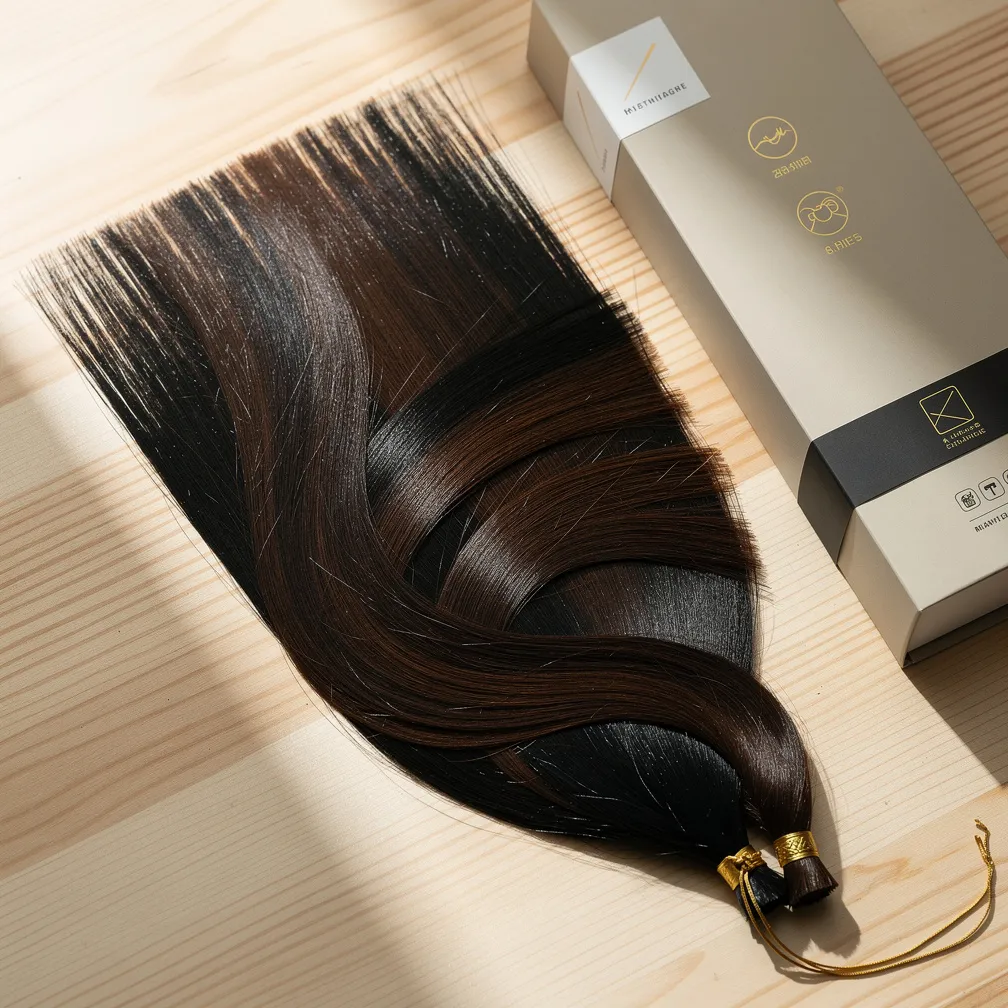
Wholesale Hair Extensions for Japan and Korea Market [2026 Guide]
Wholesale Hair Extensions for Japan and Korea Market [2026 Guide]
Wholesale hair extensions for the Japan and Korea market require straight textures in natural black and dark brown shades, cuticle-aligned Remy construction with near-zero defect tolerance, and packaging that reflects the premium aesthetic standards both markets are known for globally. Japan’s hair extension market exceeds USD 600 million in annual revenue, while South Korea’s K-beauty ecosystem has turned hair extensions into one of Asia’s fastest-growing beauty categories, with double-digit annual growth since 2022. For international distributors and salon buyers looking to source for these markets, Indian Remy hair offers the ideal combination of quality, texture compatibility, and price competitiveness — typically 40-60% below domestic East Asian wholesale rates for equivalent hair grades.
This guide is written from direct export experience. Hair Extensions By Nature, based in Faridabad, Haryana, has supplied wholesale hair extensions to buyers in Tokyo, Osaka, Seoul, and Busan for over a decade. The insights below reflect real buyer feedback, not theoretical market research.
Source Remy hair extensions for the East Asian market. Hair Extensions By Nature supplies cuticle-aligned Indian hair to wholesale buyers in Japan and Korea with quality documentation, premium packaging options, and MOQs starting at 50 pieces.
WhatsApp Us for East Asian Market Pricing
Understanding the East Asian Hair Extension Market in 2026
Japan and South Korea represent two distinct but overlapping markets within the broader East Asian beauty industry. Japan’s market is mature, conservative, and quality-obsessed. Korean buyers are trend-driven, innovation-focused, and heavily influenced by the K-beauty supply chain model. Both markets share a common trait: they accept nothing less than exceptional product quality, and they will test every shipment rigorously before committing to repeat orders.
Japan’s hair extension demand is concentrated in three segments: salon services (the largest by revenue), medical and cosmetic solutions for hair loss, and fashion extensions for younger consumers in urban centers like Tokyo, Osaka, and Nagoya. The salon segment alone accounts for approximately 55% of total market value, with Japanese salons charging premium installation fees that require equally premium product quality.
South Korea’s market is shaped by the entertainment and beauty content industries. K-drama styling, K-pop idol aesthetics, and beauty influencer culture drive consumer demand for natural-looking extensions that are virtually undetectable when installed. Korean distributors often source for both domestic retail and re-export to Southeast Asian markets, making their volume requirements substantial.
Texture and Color Preferences: What Japan and Korea Actually Buy
Understanding what East Asian buyers order — not what they say they might order — is critical for any supplier relationship. The following table reflects actual order patterns from our Japan and Korea wholesale accounts.
| Specification | Japan Preference | Korea Preference |
|---|---|---|
| Primary Texture | Bone straight, natural straight | Natural straight, slight body wave |
| Top Colors | Natural black (#1B), dark brown (#2) | Dark brown (#2), medium brown (#4), ash brown |
| Popular Lengths | 14-20 inches (salon use) | 16-24 inches (fashion and content) |
| Top Products | Tape-in, clip-in, medical wigs | Tape-in, lace front wigs, ponytails |
| Hair Grade | Double-drawn Remy only | Double-drawn Remy, some single-drawn |
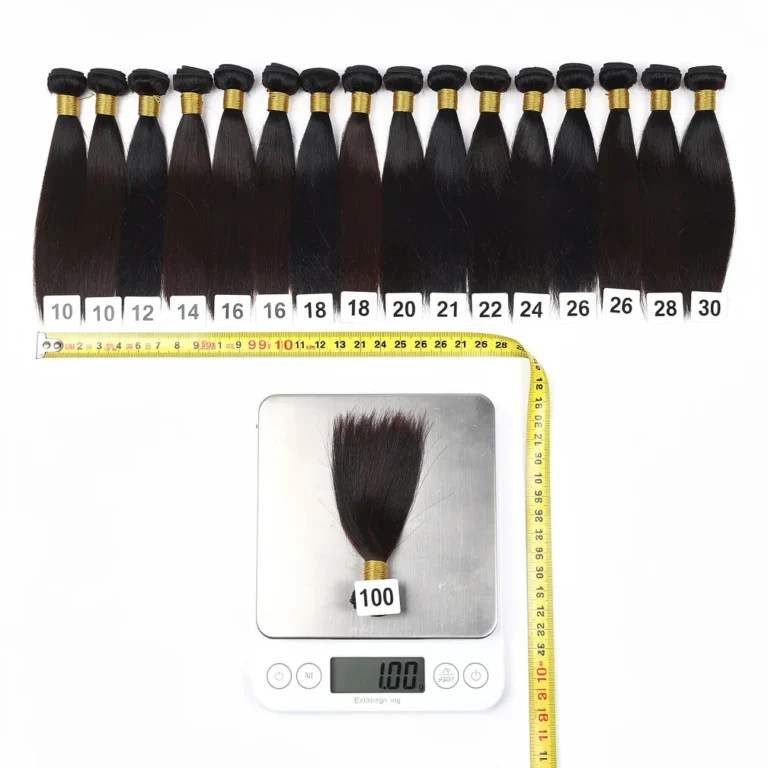
| Weight Per Bundle | 100g standard (precision weighed) | 100g standard |
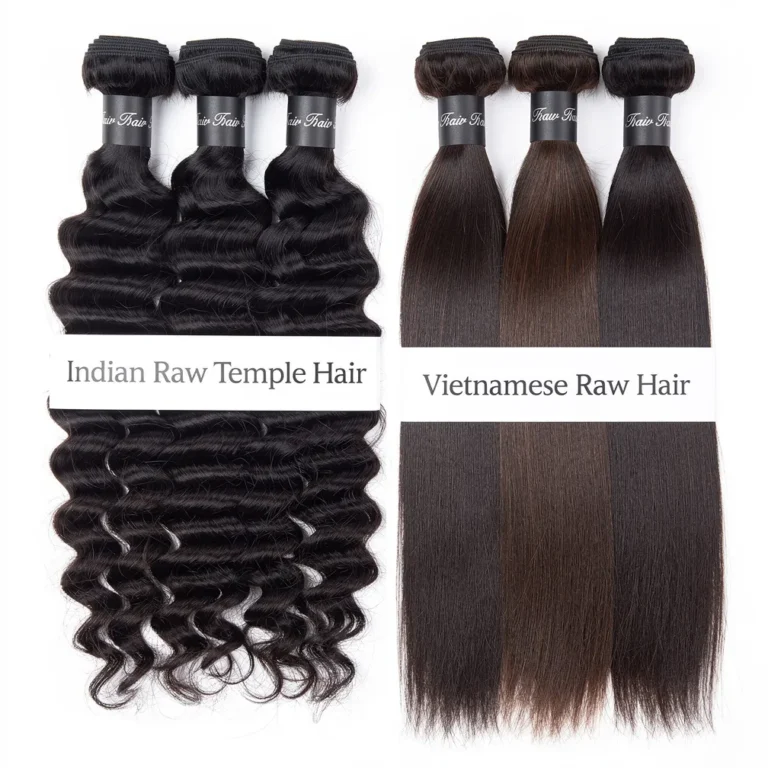
A critical note on texture: Indian Remy hair in its natural straight state is an excellent match for East Asian buyer expectations. The natural texture of Indian temple hair, when processed for straightening without aggressive chemical treatment, produces a soft, natural-movement straight that Japanese and Korean end consumers prefer over the stiff, silicone-coated synthetic blends that dominate the low end of these markets.
Quality Standards and Defect Tolerance
Japanese buyers in particular operate on a quality philosophy rooted in manufacturing precision. The concept of “zero defect” is not aspirational in Japan — it is a baseline expectation. This means suppliers to the Japanese market must implement quality control processes that go beyond what is standard for other export destinations.
Specific quality benchmarks that Japanese and Korean wholesale buyers evaluate include:
- Shedding tolerance: Less than 3-5 strands per weft during a pull test. Japanese buyers often perform this test on every batch received.
- Tangle resistance: Hair must withstand 50+ brush strokes without visible tangling after washing. Korean testing protocols include wet-comb tests.
- Color consistency: Batch-to-batch color variation must be indistinguishable to the naked eye. Color cards or Pantone references are expected.
- Weight accuracy: Bundles must be within plus or minus 2 grams of stated weight. Japanese buyers weigh every bundle.
- Packaging integrity: No loose hairs outside the packaging, no moisture damage, no creasing or compression marks on the hair itself.
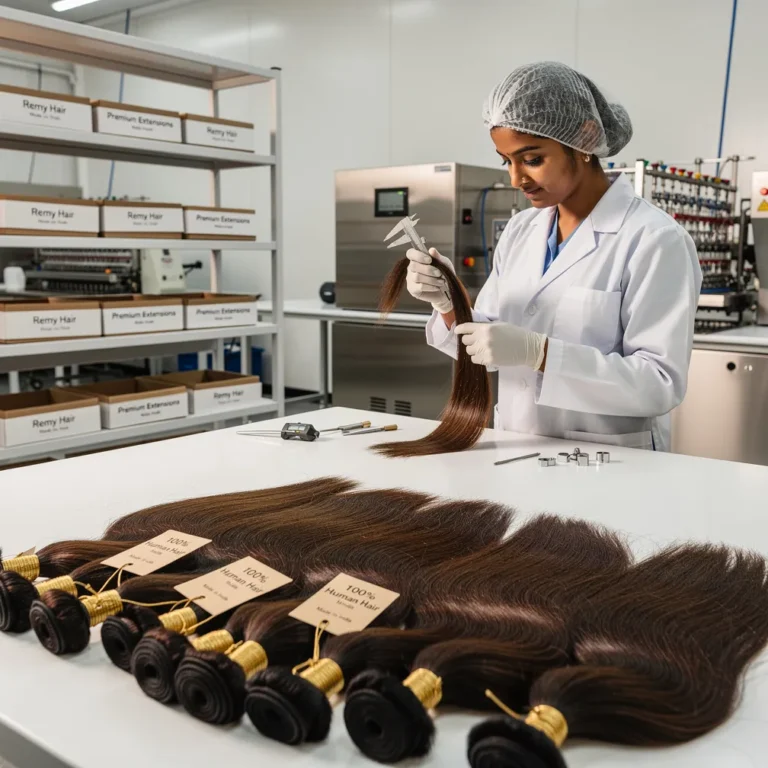
At Hair Extensions By Nature, our quality control process includes a seven-point inspection protocol specifically developed for East Asian market shipments. Every bundle is individually inspected, weighed, and photographed before packaging. This level of documentation is not optional for the Japan and Korea market — it is required to maintain buyer relationships.
Payment Culture and Business Etiquette
Doing business with Japanese and Korean buyers requires understanding payment norms that differ significantly from other export markets. Misaligning on payment expectations can end a business relationship before it starts.
Japan: Japanese business culture places enormous value on trust built through consistent performance over time. First orders typically involve full prepayment or letter of credit (LC). Once a supplier relationship is established — which can take two to three successful orders — Japanese buyers often transition to 30-60 day payment terms, which they honor with clockwork precision. Bank transfers (telegraphic transfer) are the preferred method. Japanese buyers expect formal invoices with detailed product specifications, not just a total amount.
South Korea: Korean buyers tend to move faster in establishing relationships but also expect quicker turnaround on negotiations. Wire transfer is standard for first orders, with a 30-50% advance and balance before shipment. Established Korean distributors may request 30-day credit terms after three to four successful orders. Korean buyers are comfortable with digital payment confirmations and electronic documentation.
In both markets, price negotiation is conducted formally. Aggressive discounting or frequent price changes signal instability. Set your wholesale price structure clearly and hold it consistently. Volume-based tiered pricing is respected and expected.
Shipping, Logistics, and Import Regulations
Shipping hair extensions to Japan and Korea involves specific regulatory considerations that differ from exporting to Western markets.
Japan customs: Human hair products imported into Japan are subject to standard customs duties and consumption tax. Hair extensions are classified under HS code 6703, and the duty rate varies depending on whether the product is raw or finished. Japanese customs officials may request a certificate of origin and product composition documentation. All packaging must include Japanese-language labeling or be accompanied by Japanese translation documents.
South Korea customs: Korea requires compliance with the Korean Cosmetics Act for any hair products containing adhesives, treatments, or chemical processing agents. Pure human hair without chemical treatment is classified as a textile product. Import duties apply, and buyers should factor in a 10% VAT on CIF value. Korean customs occasionally requests quality testing certificates, particularly for colored or chemically treated extensions.
Shipping routes from India to Japan and Korea are well-established. Air freight via Delhi (DEL) to Tokyo Narita (NRT) or Incheon (ICN) takes 3-5 business days. Sea freight for larger orders takes 14-21 days. We ship via DHL, FedEx, and Aramex for air consignments and work with established freight forwarders for sea shipments.
Cultural Considerations for Supplier-Buyer Relationships
Building sustainable wholesale relationships in Japan and Korea requires cultural awareness that goes beyond product quality.
Communication style: Japanese buyers prefer formal, detailed written communication. Emails should be structured, with clear subject lines and itemized content. Korean buyers are more direct and comfortable with WhatsApp or KakaoTalk for ongoing communication, but expect formal documentation for orders and invoices.
Relationship building: In Japan, the supplier evaluation process can take months. Japanese buyers will order small sample quantities, test them thoroughly, share feedback, order again, and only then discuss volume commitments. Rushing this process signals a lack of understanding of Japanese business culture. Korean buyers move faster but still expect consistency and reliability as proof of a worthy partnership.
Product presentation: Both markets expect product catalogs, spec sheets, and sample kits that reflect the quality of the product itself. A premium product shipped in a plastic bag with a handwritten label will be rejected regardless of the hair quality inside. Invest in professional product photography, clear specification documents, and sample packaging that demonstrates your capability.
After-sale support: Japanese and Korean buyers expect responsive after-sale support, including batch tracking, replacement policies for defective products, and proactive communication about any production delays or quality issues. Silence is interpreted as indifference, and indifference ends relationships.
Ready to supply the East Asian market? Hair Extensions By Nature has dedicated support for Japan and Korea wholesale accounts, including Japanese-language product documentation, premium packaging options, and sample programs designed for East Asian market entry.
WhatsApp Us for Japan/Korea Wholesale
Why Source From Hair Extensions By Nature for the East Asian Market
Hair Extensions By Nature is a Faridabad-based manufacturer with direct export experience to Japan and South Korea. Here is what makes us the right sourcing partner for East Asian market entry:
- Cuticle-aligned Remy hair: Every bundle we produce maintains unidirectional cuticle alignment, meeting the strict quality expectations of Japanese and Korean buyers.
- Double-drawn standard: Our production line delivers consistent double-drawn construction as the default for East Asian market orders.
- Precision weight control: Each bundle is individually weighed with documented accuracy within plus or minus 2 grams.
- Premium packaging capability: Custom branded packaging with clean, minimalist design aesthetic that resonates with East Asian retail expectations.
- Export documentation: Full IEC, GST, and certificate of origin documentation for seamless customs clearance in Japan and Korea.
- Dedicated export team: English-speaking export coordinators with experience managing Japanese and Korean wholesale accounts.
- Sample programs: Paid sample kits with multiple textures and lengths for buyer evaluation before bulk commitment.
Our factory is located at Booth No 71, Sector 16 Huda Market, Faridabad, Haryana, India – 121002. We welcome video factory tours and in-person visits by appointment. Contact us at info@hairextensionsbynature.com or WhatsApp +91 9289358222.
Frequently Asked Questions
What type of hair extensions sell best in Japan?
Tape-in extensions and medical wigs are the highest-demand products in the Japanese market. Japanese consumers prefer bone straight or natural straight textures in natural black (#1B) and dark brown (#2), with lengths between 14 and 20 inches. Double-drawn Remy construction is the expected standard, and buyers will not accept single-drawn hair for salon-grade products.
What quality standards do Korean hair extension buyers expect?
Korean buyers expect cuticle-aligned Remy hair with minimal shedding (fewer than 5 strands per pull test), tangle resistance through 50-plus brush strokes after washing, batch-to-batch color consistency, and weight accuracy within 2 grams of stated specifications. Korean buyers also expect premium packaging and detailed product specification sheets.
How do I ship hair extensions from India to Japan?
Hair extensions can be shipped from India to Japan via air freight (3-5 business days from Delhi to Tokyo Narita) or sea freight (14-21 days). Products are classified under HS code 6703. Japanese customs may require a certificate of origin and product composition documentation. All packaging should include Japanese-language labeling or accompanying translation documents.
What payment terms do Japanese hair extension buyers prefer?
Japanese buyers typically pay via full prepayment or letter of credit for first orders. After two to three successful orders, they often transition to 30-60 day payment terms, which they honor consistently. Bank transfer (telegraphic transfer) is the preferred payment method. Formal invoices with detailed product specifications are expected.
Is Indian Remy hair suitable for the Korean market?
Yes. Indian Remy hair in natural straight texture is highly compatible with Korean market expectations. The natural softness and movement of properly processed Indian temple hair matches the aesthetic preferences of Korean consumers, who favor natural-looking extensions over stiff or overly processed alternatives. Indian Remy hair also offers a 40-60% price advantage over domestically sourced alternatives in Korea.
![Wholesale Closure Wigs (4×4, 5×5) from India — Manufacturer Guide [2026]](https://hairextensionsbynature.com/wp-content/uploads/2026/04/09-wholesale-closure-wigs-4x4-5x5-india-hero-768x768.webp)
![Wholesale Hair Extension Storage and Display Guide for Retailers [2026]](https://hairextensionsbynature.com/wp-content/uploads/2026/04/22-wholesale-hair-extension-storage-display-hero-768x768.webp)