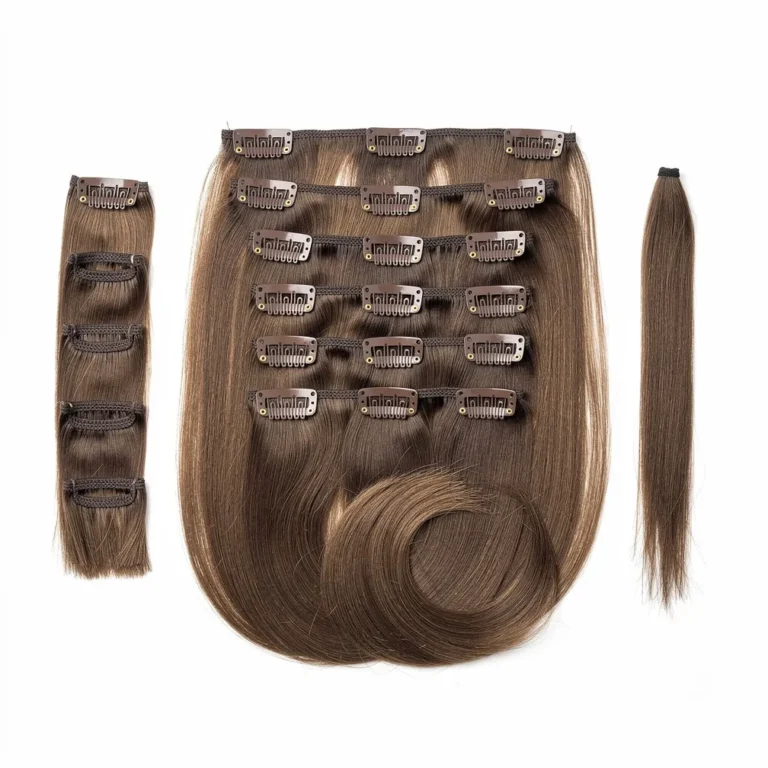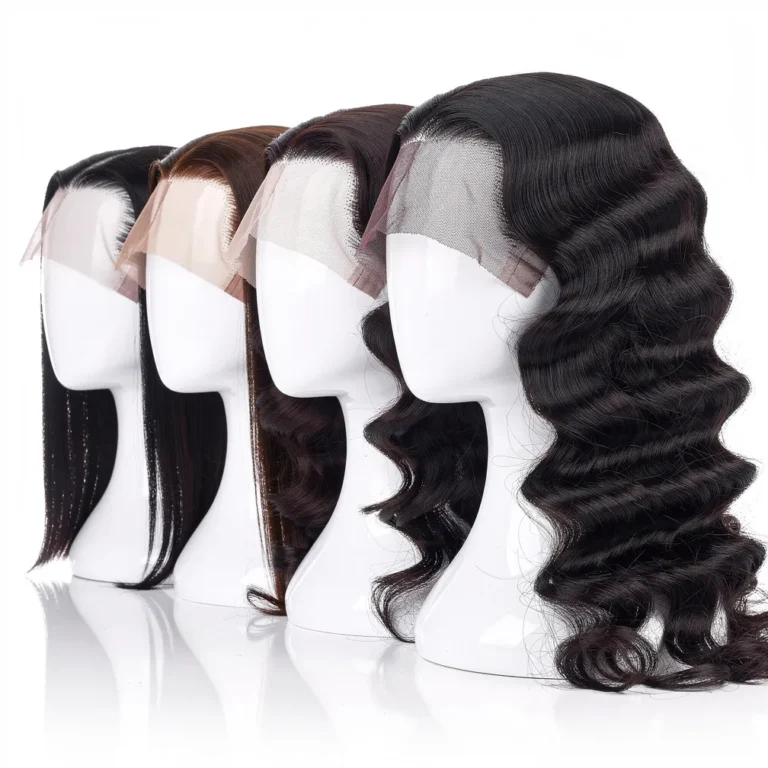
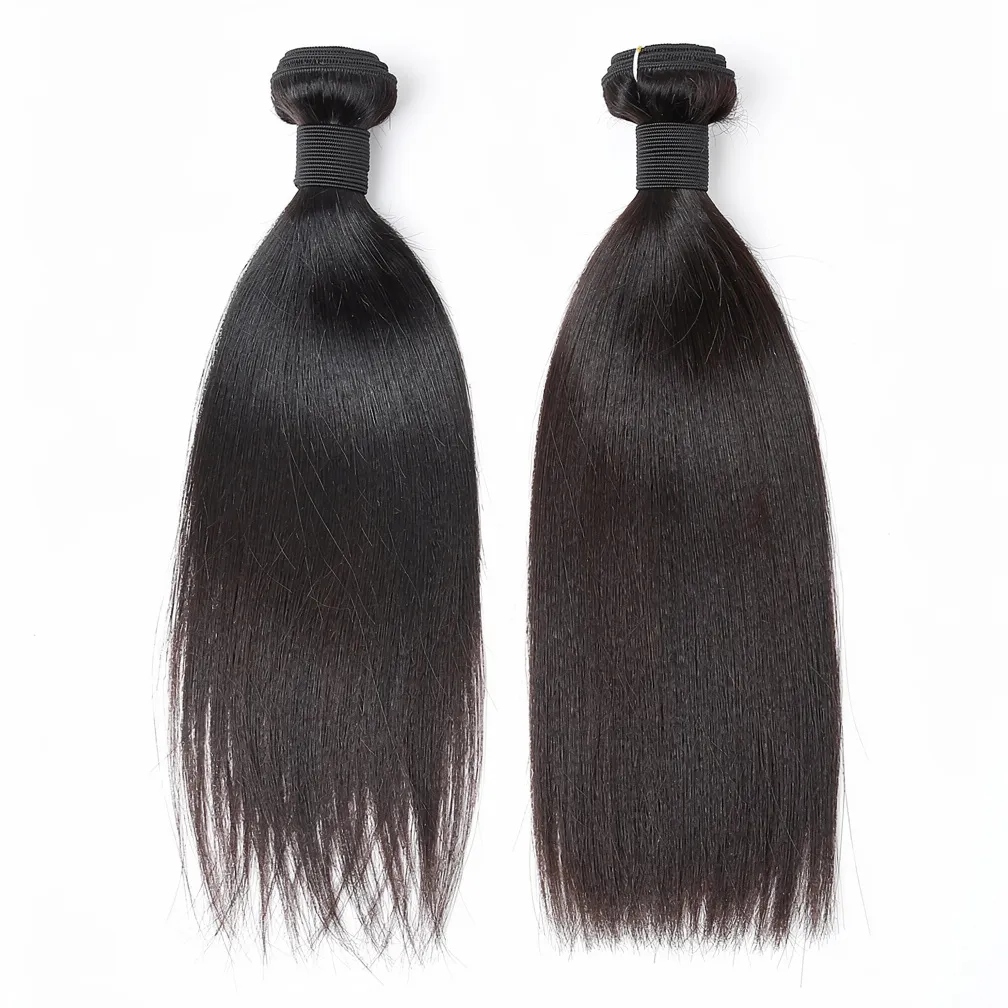
Single Drawn vs Double Drawn Hair
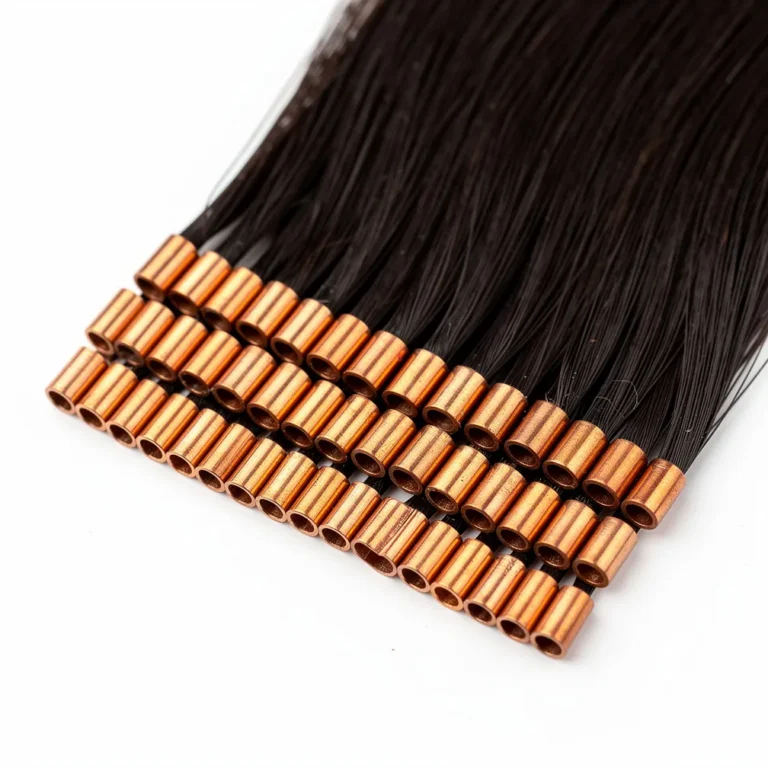
Single drawn and double drawn hair extensions differ in one fundamental way: the proportion of strands in the bundle that reach the full labeled length. In a single drawn bundle, the hair has been sorted and processed once, resulting in a mix of strand lengths — the root end is full and thick, but the tips taper because a significant proportion of strands are shorter than the labeled measurement. In a double drawn bundle, the processing includes a second drawing pass to remove those shorter strands, creating a bundle where the majority of strands reach or approach the full labeled length from root to tip. This difference in construction determines the bundle’s fullness at the tips, its visual density, its retail positioning, and its wholesale price — with double drawn consistently priced 30–50% higher than equivalent single drawn product from the same manufacturer. For more details, see our guide on complete guide to sourcing hair extensions from India. For more details, see our guide on Cuticle Aligned Hair Extensions.
What Happens During the Drawing Process
Understanding the drawing process clearly makes the single vs. double drawn distinction easy to understand and communicate to your clients and retail customers.
In Indian hair extension manufacturing, raw temple hair arrives in a range of natural lengths — a single collection lot contains strands from 6 inches to potentially 36 inches, reflecting the different growth histories of each donor. After cleaning and sorting by approximate length, the hair bundles undergo the drawing process: a comb is pulled through the sorted bundle from root to tip, catching and removing shorter strands that do not reach the length marker being targeted.
After one pass through the drawing comb, a significant proportion of shorter strands are removed — this is single drawn hair. However, after the first pass, many medium-short strands that were partially hidden within the bundle are now more accessible. A second drawing pass removes these remaining shorter strands. The result of two passes is a bundle with dramatically greater strand-length uniformity — this is double drawn hair.
The practical consequence is that to produce the same weight of finished double drawn product, manufacturers must start with a significantly larger volume of raw hair — because the second drawing removes additional weight. This raw material cost difference, combined with the additional labor of a second drawing pass, is what drives the 30–50% wholesale price premium for double drawn hair.
Visual Description: What Each Looks Like
If you have two bundles in front of you — one single drawn, one double drawn — the visual difference is immediately clear:
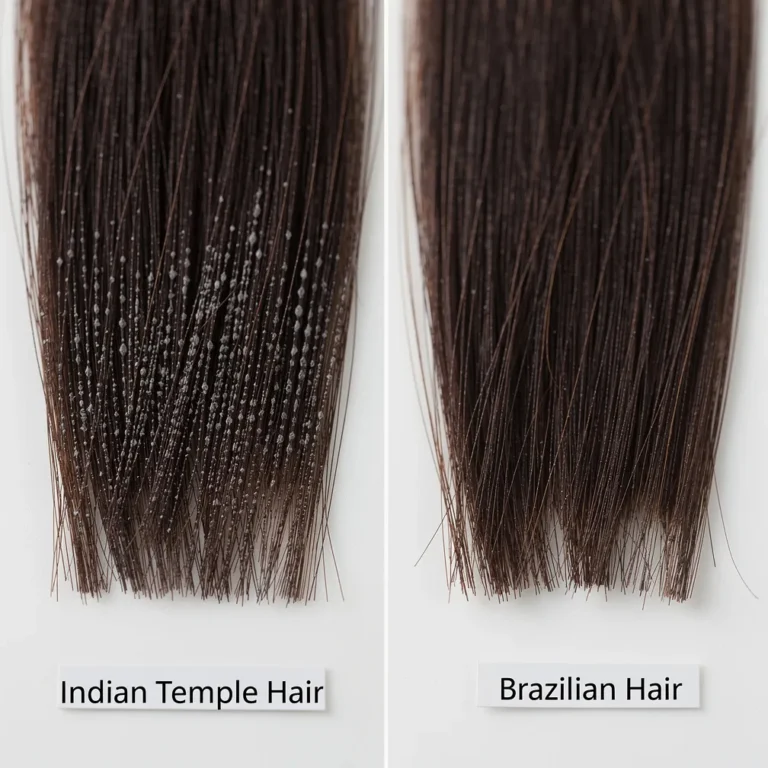
Single drawn bundle: Hold the bundle at the root end. The root area is full and thick. Run your fingers down toward the tips. As you approach the tip area (last 4–6 inches), the bundle becomes noticeably thinner and finer — this is the natural tapering caused by the mix of shorter and longer strands. The bundle has a shape similar to a natural ponytail: full at the base, tapered at the end.
Double drawn bundle: Hold the bundle at the root end. The root area is full and thick. Run your fingers toward the tips. The bundle maintains its fullness all the way to the ends — perhaps slightly thinner at the very tips, but without the significant taper visible in single drawn. The bundle has a more uniform, rectangular profile throughout its length.
This visual difference is also why double drawn extensions photograph better and why they look fuller and more voluminous when styled — the consistent density creates a more dramatic volume effect at the tips that clients and consumers respond to immediately.
Single Drawn vs Double Drawn — Complete Comparison
| Factor | Single Drawn | Double Drawn |
|---|---|---|
| Drawing passes | One drawing pass | Two drawing passes |
| Strand length uniformity | 50–70% at labeled length | 70–80% at labeled length |
| Bundle profile | Full at root, tapered at tips | Full and even from root to tip |
| Visual appearance | Natural, ponytail-like taper | Full, uniform, dramatic volume |
| Wholesale price difference | Baseline price | 30–50% premium over single drawn |
| Raw material required (per 100g finished) | Lower — one drawing pass | Higher — more raw hair needed |
| Best for (product types) | Machine weft bundles, tip extensions (length focus) | Clip-ins, hand-tied wefts, premium bundles |
| Best for (market segment) | Mid-market, high volume, price-sensitive | Premium segment, brands, quality-focused salons |
| Retail positioning | Mid-market ($15–$60 retail per piece) | Premium ($35–$120+ retail per piece) |
| Photography performance | Good with proper styling | Excellent — natural fullness photographs well |
| Client perception | Good quality, slight natural taper | Very full, luxurious look and feel |
Which Hair Grade Should Be Single vs. Double Drawn?
The single drawn / double drawn distinction applies across all hair quality grades — it is a specification of how the hair was processed, not of the hair’s inherent quality. However, combining quality grade with drawing specification creates a natural hierarchy that helps wholesale buyers structure their product ranges.
Standard Remy single drawn occupies the entry to mid-market tier — appropriate for buyers prioritizing price efficiency and high volume. Standard Remy double drawn occupies the mid to upper-mid market — the workhorse quality for established salons and mid-range retail brands. Virgin Remy single drawn serves premium buyers who prefer natural construction at premium quality. Virgin or raw temple double drawn occupies the ultra-premium tier — maximum quality specification with the highest price point, used by high-end salon brands and boutique hair companies.
For most retail brands building a product range, Remy double drawn is the most commercially practical choice: it delivers the visible quality that justifies a meaningful retail markup without the extreme price premium of virgin or raw temple hair.
Request Single and Double Drawn Samples on WhatsApp →
How to Identify Single vs. Double Drawn When Evaluating Samples
One of the most common sourcing challenges for new wholesale buyers is verifying whether a manufacturer’s “double drawn” product actually meets that standard. Many suppliers describe their product as double drawn when it is, in practice, closer to single drawn — because the terminology is unregulated and there is no universal testing standard.
Here is how to evaluate a sample accurately:
The Fan Test
Fan the bundle open like a deck of cards, holding the root end. A genuine double drawn bundle will maintain relatively consistent density across its full length when fanned. A single drawn bundle will show clear thinning toward the tip end of the fan. This test is subjective but gives a strong visual impression of drawing quality.
The Length Count Method
From a 100g bundle, pull a random sample of 20 strands. Lay each strand along a ruler. Count how many strands reach the labeled length (±1 inch). In a genuine double drawn bundle, 70–80% of your 20 strands should be at or very close to the labeled length. In single drawn, expect 50–60%. If fewer than 50% reach the labeled length, the product is marketed inaccurately.
The Tip Feel Test
Hold the bundle at the root and run your palm down to the tips. With your palm at the tips, assess the density in your hand. For double drawn, the tips should feel similar in density to the roots — a good handful. For single drawn, the tips will feel thinner and lighter than the roots. The more dramatic this difference, the lower the drawing quality.
Pricing Benchmarks: Single vs. Double Drawn From India
| Product | Length | Single Drawn Wholesale | Double Drawn Wholesale | Premium (%) |
|---|---|---|---|---|
| Machine weft bundle (Remy) | 16″ | $15–$22 | $20–$32 | 30–45% |
| Machine weft bundle (Remy) | 20″ | $22–$32 | $32–$48 | 40–50% |
| Machine weft bundle (Remy) | 24″ | $30–$45 | $45–$65 | 40–50% |
| Clip-in full head set (Remy) | 18″ | $25–$38 | $38–$58 | 35–50% |
| Clip-in full head set (Remy) | 22″ | $35–$50 | $52–$75 | 40–50% |
| I-tip extensions (Remy, per 100 strands) | 20″ | $20–$30 | $30–$45 | 40–50% |
| Hand-tied weft (Remy) | 20″ | $30–$45 | $45–$70 | 40–55% |
Communicating the Difference to Your Clients
For wholesale buyers selling to salons, brand builders, or distributors, being able to clearly explain the single vs. double drawn distinction adds credibility and helps justify the price difference. The most effective explanation is visual and simple: “Single drawn has a natural taper — fuller at the root, thinner at the tips. Double drawn is full and thick all the way to the ends. That’s why it looks more voluminous and is priced higher.” Most salon owners and brand builders immediately understand this once they can see or feel two samples side by side.
See our article on how Indian temple hair is processed for a deeper understanding of the drawing stage and the overall manufacturing process that produces these quality differences.
Compare Single and Double Drawn Wholesale Pricing on WhatsApp →
Frequently Asked Questions
What is the difference between single drawn and double drawn hair?
Single drawn hair contains a mix of strand lengths — approximately 50–70% of strands reach the labeled length, with the rest shorter. Double drawn hair has been processed twice to remove shorter strands, so 70–80% of strands reach the labeled length. Double drawn bundles are fuller at the tips and cost 30–50% more wholesale.
How much more expensive is double drawn hair?
Double drawn hair is typically 30–50% more expensive wholesale than equivalent single drawn hair of the same grade and length. The premium reflects both the additional processing labor and the larger volume of raw hair required to produce the same weight of finished double drawn product.
Is double drawn hair always better than single drawn?
Not necessarily — it depends on the application and customer preference. Double drawn is better for clip-in sets, hand-tied wefts, and any application where fullness at the tips is important. Single drawn is appropriate for length-focused applications where a natural, slightly tapered look is acceptable and price efficiency is important.
Which products should use double drawn hair?
Double drawn is most important for: clip-in sets (tips are visible and must look full), hand-tied wefts (the even density is essential for the premium seamless look), and any product where the visual appearance of fullness at the ends is a key selling point. Tip extensions and machine weft used primarily for length can often use single drawn effectively.
How can I verify if a supplier’s product is genuinely double drawn?
Use the length count method: randomly select 20 strands from a bundle and measure each. In genuine double drawn, 70–80%+ of strands should be at or very close to the labeled length. If fewer than 50% reach the labeled length, the product is single drawn regardless of how it is marketed.
Does drawing affect the hair’s quality or strength?
Drawing is a mechanical process (combing to sort by length) and does not damage the hair. It is performed on cleaned, conditioned hair and does not affect cuticle integrity, strength, or longevity. The drawing process only removes shorter strands; it does not process the remaining strands in any way.
Can I order both single drawn and double drawn from the same manufacturer?
Yes. Most Indian manufacturers produce both and can supply both specifications from the same production facility. This is useful for brands offering tiered product ranges — for example, a “classic” single drawn range and a “premium” double drawn range at different price points.
Source Single Drawn and Double Drawn Extensions Direct From India
Hair Extensions By Nature supplies both single drawn and double drawn Remy Indian human hair extensions with clear specification standards, sample verification, and competitive wholesale pricing. Whether you are a salon buying premium double drawn for high-end service, a brand building a tiered product range, or a distributor supplying multiple market segments, we can quote both specifications with honest quality description.
Request Sample Comparison Kit on WhatsApp →
Email: info@hairextensionsbynature.com
Hair Extensions By Nature — Manufacturer and Exporter of Remy Indian Human Hair Extensions. Factory: Booth No 71, Sector 16 Huda Market, Faridabad, Haryana, India – 121002. Phone/WhatsApp: +91 9289358222.