Wholesale Hair Extensions China vs India
Wholesale Hair Extensions: China vs India [2026 Comparison]
China and India together account for over 70% of global hair extension production, but they serve fundamentally different market segments — India dominates authentic Remy and raw human hair, while China leads in synthetic, heat-resistant fiber, and high-volume processed products. India exports over USD 450 million in human hair annually, making it the world’s largest source of genuine human hair extensions. China’s hair product exports exceed USD 3 billion when synthetic wigs, fibers, and blended products are included. For wholesale buyers, choosing the right sourcing country is not a question of which is “better” — it is a question of which aligns with your product strategy, target customer, and margin requirements. This guide provides a data-driven comparison across every factor that matters to B2B buyers.
This comparison is informed by 20 years of direct manufacturing experience at Hair Extensions By Nature, a Remy hair extension manufacturer based in Faridabad, India. While we are transparent about our position as an Indian manufacturer, the information below is presented objectively so buyers can make an informed sourcing decision.
Want to test Indian Remy hair quality firsthand? Hair Extensions By Nature offers sample programs for wholesale buyers evaluating sourcing options. Request samples on WhatsApp.
WhatsApp Us for Wholesale Pricing
The Fundamental Difference: Raw Material Source
The most important distinction between Chinese and Indian hair extensions is the raw material. India has a natural, renewable supply chain for human hair — primarily from temple donations and household collections. This temple hair is unique globally because it is typically virgin (unprocessed), collected in ponytail form (preserving cuticle direction), and available in sufficient volume to support industrial-scale manufacturing.
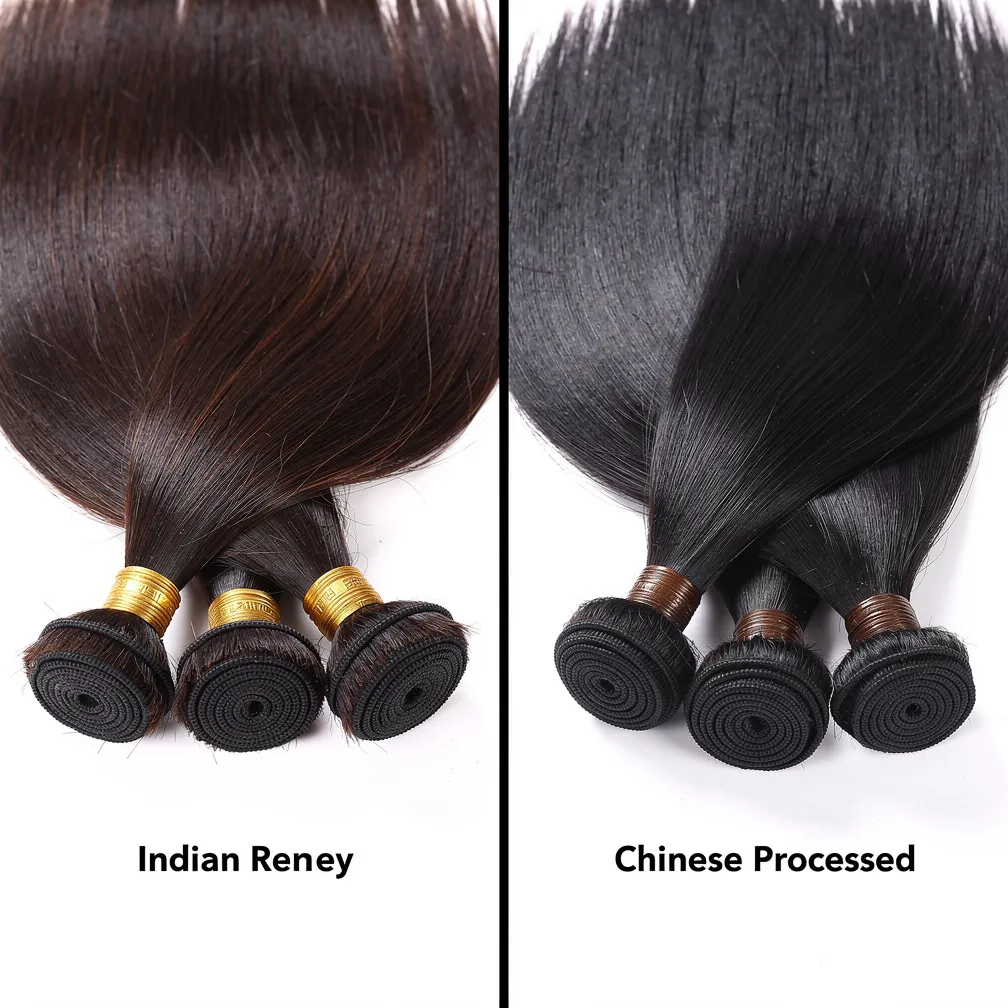
China does not have a comparable domestic supply of raw human hair. Chinese manufacturers primarily source raw human hair from other Asian countries (Myanmar, Vietnam, India itself) or use synthetic and blended fibers. Chinese factories then process, color, and assemble this hair into finished products. The manufacturing capability is excellent, but the raw material origin is different.
This distinction matters because hair origin determines texture, longevity, and processing requirements. Indian temple hair has a naturally round cross-section that produces a silky, versatile texture suitable for most ethnic markets. It holds curls, accepts color well, and maintains its integrity through repeated styling.
Comprehensive Comparison: China vs India for Wholesale Hair Extensions
| Factor | India | China |
|---|---|---|
| Primary Product | Remy and raw human hair | Synthetic, blended, and processed human hair |
| Hair Origin | Domestic temple and household collections | Imported human hair + domestic synthetic fiber |
| Cuticle Alignment | Intact and aligned (Remy standard) | Often stripped and coated (silicone-treated) |
| Product Longevity | 12-24 months with proper care | 3-9 months for processed human hair; 1-3 months for synthetic |
| Price Range (per 100g bundle) | USD 25-80 depending on length and grade | USD 8-40 for processed human; USD 2-10 for synthetic |
| MOQ (Human Hair) | 50-100 pieces or 1 kg | 20-50 pieces (often lower for processed/synthetic) |
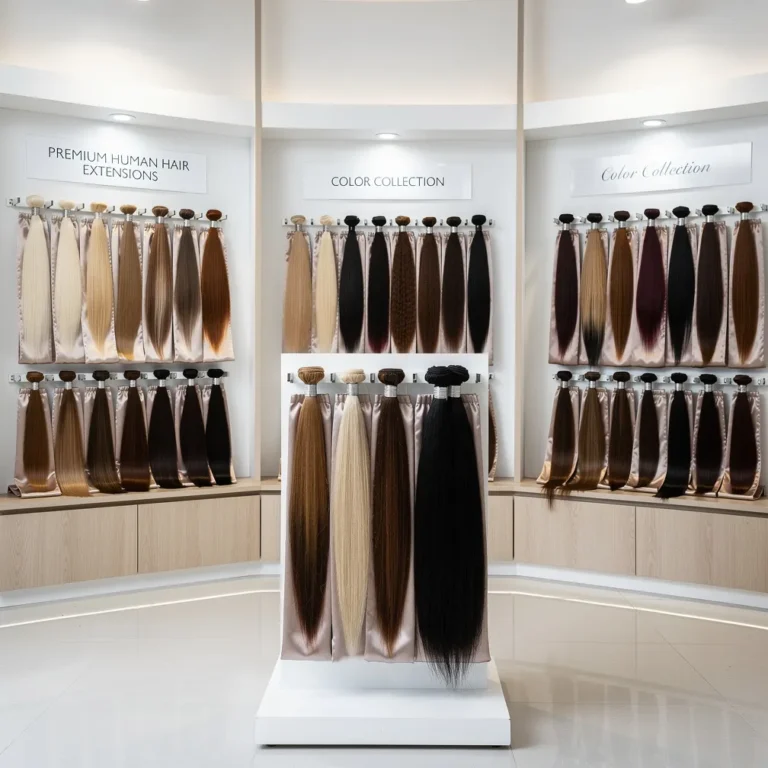
| Color Range | Natural dark shades; custom coloring available | Wide range including fashion colors; pre-colored stock |
| Texture Options | Naturally straight to wavy; can be textured | Wide variety including kinky, deep wave, body wave |
| Ethical Sourcing | Temple donation system with documented provenance | Supply chain less transparent; sourcing documentation rare |
| Shipping to US/UK | 5-7 days express; 20-30 days sea freight | 5-7 days express; 15-25 days sea freight |
| Private Label Support | Available; growing capability | Highly developed; extensive packaging options |
| Best For | Premium brands, salons, quality-focused distributors | Budget brands, fashion/synthetic lines, high-volume retail |
Quality and Longevity: The Numbers That Matter
The most significant cost difference between Indian and Chinese hair is not the purchase price — it is the cost per wear. Wholesale buyers focused solely on unit cost often miss this calculation, which directly affects their customer retention and brand reputation.
Indian Remy hair extensions with intact cuticle alignment typically last 12-24 months with proper care. At a wholesale price of USD 40 per bundle (16-inch, 100g), the cost per month of wear ranges from USD 1.70-3.30. Chinese processed hair at USD 15 per bundle may last only 3-6 months before tangling and shedding become unmanageable, resulting in a cost per month of USD 2.50-5.00.
For salon buyers, this longevity difference is critical because it determines client satisfaction and rebooking rates. Salons that install extensions lasting less than 6 months face customer complaints and reputational damage. For brand owners, product longevity directly correlates with customer reviews, return rates, and repeat purchases.
The exception is the budget market segment where customers expect to replace extensions frequently and prioritize low upfront cost. Chinese processed and synthetic products serve this segment effectively. If your business model is built on volume at accessible price points, Chinese sourcing may be the better fit.
See the quality difference yourself. We offer sample programs so you can compare Indian Remy hair against your current supplier’s product. No obligation.
WhatsApp Us for Wholesale Pricing
Pricing Deep Dive
Price comparisons require specificity. Comparing an Indian raw temple hair bundle to a Chinese processed hair bundle is not an apples-to-apples comparison. Here is a more granular pricing breakdown by product category.
| Product (16-inch, 100g) | India Wholesale | China Wholesale | Typical Retail |
|---|---|---|---|
| Raw Virgin Bundle | USD 35-60 | USD 20-40 (imported hair) | USD 80-150 |
| Remy Processed Bundle | USD 25-45 | USD 12-25 | USD 50-100 |
| Non-Remy Processed Bundle | USD 15-25 | USD 8-15 | USD 25-50 |
| Synthetic Bundle | Not a primary product | USD 2-8 | USD 10-25 |
| Lace Front Wig (Human Hair) | USD 80-200 | USD 40-120 | USD 200-500 |
The retail margin opportunity is worth noting. Indian Remy hair commands higher retail prices and supports 2-3x markups because customers recognize the quality difference. Chinese processed hair operates on thinner margins unless the brand has built strong positioning independent of the product origin.
Ethical Sourcing and Transparency
Ethical sourcing is increasingly important to end consumers and to brands building long-term reputations. India’s temple hair collection system — where devotees voluntarily donate hair as a religious offering — provides a verifiable, ethical supply chain that few other countries can match.
Major Indian temples such as Tirumala (Tirupati) auction donated hair through transparent, documented processes. Manufacturers like Hair Extensions By Nature can provide provenance documentation tracing hair from temple auction through processing and export. This documentation is valuable for brands that market ethical sourcing as part of their brand story.
Chinese supply chains for human hair are generally less transparent. Raw human hair entering Chinese factories often passes through multiple intermediaries, making origin documentation difficult to verify. This is not to suggest unethical practices are universal, but the documentation infrastructure is less developed.
For brands targeting ethically conscious consumers — particularly in European, Australian, and North American markets — Indian sourcing provides a stronger narrative and verifiable credentials.
Shipping, Logistics, and Customs
Both countries have mature export infrastructure for hair products, but there are practical differences buyers should consider.
Shipping times are comparable for express delivery (5-7 days to most Western markets from both countries). Sea freight from China is slightly faster to West Coast US ports, while India is slightly faster to European and Middle Eastern destinations.
Import duties vary by destination country and product classification. Human hair extensions and wigs (HS code 6703/6704) face different duty rates depending on origin country and trade agreements. Buyers should check current duty rates for both Indian and Chinese imports in their specific market.
Quality consistency on arrival is where many buyers report a difference. Indian manufacturers with direct production oversight tend to deliver more consistent quality across shipments. Chinese trading companies sourcing from multiple factories may deliver variable quality between orders, particularly for human hair products.
Ready to source from India? Hair Extensions By Nature ships to 30+ countries with full export documentation, customs-compliant invoicing, and express delivery options.
WhatsApp Us for Wholesale Pricing
When to Source From China Instead
In the interest of providing a balanced comparison, here are the scenarios where Chinese sourcing is the better choice:
- Synthetic and heat-resistant fiber products: China is the global leader in synthetic hair manufacturing, and Indian manufacturers generally do not compete in this segment
- Fashion colors and trendy styles: Chinese factories maintain large inventories of pre-colored, pre-styled products in trending shades and textures
- Very low MOQs: Some Chinese suppliers offer MOQs as low as 1-5 pieces, which is useful for testing new products
- Budget market positioning: If your brand competes on price rather than quality, Chinese processed hair offers lower unit costs
- Hair accessories and tools: Chinese manufacturers produce a wider range of hair extension tools, clips, adhesives, and accessories
Why Source Remy Human Hair From Hair Extensions By Nature?
For buyers whose business depends on genuine Remy human hair quality, Hair Extensions By Nature offers the advantages that Indian sourcing provides with the reliability of a direct manufacturing relationship:
- 100% Remy human hair: Cuticle-aligned, ethically sourced from Indian temples and households
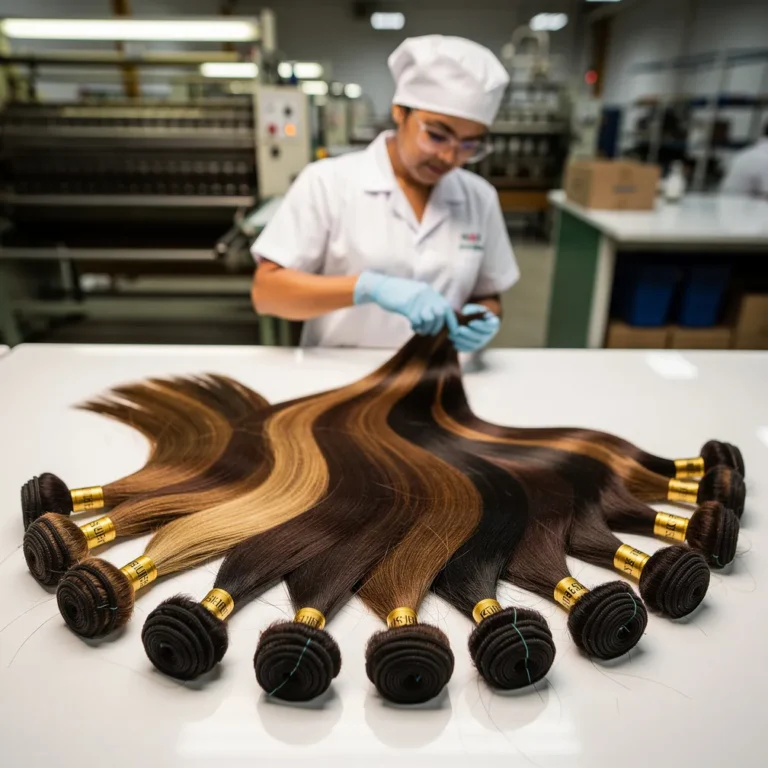
- Own manufacturing facility: Not a trading company — every product is processed in our Faridabad factory
- 20 years of export experience: We ship to 30+ countries and understand each market’s requirements
- Competitive MOQs: Starting from 50 pieces or 1 kg for most product types
- Full customization: White label, private label, custom colors, and bespoke packaging
- Transparent sourcing: Provenance documentation available for ethical sourcing verification
Frequently Asked Questions
Is Indian hair better quality than Chinese hair extensions?
Indian hair is generally higher quality for human hair extensions because India has a natural supply chain of temple-donated hair that can be processed with cuticle alignment intact (Remy standard). This results in extensions that last 12-24 months, resist tangling, and accept styling well. Chinese manufacturers excel at synthetic and processed products but rely on imported human hair, which often undergoes more aggressive processing that reduces longevity to 3-9 months.
Are hair extensions cheaper from China or India?
Chinese hair extensions are cheaper at the unit level, particularly for synthetic and processed products. However, Indian Remy hair extensions offer better cost-per-wear value because they last significantly longer. A USD 40 Indian Remy bundle lasting 18 months costs USD 2.22 per month, while a USD 15 Chinese processed bundle lasting 4 months costs USD 3.75 per month. The better value depends on your market positioning and customer expectations.
What is the MOQ difference between Chinese and Indian hair extension suppliers?
Chinese suppliers, particularly on platforms like Alibaba, often offer very low MOQs of 1-10 pieces for ready-made products. Indian manufacturers typically require higher MOQs of 50-100 pieces for most extension types, though raw hair by weight starts at 1 kg. The lower Chinese MOQs reflect their model of selling pre-made stock rather than manufacturing to order. Indian MOQs reflect custom production and quality control processes.
Can I verify the ethical sourcing of Indian hair extensions?
Yes. Indian temple hair has a verifiable supply chain. Major temples like Tirumala conduct documented hair auctions, and manufacturers can provide provenance documentation. At Hair Extensions By Nature, we offer sourcing transparency documentation on request. This is a significant advantage for brands that market ethical sourcing, particularly in European and North American markets where consumers increasingly demand supply chain transparency.
Which country is better for wholesale wig sourcing — China or India?
For human hair wigs (lace front, full lace, silk base), India offers better value for premium and mid-range products because of its authentic Remy hair supply. For synthetic wigs, fashion wigs, and budget human hair wigs, China has more extensive manufacturing infrastructure and lower price points. Many wig businesses source human hair wigs from India and synthetic or fashion wigs from China to serve both market segments.
Start Your Hair Extensions Dropship Business
Zero inventory. Premium Indian Remy hair. Ship worldwide under your brand. MOQ as low as 5 pieces.
Make an Informed Sourcing Decision
The right sourcing country depends on your specific business model, target customer, and product quality requirements. For buyers who need genuine Remy human hair with verifiable quality and ethical sourcing, India remains the strongest option. Hair Extensions By Nature is ready to be your Indian manufacturing partner.
Compare for yourself with a sample order.
WhatsApp: +91 9289358222
Email: info@hairextensionsbynature.com
Website: www.hairextensionsbynature.com
Factory: Booth No 71, Sector 16 Huda Market, Faridabad, Haryana, India – 121002