Glueless Hair Extensions Market Analysis 2026 | HEBN
Hair Extension Industry Statistics 2026 — Global Market Size and Trends
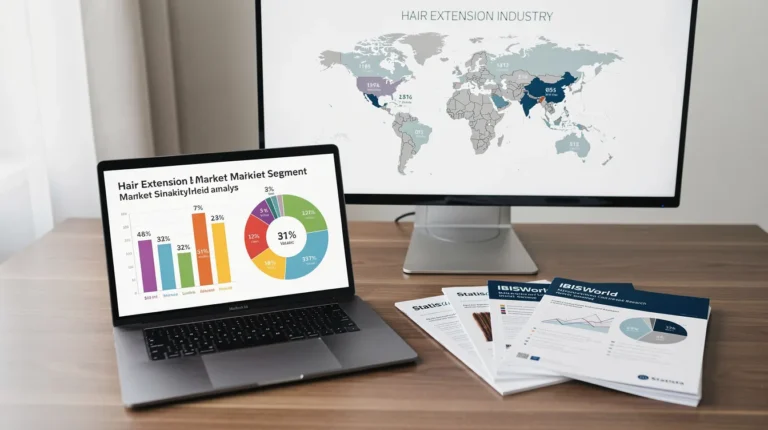
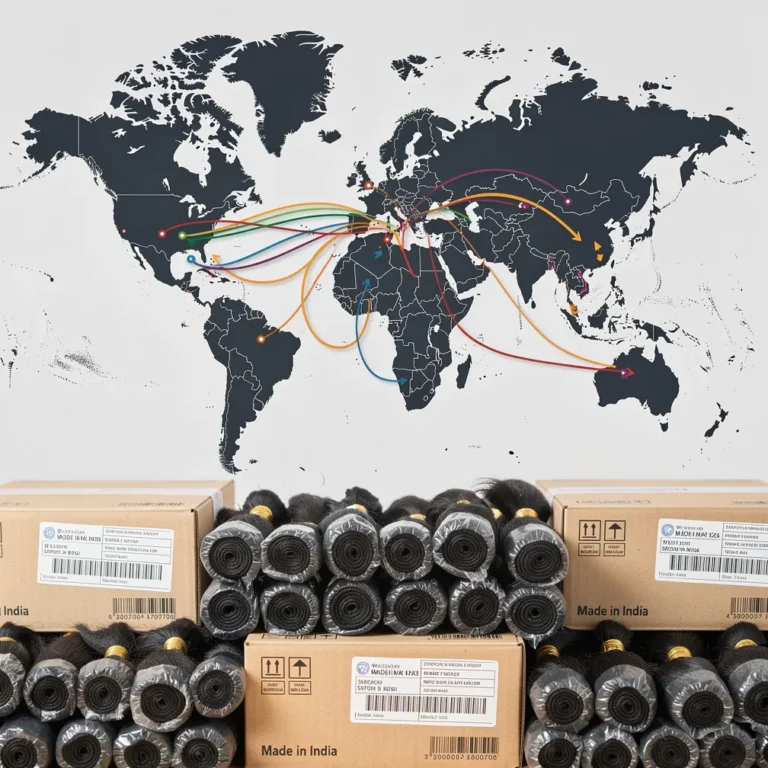
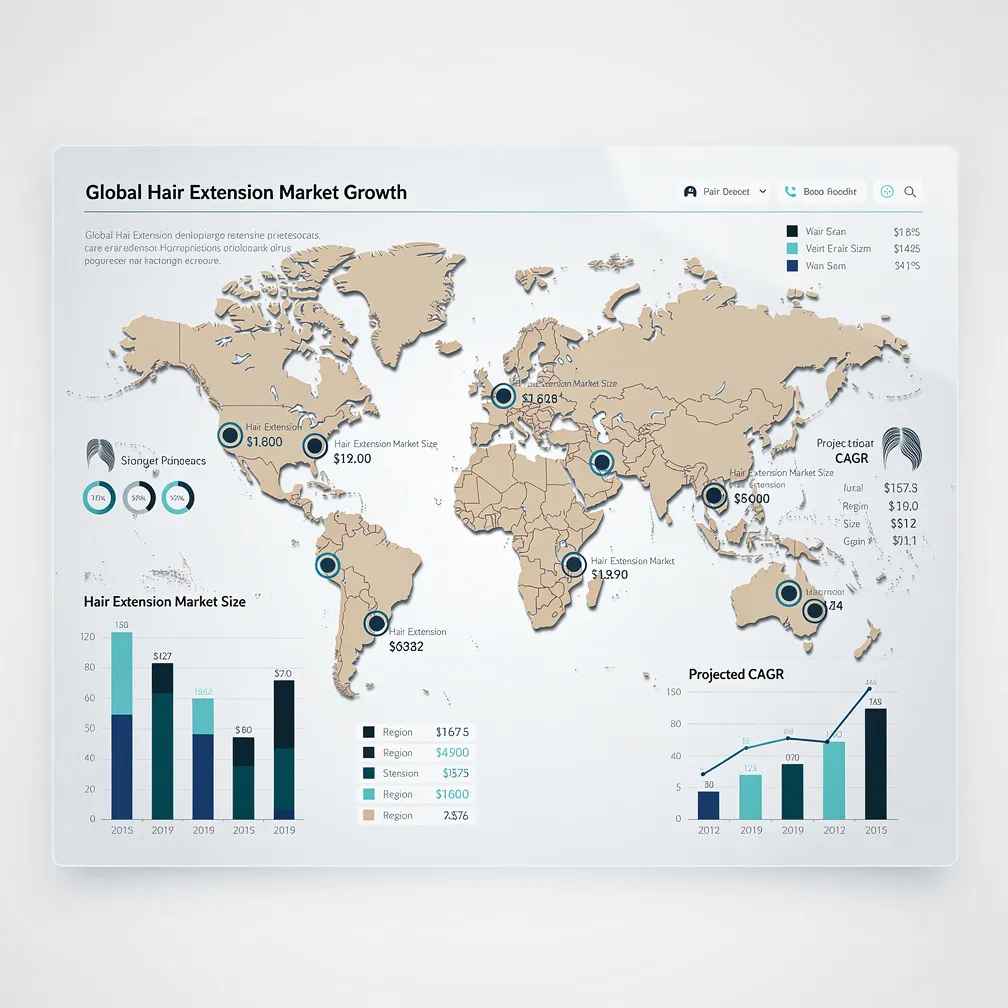
The global hair extension industry is valued at approximately USD 5.36 billion in 2026 and is projected to reach USD 13.36 billion by 2034, growing at a compound annual growth rate of 12.1%. This growth is driven by increasing consumer adoption across demographics, the normalization of extensions as everyday beauty products rather than specialty items, and expanding access through e-commerce channels. India remains the undisputed supply-side leader, accounting for approximately 93% of global raw human hair exports — a dominance rooted in the unique temple donation system and a well-established processing and manufacturing infrastructure.
This market intelligence overview is published by Hair Extensions By Nature, a direct manufacturer and exporter based in Faridabad, India. As participants in the industry’s supply chain for over a decade, we compile this data to help our wholesale buyers, distributors, and brand-building partners make informed business decisions backed by current market realities.
Building a hair extension business backed by real market data? Hair Extensions By Nature provides factory-direct supply to wholesale buyers in 30+ countries. WhatsApp us to discuss how we support new and growing brands with competitive pricing and flexible MOQs.
Global Market Size and Growth Projections
The hair extension market has experienced consistent double-digit growth over the past five years, accelerating through the post-pandemic period as consumer spending on personal appearance recovered and expanded. The key figures for 2026:
| Metric | Value | Source Context |
|---|---|---|
| Global Market Value (2026) | ~USD 5.36 billion | Industry analyst consensus estimates |
| Projected Market Value (2034) | ~USD 13.36 billion | Based on 12.1% CAGR trajectory |
| CAGR (2024-2034) | 12.1% | Multiple market research publishers |
| Human Hair Segment Share | ~62% of total market | Balance is synthetic and blended |
| E-commerce Channel Growth | ~18% annual growth | Fastest-growing sales channel |
The human hair segment — which includes raw, Remy, and virgin hair products — accounts for approximately 62% of the total market by value, despite representing a smaller share by unit volume. This premium segment is where the highest margins exist for wholesalers and retailers.
Market Share by Region
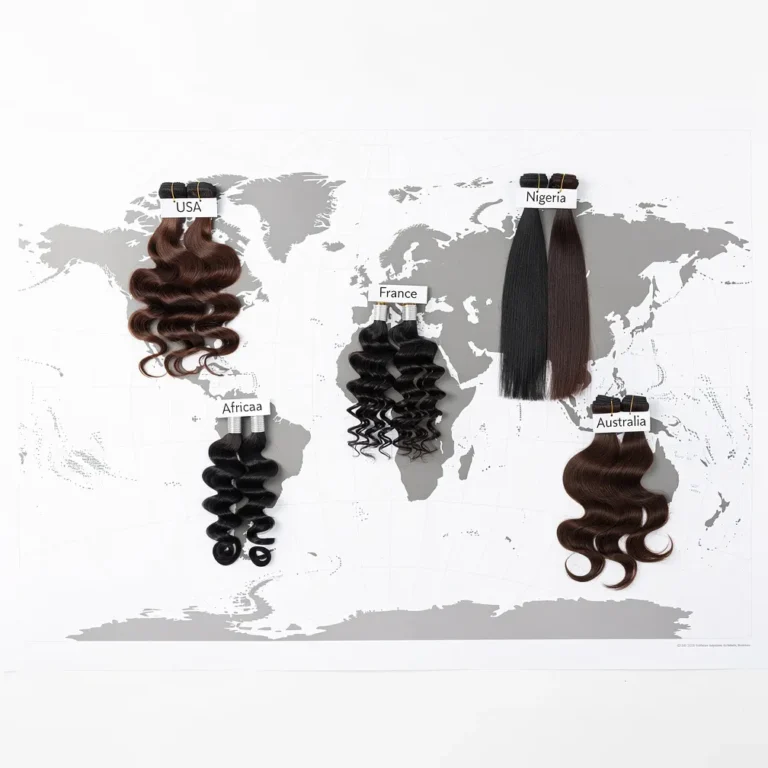
Consumer demand for hair extensions is concentrated in specific regional markets, each with distinct preferences, price sensitivity, and product mix requirements:
| Region | Market Share | Key Markets | Growth Rate |
|---|---|---|---|
| North America | ~35% | United States, Canada | 10-11% CAGR |
| Europe | ~25% | UK, Germany, France, Russia | 9-10% CAGR |
| Africa | ~18% | Nigeria, South Africa, Ghana, Kenya | 14-16% CAGR |
| Asia-Pacific | ~14% | South Korea, Japan, China, Australia | 11-13% CAGR |
| Middle East | ~5% | UAE, Saudi Arabia, Turkey | 12-14% CAGR |
| Latin America | ~3% | Brazil, Mexico, Colombia | 10-12% CAGR |
Africa is the fastest-growing regional market, driven by rising disposable incomes, increasing beauty consciousness, and the cultural significance of hair as a form of self-expression across the continent. Nigeria alone imports an estimated USD 600-800 million worth of hair products annually, making it one of the single largest national markets by import value.
India’s Dominance in Global Hair Supply
India’s position as the world’s leading hair extension supplier is built on several structural advantages that are unlikely to be replicated by any other country in the near term:
- Temple donation system: Millions of devotees donate hair at Hindu temples annually, creating a reliable, ethical, and large-scale raw material supply chain that no other country possesses
- Export value: India exports over USD 450 million in human hair and hair products annually under HS codes 6703 and 6704, according to DGCIS trade data
- 93% supply share: India accounts for approximately 93% of global raw human hair exports by volume
- Manufacturing infrastructure: Over 500 hair extension factories and processing units operate across major hubs in Faridabad, Chennai, Hyderabad, and Kolkata
- Quality advantage: Indian hair is naturally strong, has high strand density, and accepts chemical processing well — making it the preferred base material for global markets
- Cost competitiveness: Labor costs in Indian manufacturing are 40-70% lower than in China and Southeast Asia, translating to competitive wholesale pricing
Product Segment Analysis
Different extension types are growing at different rates, and understanding these trends helps buyers position their product portfolios for future demand:
| Product Type | Market Share | Growth Trend | Key Driver |
|---|---|---|---|
| Clip-In Extensions | ~22% | Strong growth | DIY application, social media influence |
| Tape-In Extensions | ~18% | Fastest growth | Salon adoption, reusability |
| Weft/Weave Bundles | ~20% | Stable | Traditional install method, value pricing |
| Wigs (lace front/full) | ~25% | Strong growth | Convenience, protective styling trend |
| Keratin/Fusion Bonds | ~8% | Moderate | Premium salon market |
| Toppers/Hairpieces | ~7% | Strong growth | Hair loss solution demand |
Tape-in extensions and toppers/hairpieces represent the highest-growth segments for wholesale buyers to prioritize. Tape-ins benefit from salon workflow efficiency and repeat installation revenue, while toppers address the growing market for discreet hair loss solutions across all age demographics.
Position your product line for 2026 growth. Hair Extensions By Nature manufactures the full range of high-growth product categories — tape-ins, clip-ins, toppers, wigs, and weft bundles — all from our factory in India. WhatsApp us to discuss which products align with your market opportunity.
Discuss Product Strategy on WhatsApp
E-Commerce and Sales Channel Trends
The distribution landscape for hair extensions continues to shift toward digital channels. Key channel statistics for 2026:
- E-commerce: Now represents approximately 35-40% of total hair extension sales globally, up from 25% in 2020. Growing at roughly 18% annually
- Salon/professional channel: Accounts for approximately 30% of sales. Stable but shifting as more salons develop their own retail e-commerce presence
- Beauty supply stores: Approximately 20% of sales. Declining in developed markets but still dominant in West Africa and parts of the U.S.
- Social commerce: Instagram, TikTok, and WhatsApp-based selling accounts for an estimated 10-15% of sales, with significantly higher share in emerging markets like Nigeria, Kenya, and Brazil
For wholesale buyers, the implication is clear: if your business model relies solely on physical retail, you are competing for a shrinking share of the market. The most successful hair extension brands in 2026 operate omnichannel — combining online sales, salon partnerships, and social media storefronts.
Key Import Markets by Country
Understanding which countries import the most hair extensions helps distributors and brand builders identify where demand is strongest and where competition may be less established:
| Country | Estimated Import Value (Annual) | Primary Source | Growth |
|---|---|---|---|
| United States | $1.2-1.5 billion | India, China, Vietnam | Stable |
| Nigeria | $600-800 million | India, China | High |
| United Kingdom | $300-400 million | India, EU resellers | Moderate |
| South Africa | $200-300 million | India, China | High |
| Germany | $150-200 million | India, Eastern Europe | Moderate |
| UAE | $100-150 million | India | High |
Why Source From Hair Extensions By Nature
Hair Extensions By Nature (legal entity: Hair Envy LLP) is a direct manufacturer based in Faridabad, Haryana — one of India’s primary hair extension export hubs. We supply Remy and raw temple hair extensions across all major product categories to wholesale buyers in over 30 countries. Our positioning within India’s dominant supply chain gives our buyers direct access to the world’s largest and most cost-competitive source of human hair extensions.
Whether you are entering the market for the first time or scaling an established brand, our factory-direct model provides pricing transparency, quality consistency, and the production capacity to support growing demand. Reach us at +91 9289358222 (WhatsApp) or info@hairextensionsbynature.com. Our facility is located at Booth No 71, Sector 16 Huda Market, Faridabad, Haryana, India – 121002.
Frequently Asked Questions
How big is the global hair extension market in 2026?
The global hair extension market is valued at approximately USD 5.36 billion in 2026. It is projected to grow to USD 13.36 billion by 2034 at a compound annual growth rate of 12.1%. The human hair segment represents about 62% of the total market by value, with the balance in synthetic and blended products.
What percentage of global hair extensions come from India?
India accounts for approximately 93% of global raw human hair exports by volume. The country exports over USD 450 million in human hair and hair products annually. This dominance is driven by India’s unique temple donation system, established manufacturing infrastructure, and cost-competitive labor for processing and finishing.
Which country imports the most hair extensions?
The United States is the largest importer of hair extensions globally, with estimated annual imports of USD 1.2-1.5 billion. Nigeria is the second-largest market with USD 600-800 million in annual imports. The United Kingdom, South Africa, and Germany round out the top five import markets.
What is the fastest-growing hair extension product type?
Tape-in extensions are the fastest-growing product segment in the hair extension market, driven by salon adoption and consumer preference for reusable, low-damage application methods. Toppers and hairpieces are also experiencing rapid growth as demand for discreet hair loss solutions increases across all demographics.
Is the hair extension industry growing?
Yes. The hair extension industry is growing at a CAGR of 12.1% and is expected to more than double in size between 2024 and 2034. Key growth drivers include social media influence on beauty standards, increasing adoption across age groups, rising disposable incomes in emerging markets, and the expansion of e-commerce as a sales channel.
Which region has the fastest-growing demand for hair extensions?
Africa is the fastest-growing regional market for hair extensions, with a CAGR of 14-16%. Nigeria, South Africa, Ghana, and Kenya are leading this growth. The Middle East is also experiencing rapid growth at 12-14% CAGR, driven by premium demand in UAE, Saudi Arabia, and Turkey.
Start Your Hair Extensions Dropship Business
Zero inventory. Premium Indian Remy hair. Ship worldwide under your brand. MOQ as low as 5 pieces.