
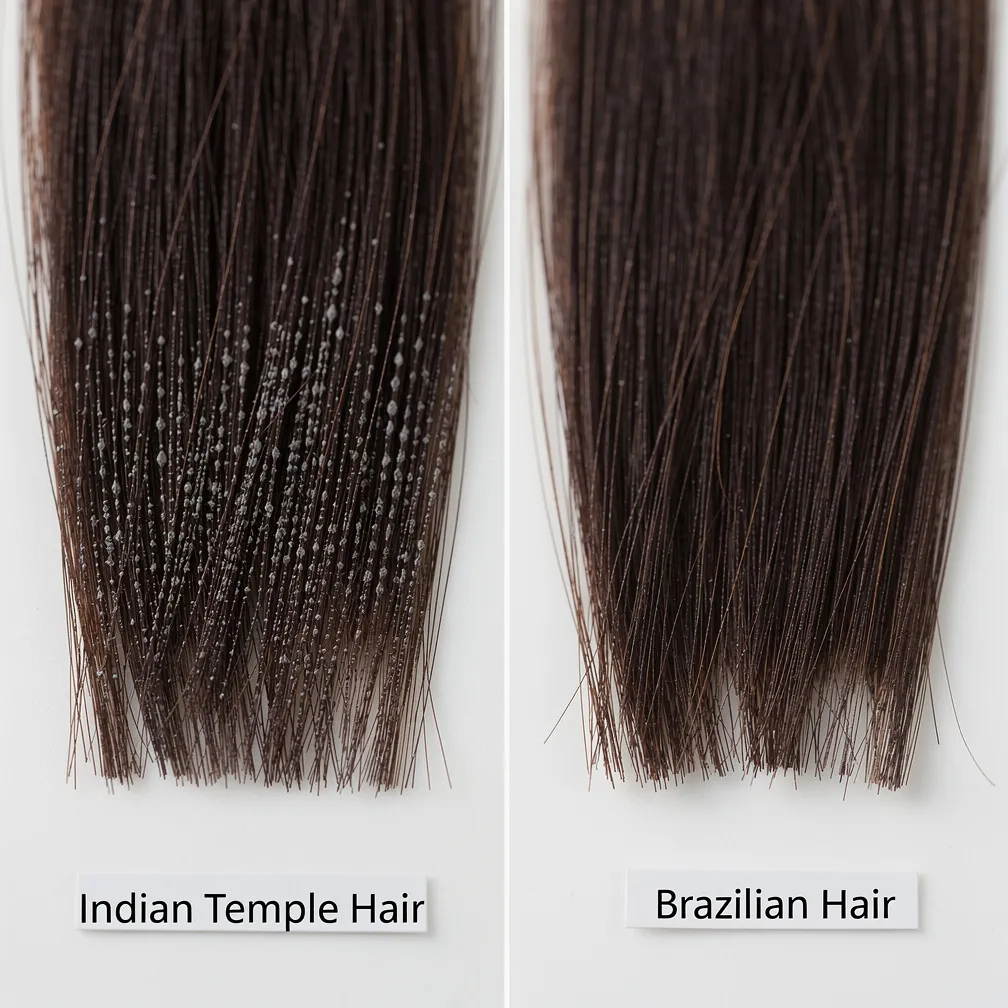
Indian Hair vs Brazilian Hair
Indian Hair vs Brazilian Hair — Wholesale Buyer Comparison [2026]
The most important fact wholesale buyers should understand about the Indian hair vs Brazilian hair comparison in 2026 is that most “Brazilian hair” sold in the wholesale market does not originate from Brazil. The majority of hair marketed as Brazilian is either Indian or Southeast Asian raw hair imported to Brazil, locally processed, and re-exported under a Brazilian origin designation — at a 25-40% price premium over equivalent Indian-origin product. Genuine Brazilian human hair exists in limited volumes and is rarely encountered in the mainstream wholesale supply chain. This guide provides wholesale buyers with an objective, data-driven comparison of both hair types to support informed procurement decisions without misleading marketing language. For more details, see our guide on Indian Hair vs Chinese Hair.
Hair Extensions By Nature is a direct manufacturer of Indian Remy and raw temple hair extensions, based in Faridabad, Haryana. We supply wholesale buyers across 30+ countries and maintain transparent supply chain documentation for all product categories.
Compare Indian hair pricing directly with our factory. Hair Extensions By Nature provides factory-direct pricing on Remy, double-drawn, and raw temple hair for wholesale buyers. No intermediary markup. Contact us for a current price list. For more details, see our guide on Single Drawn vs Double Drawn Hair.
Get Factory-Direct Pricing on WhatsApp
Understanding “Brazilian Hair” in the Wholesale Market
The term “Brazilian hair” in the wholesale extensions market is a marketing label, not a reliable indicator of geographic origin. Brazil does not have a significant natural human hair collection infrastructure comparable to India’s temple donation network. The Brazilian hair industry’s model is primarily import-process-export: raw Indian or Southeast Asian hair is imported, chemically processed (typically steam-treated to create the wave patterns associated with the Brazilian brand), and re-exported internationally.
This model has two practical implications for wholesale buyers. First, you are paying a brand premium — 25-40% above comparable Indian-origin product — for a processing step that may not add proportional value to longevity or performance. Second, the supply chain transparency is lower, because the actual hair origin may not be disclosed on product labeling or sourcing documentation.
This is not to suggest that Brazilian-marketed hair is uniformly poor quality. Many importers applying the Brazilian label source and process quality Indian Remy hair and deliver consistent product. The issue is price transparency and origin traceability, not quality per se.
Indian Hair vs Brazilian Hair — Full Comparison Table
| Comparison Factor | Indian Hair (Factory Direct) | Brazilian Hair (Market Standard) |
|---|---|---|
| True Origin | South India (Tamil Nadu, Andhra Pradesh) — temple donations and collection infrastructure | Primarily Indian or SE Asian hair imported and processed in Brazil; small authentic volume exists |
| Natural Texture | Fine to medium; naturally straight to slight wave; minimal natural curl | Marketed as medium texture, loose wave — texture is often chemically induced from straight Indian/SE Asian raw hair |
| Cuticle Structure | Intact and aligned in Remy and raw grades; excellent natural cuticle integrity | Variable; depends on source and processing; steam-processed Brazilian may have good cuticle retention |
| Wholesale Price (Remy, 18″) | USD 28-45 per 100g bundle (factory direct) | USD 40-70 per 100g bundle (distributor/importer level) |
| Supply Volume | Very high; India is the world’s largest human hair exporter; consistent large-volume availability | Authentic Brazilian volume is low; marketed “Brazilian” depends on Indian/SE Asian supply availability |
| Consistency Across Orders | High consistency when sourced factory-direct with documented specifications | Variable; depends on importer’s supply chain and sourcing consistency |
| Longevity (Remy Grade) | 12-18 months with proper care for Remy double drawn; 2-4 years for raw temple hair | 12-18 months for quality Brazilian Remy; shorter if heavily processed to achieve wave patterns |
| Color Receptivity | Excellent; raw Indian hair lifts and colors very predictably; reliable for salon color work | Good to variable; chemically pre-treated Brazilian wave hair may have inconsistent lift |
| Heat Tolerance | High; raw and Remy Indian hair responds well to heat styling | Good to high; depends on processing level applied to achieve marketed texture |
| Market Suitability | All markets; particularly strong in UK, EU, Australia, South Asia diaspora markets, and Africa | Strong brand recognition in US market; marketed wave texture popular in African-American market |
| Sourcing Transparency | High; verifiable origin documentation from temple collection networks; traceability to source | Low to medium; actual hair origin typically undisclosed; transparency depends on individual supplier |
| Ethical Sourcing | Temple hair is ethically donated as religious offering; well-documented tradition with donor consent | Harder to verify for hair of unknown origin marketed as Brazilian |
| Custom Processing | Any texture achievable through professional chemical processing from Indian straight base | Wave textures are standard; custom processing possible but adds another processing layer |
Texture Analysis: What Indian Hair Really Feels Like
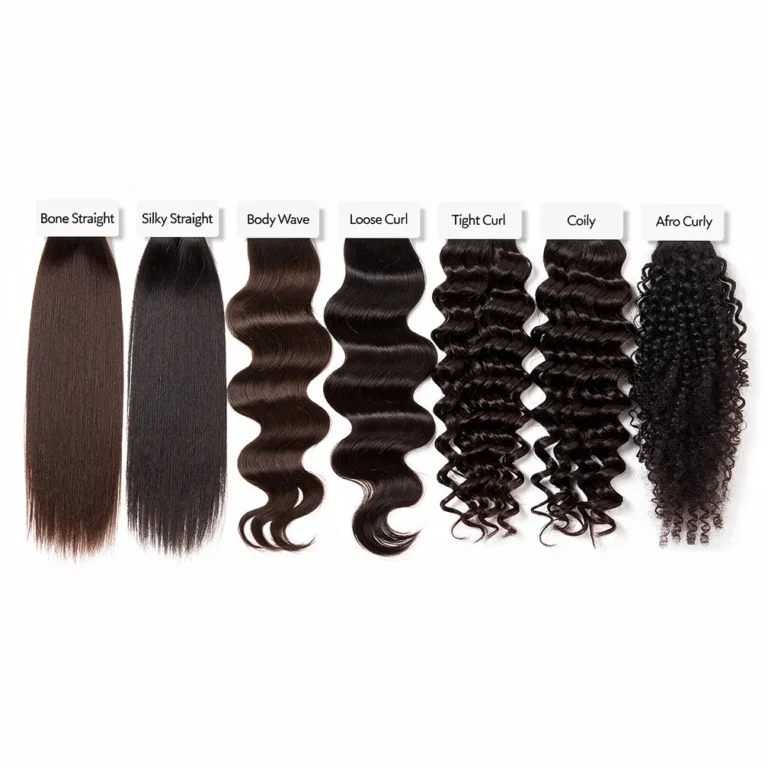
Indian hair in its raw state is typically fine to medium in diameter, naturally straight to slightly wavy, and possesses a natural sheen that is distinct from the silicone-enhanced shine of processed extensions. The fine texture of Indian hair makes it particularly compatible with European and South Asian hair types, and — with appropriate chemical processing — it can be transformed into body wave, deep wave, and curl patterns that suit afro-textured hair markets.
The natural wave patterns found in Indian raw hair vary by region of collection. Hair from certain parts of Tamil Nadu and Andhra Pradesh has a natural loose wave that, when combined with steam processing, produces a pattern very similar to what is marketed as “Brazilian wave” by distributors globally. This is a significant contributor to why Brazilian-marketed hair and Indian Remy so often originate from the same source material.
Price Differential: What Wholesale Buyers Are Actually Paying For
The 25-40% premium typically attached to Brazilian-marketed hair over equivalent Indian-direct product can be broken down into three components:
- Brazil processing cost: Steam treatment, quality sorting, and packaging in Brazil adds genuine production cost — approximately 10-15% of the final wholesale price
- Logistics and import/export margins: The double import-export journey (India to Brazil, Brazil to global markets) adds freight and handling costs — approximately 5-10%
- Brand premium: The remaining 10-20% premium is attributable purely to the “Brazilian” brand label, which commands higher perceived value in certain market segments, particularly the US African-American hair market
For wholesale buyers supplying markets where the “Brazilian” label is a significant selling point to end customers, this premium may be justified by retail price positioning. For buyers supplying markets where origin label is less important than product performance and price — UK salon chains, Australian distributors, European wholesale networks — factory-direct Indian sourcing provides better margin at equivalent quality.
Supply the same quality at a better margin. Hair Extensions By Nature supplies Indian Remy and raw temple hair direct from our Faridabad factory. No Brazilian middleman margin. WhatsApp our export team for a comparison price list.
Get Comparison Pricing on WhatsApp
Which Hair Type Performs Best in Which Markets
| Market / Customer Segment | Recommended Hair Type | Reasoning |
|---|---|---|
| UK / European salon chains | Indian Remy straight or body wave | Texture compatibility, excellent color receptivity, value |
| US African-American market | Indian hair processed to Brazilian wave or Indian kinky straight | Wave texture preference; “Brazilian” label retains retail value in this market |
| West African distributors (Nigeria, Ghana) | Indian body wave, deep wave, or kinky curl | High volume demand; price sensitivity; Indian direct pricing strongest advantage |
| Australian / New Zealand market | Indian Remy straight or body wave | Fine hair compatibility; strong quality expectations; value-conscious professional buyers |
| Middle East / UAE luxury market | Raw Indian temple hair, straight | Premium positioning; natural texture preference; high longevity expectation |
| South Asian diaspora (US, UK, CA) | Indian Remy straight or slight wave | Cultural familiarity with Indian hair texture; seamless blend with natural hair |
The Ethical Sourcing Advantage of Indian Temple Hair
One area where Indian hair holds a clear and verifiable advantage over most other marketed origins is sourcing ethics. The South Indian temple hair tradition — particularly associated with Tirupati Balaji Temple in Andhra Pradesh and temples across Tamil Nadu — involves devotees voluntarily donating their hair as a religious offering (tonsuring). This is a centuries-old practice with deep cultural and religious significance.
The hair collected from these temple donations is auctioned by the temple trusts to registered processors and manufacturers. The auction system is publicly documented, the proceeds fund temple operations and charitable work, and the donors give their hair freely as part of sincere religious practice. This is arguably the most ethically transparent human hair collection system in the world.
As ESG (Environmental, Social, Governance) criteria become more influential in wholesale procurement decisions — particularly among larger distributors, retail chains, and B2B buyers in regulated markets — the ability to document ethical sourcing is increasingly a commercial advantage, not just a moral consideration.
For a deeper look at how raw temple hair is sourced, graded, and processed, see our dedicated guide on sourcing hair extensions from India.
Source the original. Not a premium-labeled version of it. Hair Extensions By Nature supplies factory-direct Indian Remy and raw temple hair — the same hair that most “Brazilian” products originate from, at a significantly better wholesale price. Contact us via WhatsApp or email info@hairextensionsbynature.com.
Frequently Asked Questions
Is Brazilian hair better than Indian hair for extensions?
At equivalent quality grades, Indian Remy hair and genuine Brazilian Remy hair perform comparably in terms of longevity and texture. However, most hair marketed as “Brazilian” in the wholesale market is Indian or Southeast Asian hair processed in Brazil — meaning the premium paid for the Brazilian label buys branding rather than superior quality. For wholesale buyers focused on product performance and margin, factory-direct Indian hair provides the best value proposition.
Where does Brazilian hair actually come from?
Most “Brazilian hair” sold in the wholesale extensions market originates from India or Southeast Asia (particularly Vietnam, Cambodia, and Myanmar). It is imported to Brazil, steam-processed to achieve wave or curl patterns, then re-exported internationally as Brazilian hair. Authentic human hair collected domestically in Brazil exists in limited volumes and is rarely found in the mainstream wholesale supply chain.
Why is Indian hair less expensive than Brazilian hair at wholesale?
Indian hair is less expensive because it is sourced and manufactured in the same country — eliminating the import-processing-export cycle that adds cost to Brazilian-marketed hair. India is the world’s largest raw human hair exporter, with a vast domestic supply from temple donation networks and collection infrastructure. Factory-direct Indian pricing removes both the Brazilian processing margin and the brand premium.
Which hair type is better for the African-American hair extension market — Indian or Brazilian?
For the US African-American hair extension market, Indian hair processed to body wave, deep wave, or kinky curl textures performs comparably to Brazilian-marketed wave textures at a lower wholesale cost. The “Brazilian” label does carry residual brand recognition in this market, which can affect retail pricing power. Buyers supplying this market should evaluate whether the Brazilian label premium translates to sustainable retail margin advantage in their specific distribution channel.
Is Indian temple hair ethically sourced?
Yes — Indian temple hair is collected through a centuries-old voluntary religious donation practice called tonsuring, where devotees shave their heads as an offering at Hindu temples. The largest collection center, Tirupati Balaji Temple, operates a publicly documented hair auction system where proceeds fund temple charitable work. This is considered one of the most transparent and ethically verifiable human hair sourcing systems in the global market.
Can Indian hair be processed to look like Brazilian wave or curl textures?
Yes — Indian straight raw or Remy hair can be professionally processed to achieve body wave, deep wave, kinky wave, loose curl, and tight curl textures through steam processing and chemical treatments. This is in fact the standard production method used by Brazilian hair manufacturers. Indian manufacturers with in-house processing capability can produce the same textures factory-direct at lower cost than sourcing through Brazilian distributors.
One Comment
Comments are closed.