Hair Extension MOQ Guide
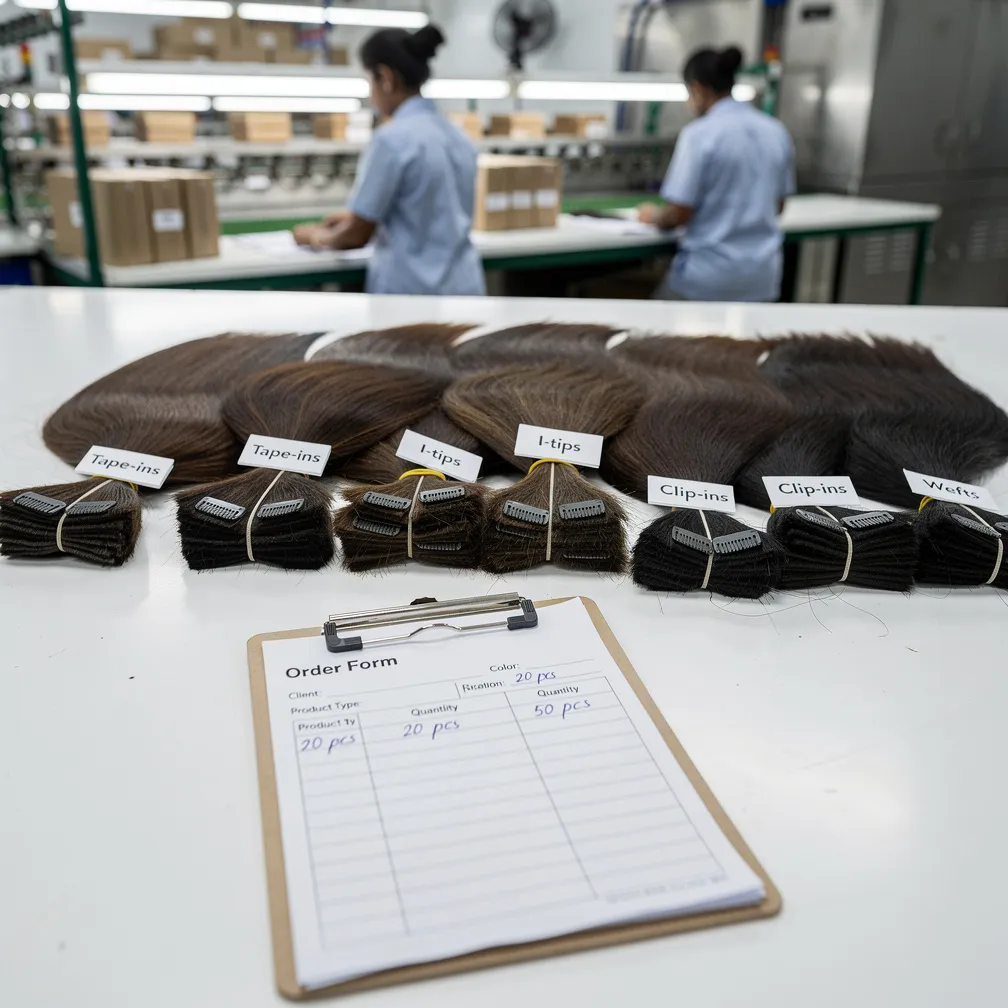
Hair extension MOQ wholesale minimums from Indian manufacturers typically start at 10–25 pieces for finished extensions such as clip-ins and tape-ins, 50–100 strands for fusion tips (I-tip and U-tip), and 100–500 grams for bulk hair. First-time buyers can almost always negotiate lower entry quantities or structured sample orders before committing to full production volumes. Understanding MOQ structures before you contact a supplier saves time, protects your budget, and positions you to negotiate from a position of knowledge. For more details, see our guide on How to Order Hair Extension Samples from India. For more details, see our guide on Hair Extension Import Regulations.
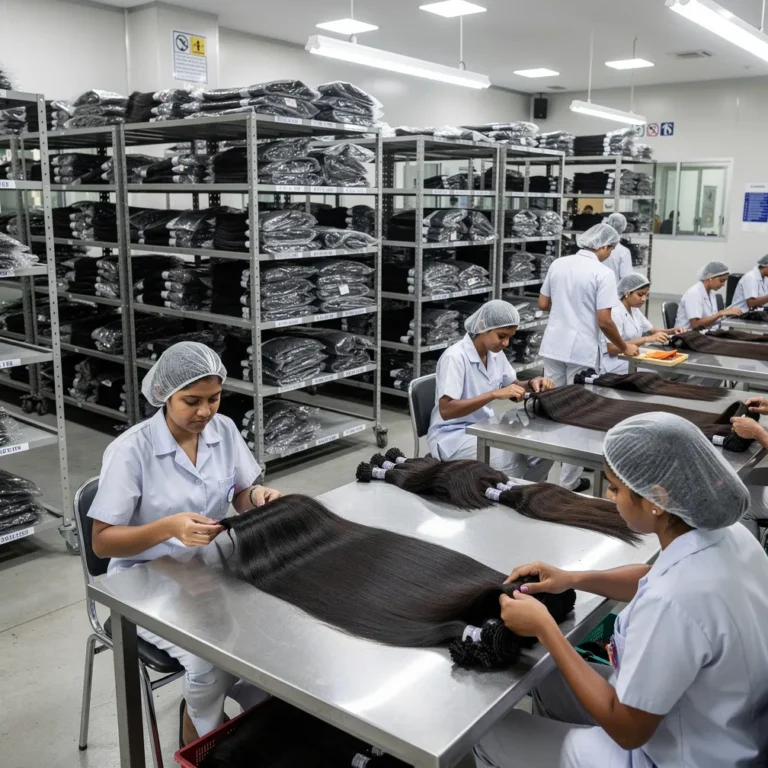
At Hair Extensions By Nature, we supply salons, distributors, and brand builders across more than 40 countries from our manufacturing facility in Faridabad, Haryana. We work with first-time wholesale buyers regularly and understand that MOQ is often the first hurdle — and sometimes the most confusing one. This guide explains how MOQs work in the Indian hair extension manufacturing industry, what is negotiable, and how to build a smart scaling strategy from sample order to ongoing supply relationship.
Why MOQs Exist and What They Protect
Minimum order quantities are not arbitrary restrictions. They exist because manufacturing has fixed costs — setup time, material sourcing, labor allocation, and quality control — that make very small orders economically impractical for a manufacturer. When a factory produces a batch of tape-in extensions, the setup process for cutting, loading adhesive, and quality-checking is essentially the same whether the run is 10 sets or 500 sets. MOQs ensure that batch production covers those fixed costs at a sustainable margin.
For buyers, understanding this logic is useful in negotiations. If you can demonstrate that you are a serious buyer with genuine volume potential, most manufacturers will lower their stated MOQ for a first order in exchange for a commitment to ongoing business. The key is approaching the conversation as a long-term partnership rather than a one-time transaction.
MOQ by Product Type — Reference Guide
MOQs vary significantly by product category. Here is a breakdown of what first-time buyers should expect when sourcing from a direct Indian manufacturer.
| Product Type | Typical MOQ (per style/color) | Common Units | Notes for First-Time Buyers |
|---|---|---|---|
| Clip-in extensions | 10–25 sets | Sets (6–8 piece per set) | Lowest MOQ category; easy to test multiple colors |
| Tape-in extensions | 10–25 packs | Packs (20 pieces per pack) | Often negotiable to 5–10 packs for first order |
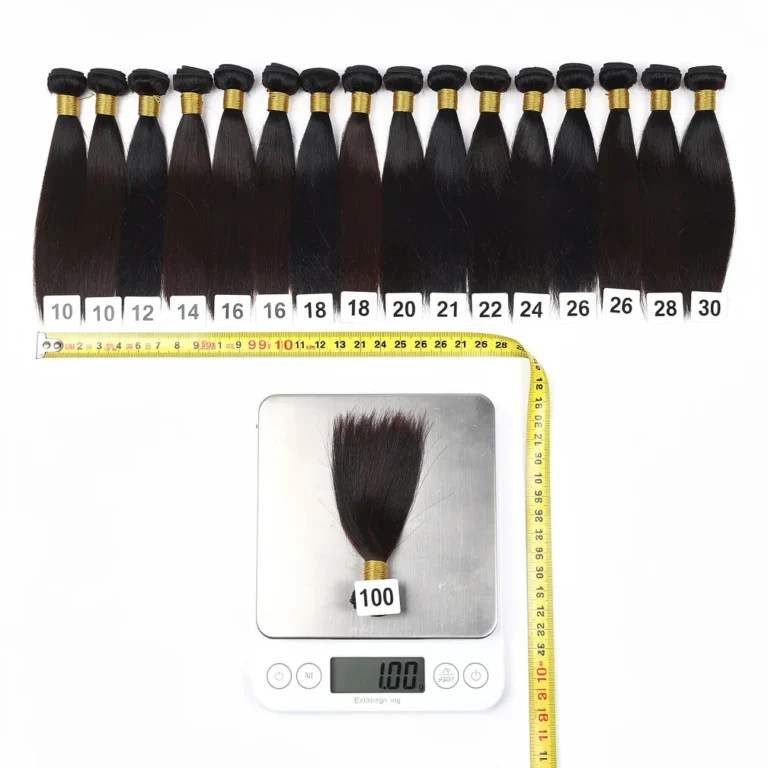
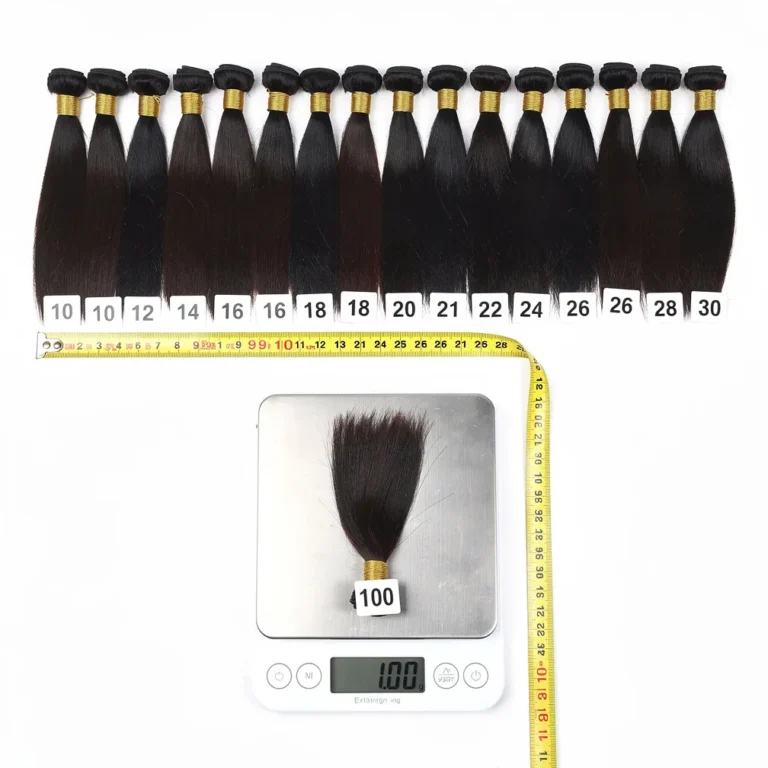
| I-tip / keratin tip extensions | 50–100 strands | Individual strands (0.5g–1g each) | Can be ordered by the gram (50g minimum common) |
| U-tip / nail tip extensions | 50–100 strands | Individual strands (0.5g–1g each) | Same MOQ structure as I-tip |
| Hand-tied weft | 5–10 bundles (rows) | Per weft row (approx. 50g each) | Premium product; lower unit MOQ but higher price |
| Machine weft (sew-in) | 20–50 bundles | Bundles by weight and length | Higher MOQ; best for distributors and bulk buyers |
| Lace front / full lace wigs | 5–10 units | Per wig | Custom construction increases MOQ requirement |
| Hair toppers | 5–10 units | Per topper | Specialty product; confirm base size and hair density |
| Raw bulk hair | 100–500 grams | By weight | For processors and manufacturers; not finished product |
| Custom private label | 50–100 units minimum | Varies by product | Higher MOQ for branding/packaging setup costs |
These ranges reflect standard starting points. Actual MOQs vary by manufacturer, hair grade, customization requirements, and your relationship with the supplier. The figures above are typical for working with a direct Indian manufacturer — not a trading company, which may have higher stated MOQs but less flexibility to negotiate.
Ready to discuss MOQs for your specific product needs? Message us on WhatsApp and we will send you our current MOQ sheet and pricing within 24 hours.
How to Negotiate Lower MOQs as a First-Time Buyer
The single most effective negotiating tool for a first-time buyer is demonstrating credibility and future volume potential. Manufacturers reduce MOQs for buyers who communicate a clear business plan and a realistic growth trajectory. Vague inquiries receive standard MOQs. Specific, professional buyers get flexibility.
Strategies That Work
Be specific about your business model. Tell the supplier exactly who you are — a salon owner with 200 active clients, a distributor covering three states, or a brand launching an e-commerce store. Give context. A manufacturer who understands your customer base and volume potential is far more likely to work with a lower first-order MOQ.
Offer to pay a higher unit price for a smaller first order. This is a standard practice. If the supplier’s break-even on clip-in extensions is at 20 sets, offer to pay a premium per set for a 10-set trial order, with a written commitment to a 50-set follow-up order within 60 days if quality meets your specifications. Most manufacturers will accept this structure.
Consolidate your order across fewer SKUs. Instead of ordering 5 sets in 10 different colors, order 15 sets in 3 colors. The total unit count may be the same or higher, but the manufacturer’s production efficiency increases — which is what the MOQ is designed to protect.
Start with the supplier’s stock program. Many Indian manufacturers maintain a ready-stock inventory of their most popular products — typically natural black and dark brown in standard lengths. Ready-stock orders often have no MOQ or a much lower minimum (sometimes 1–5 pieces) because there is no production setup cost. Use this to evaluate quality before placing custom production orders.
Reference your sourcing guide and come prepared. For a comprehensive overview of how the sourcing process works, read our complete guide to sourcing hair extensions from India.
Sample Orders — The Smart First Step
Before placing any bulk order, request a formal sample order. Sample orders are not free in the hair extension industry — and any supplier offering free samples at full specification should be viewed with caution, as it often indicates low-quality material or deceptive trade practices. Legitimate manufacturers charge for samples at a per-piece rate, typically at or above wholesale unit cost.
A well-structured sample order for a first-time buyer includes:
- 2–3 pieces or sets of your primary product (the one you plan to stock in highest volume)
- 1 piece each of 2–3 alternative products you are evaluating
- At least 2 color options within your target range
- Your most important length (and optionally one longer for comparison)
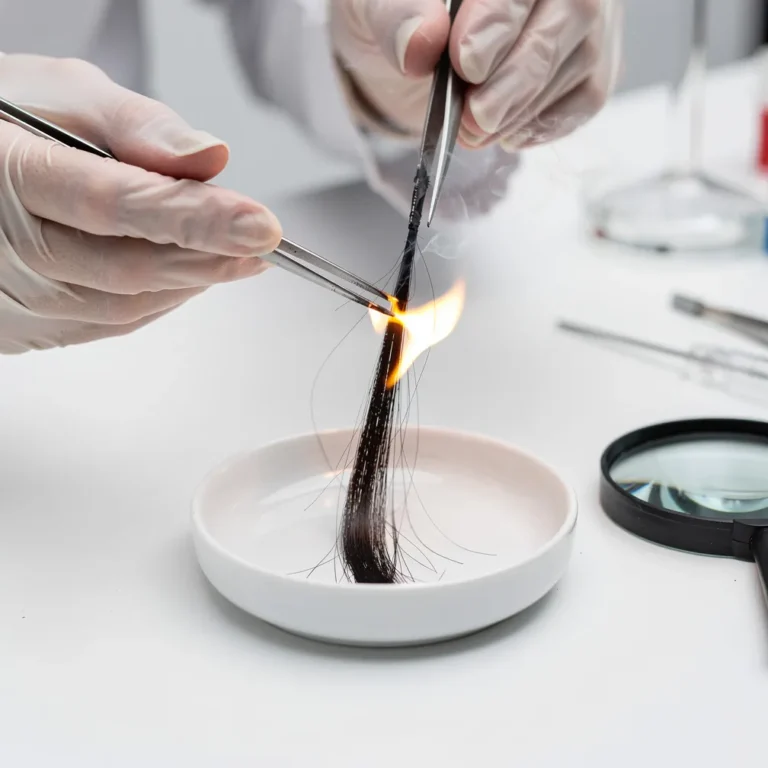
When your samples arrive, test them thoroughly. For Remy hair extensions, run your fingers from root to tip, then tip to root — there should be minimal resistance in both directions and the hair should feel smooth. For tape-ins, check adhesive coverage and bond strength. For I-tips, examine keratin bond consistency and strand weight. Document your evaluation with photos and notes. This documentation also gives you a professional basis for quality discussions when placing your bulk order.
Building a Scaling Strategy from Sample to Ongoing Supply
Most successful wholesale buyers follow a three-phase approach when establishing a new supplier relationship.
Phase 1: Sample Evaluation (Weeks 1–3)
Order samples, test thoroughly, and make a go/no-go decision. If the quality is acceptable, move to a trial order. If there are quality concerns, communicate them specifically to the supplier and request revised samples. This phase should take no more than 3–4 weeks from first contact to sample receipt, given that air freight from India to most countries takes 3–7 days.
Phase 2: Trial Order (Weeks 4–10)
Place a trial order at or near the manufacturer’s stated MOQ — or at the negotiated lower entry quantity if you have successfully negotiated. This order should be large enough to sell through in your market within 6–8 weeks, giving you real-world quality and customer feedback. For a salon, this might be 20 tape-in packs and 50 I-tip strands per color. For a distributor, it might be 50 bundles of sew-in weft across three lengths.
Want to discuss a trial order structure for your business? Contact us on WhatsApp — we will help you design an efficient first order based on your product mix.
Phase 3: Regular Supply Cycles (Ongoing)
Once you have validated quality and product-market fit, establish a supply cycle. Most buyers working with Indian manufacturers place orders every 4–8 weeks, depending on their sell-through rate and inventory capacity. At this stage, you can negotiate volume pricing tiers, dedicated production slots during peak season (October–February is busiest for hair extension manufacturers), and payment terms (30-day net is common for established buyers with good payment history).
MOQ Pitfalls to Avoid
First-time buyers make consistent mistakes around MOQ that are worth knowing before you start.
Confusing per-color MOQ with total order MOQ. When a manufacturer says “MOQ is 25 pieces,” they often mean 25 pieces per color or style — not 25 pieces total. Ordering 5 colors at 25 pieces each means a 125-piece order. Always clarify whether the MOQ applies per SKU or to the total order value.
Ordering too many colors too early. First-time buyers often want to stock a full color range immediately. This ties up capital in slow-moving inventory. Start with 2–3 core colors (natural black, dark brown, and your market’s most popular highlight color) and expand based on actual sales data.
Ignoring lead times when calculating MOQ value. MOQ is not just about unit count — it is also about the production lead time your order triggers. A 50-piece custom order may require 3–4 weeks of production time, while a 200-piece order may actually be faster per unit (or the same timeline) due to batch efficiency. Ask about lead times, not just unit minimums.
Choosing the lowest MOQ supplier without verifying quality. Some suppliers advertise very low MOQs (sometimes 1–3 pieces) to attract new buyers. This is not inherently problematic, but it is a signal worth investigating. Low MOQs often mean ready-stock inventory of inconsistent quality, not custom production to your specifications. Always request samples regardless of MOQ level.
MOQ and Pricing — How They Interact
In wholesale hair extensions, MOQ and pricing are directly linked. The more units you order, the lower your per-unit cost — and the better your retail margin. Here is a general illustration of how price tiers typically work at a direct Indian manufacturer for Remy human hair clip-in extensions (18 inches, natural black):
| Order Quantity (sets) | Typical Price Tier | Positioning |
|---|---|---|
| 1–5 sets | Sample / retail price | Quality evaluation only |
| 10–25 sets | Entry wholesale | First-time buyer tier |
| 26–50 sets | Standard wholesale | Regular salon/distributor |
| 51–100 sets | Volume wholesale | Established account |
| 100+ sets | Bulk / OEM pricing | Distributor / brand pricing |
The difference between entry wholesale and bulk pricing is typically 20–40% per unit, depending on product type and supplier. For a buyer placing 100 sets versus 10 sets, this price difference alone can translate into a significantly better retail margin — making it worthwhile to consolidate orders once quality has been validated.
Frequently Asked Questions
What is the minimum order quantity for hair extensions from India?
MOQs from Indian manufacturers typically start at 10–25 sets for clip-ins and tape-ins, 50–100 strands for I-tip and U-tip extensions, and 100–500 grams for bulk hair. These figures are often negotiable for first-time buyers who can demonstrate volume potential and a clear business plan.
Can I order samples before placing a bulk order?
Yes. Most legitimate Indian manufacturers offer paid sample orders of 1–5 pieces. Expect to pay wholesale or above-wholesale price per unit, plus international shipping. Avoid suppliers offering completely free samples at full specification — it is rarely a genuine offer.
How do I negotiate a lower MOQ?
Explain your business model clearly, consolidate your SKU list, offer to pay slightly above standard wholesale for the first order, and commit to a follow-up order within a defined timeframe. Suppliers are far more flexible with buyers who demonstrate credibility and volume trajectory.
Is the MOQ per color or per total order?
This varies by supplier and must be confirmed before ordering. Many manufacturers apply MOQ per color or style. Others apply a total order value minimum. Always clarify this in your first conversation.
What is the lead time for a wholesale order from India?
Custom production orders require 2–4 weeks of manufacturing time after deposit. Ready-stock orders ship within 2–5 business days. International air freight adds 3–7 days to most destinations.
Next Steps for First-Time Wholesale Buyers
The MOQ structure at Hair Extensions By Nature is designed to be accessible for serious first-time buyers while being sustainable for production. We manufacture the full range of Remy human hair extensions — clip-ins, tape-ins, I-tips, U-tips, hand-tied wefts, wigs, and toppers — from our factory in Faridabad, Haryana, India.
For a complete understanding of the sourcing process before placing your first order, read our complete guide to sourcing hair extensions from India. It covers supplier verification, quality testing, shipping logistics, and pricing benchmarks in detail.
Ready to discuss your first wholesale order? Message us on WhatsApp or email us at info@hairextensionsbynature.com. We respond within 24 hours with current MOQ sheets, pricing, and product availability.
Hair Extensions By Nature
Booth No 71, Sector 16 Huda Market, Faridabad, Haryana, India – 121002
Phone/WhatsApp: +91 9289358222