
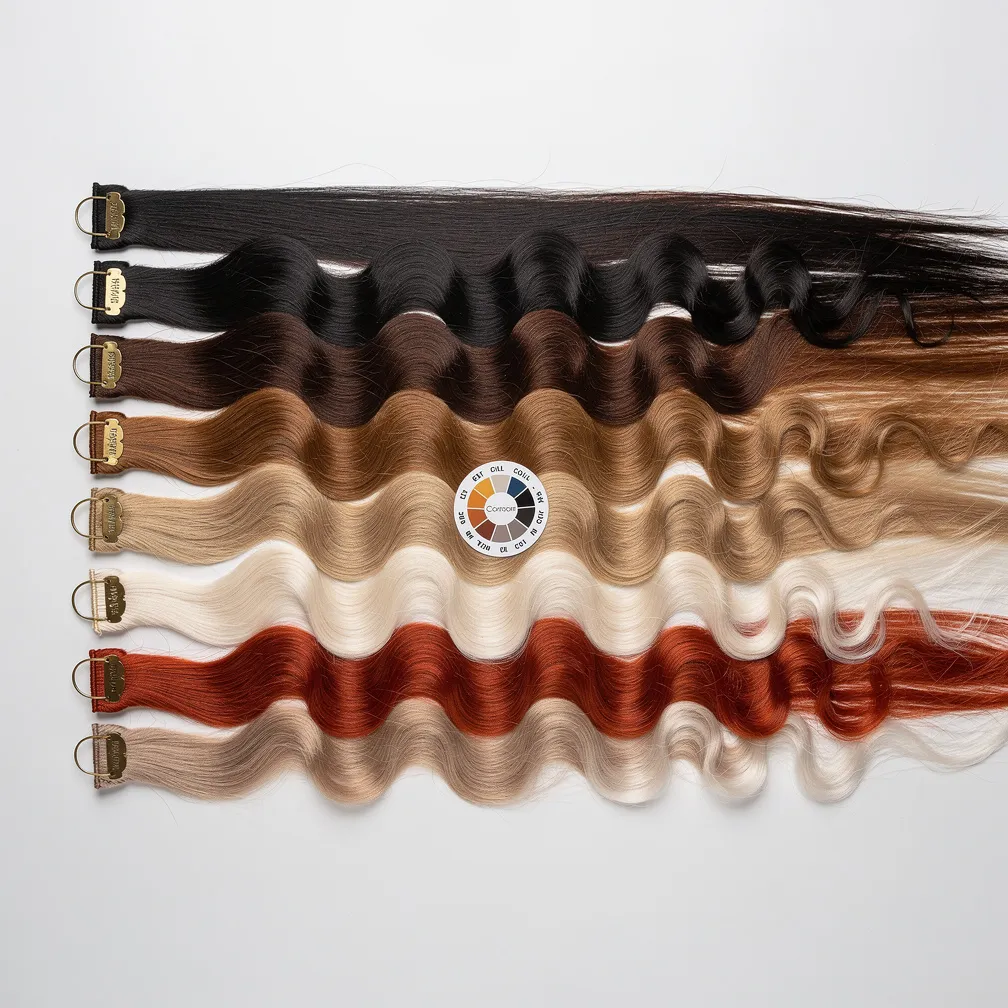
Hair Extension Color Matching Guide for Wholesale Buyers [2026]
Hair extension color matching for wholesale buyers is managed through standardized international color number systems, with extensions available in numbered shades from #1 (jet black) through #613 (platinum blonde) plus a wide range of fashion colors, highlights, and blended tones. Manufacturers stock these colors in finished extensions or can produce custom colors to a buyer’s specification. When ordering wholesale, you select colors from the manufacturer’s physical color ring or digital catalog, specify quantities per shade, and the order is packed to your color breakdown. Custom color development for private label brands — including bespoke balayage blends and proprietary shade names — requires a sample approval process and a minimum order quantity per color, typically starting at 50 pieces. For more details, see our guide on Hair Extension Return Policies. For more details, see our guide on Hair Extension Textures Explained.
This guide explains the color systems used in the professional extension industry, how to select the right color assortment for your market, how balayage and ombre options are produced and priced, and how to manage color consistency across repeat wholesale orders.
Understanding the International Hair Color Number System
The professional hair color numbering system used for extensions mirrors the system used by professional hair color brands. Numbers range from 1 to 10 on the base scale, with color names and descriptors added for clarity. The system is not universal across every manufacturer, but the numbered scale is broadly consistent across Indian, European, and North American professional markets.
Base Color Number Scale
The core numbering works as follows: lower numbers indicate darker shades and higher numbers indicate lighter shades. #1 is pure jet black. #10 is a light blonde. The commonly used extended range includes #613 for platinum blonde (a legacy code that has become universally recognized in the extension industry) and #60 for silver blonde.
In practice, extension catalogs commonly list: #1 (jet black), #1B (natural off-black, the most popular shade globally), #2 (darkest brown), #4 (medium/chocolate brown), #6 (light brown/chestnut), #8 (medium golden brown), #10 (light golden brown), #12 (medium golden blonde), #16 (light golden blonde), #22 (light ash blonde), #27 (honey blonde/strawberry blonde), #30 (medium auburn), #33 (rich auburn), #60 (silver blonde), and #613 (platinum blonde).
Manufacturers may add letter suffixes to indicate undertones: “A” for ash, “G” for gold, “R” for red. So #6A is an ash light brown, while #6G is a golden light brown. When ordering wholesale, always specify both the number and any tone suffix to avoid receiving the wrong shade.
Color Reference Table for Wholesale Ordering
| Color Code | Description | Top Market Demand | Notes |
|---|---|---|---|
| #1 | Jet black | Asia, Africa, Middle East | High demand for wigs, weft |
| #1B | Natural off-black | Global — #1 bestseller | Most natural-looking dark shade |
| #2 | Darkest brown | USA, UK, Africa, India | Most versatile dark shade |
| #4 | Chocolate/medium brown | USA, Europe, Australia | Top seller in Western markets |
| #6 | Light/chestnut brown | Europe, North America | Popular for natural blends |
| #8 | Medium golden brown | USA, Australia, UK | Common balayage base |
| #27 | Honey/strawberry blonde | USA, UK, Australia | Top seller in blonde ranges |
| #60 | Silver/pearl blonde | Europe, Scandinavia | Premium pricing, niche demand |
| #613 | Platinum blonde | USA, Scandinavia, Australia | Requires bleached/virgin hair base |
| P4/27 | Piano mix brown/blonde | USA, UK | Two-tone highlight effect |
| T1B/27 | Ombre off-black to honey blonde | USA, Africa, Caribbean | Top ombre blend globally |
| T4/613 | Ombre brown to platinum | USA, Europe | Dramatic fade effect |
| Balayage #4/#27 | Painted highlights brown/blonde | Europe, North America | Premium product, handcrafted |
Request Our Full Color Ring and Wholesale Catalog →
Balayage and Ombre Extensions — Production and Pricing
Balayage and ombre extensions have grown from a trend to a staple in professional extension menus across Europe and North America. Understanding how they are produced helps you evaluate quality and pricing.
Ombre Extensions
Ombre hair extensions have a graduated color transition from a darker root to a lighter end. In the wholesale manufacturing process, this is achieved by selectively dipping the lower portion of already-sorted hair bundles into a lightening or coloring bath, then toning the lightened section. The result is a clean, blended gradient. Common ombre transitions include T1B/27 (off-black to honey blonde), T1B/30 (off-black to medium auburn), T2/613 (darkest brown to platinum), and T4/27 (chocolate brown to honey blonde).
Ombre extensions are priced 10–20% above equivalent solid-color extensions due to the additional processing step. Quality ombre work has a smooth, natural-looking gradient rather than an abrupt color line. When evaluating samples, look for at least 3–4 inches of graduated transition, not a sharp divide.
Balayage Extensions
True balayage extensions are produced by hand-painting color onto selected sections of a hair bundle using the same freehand painting technique used in balayage hair coloring. This creates a multi-dimensional, lived-in look with irregular highlights throughout the extension rather than a uniform ombre gradient. Balayage extensions are more labor-intensive to produce than ombre and command a 15–25% price premium.
The most popular wholesale balayage combinations are #4 base with #27 and #613 painted highlights (the classic caramel balayage), #2 base with #8 and #27 painted highlights (natural dark balayage), and #6 base with #60 highlights (cool-toned ash balayage). Buyers in European markets, particularly France and Germany, have the strongest demand for premium balayage extensions.
Piano Mix (Highlight Mix) Extensions
A step below full balayage, piano mix extensions combine two distinct shades woven together throughout the bundle — typically a dark base color and a lighter highlight shade. These are faster to produce than balayage (no hand-painting required) and are priced 8–12% above solid-color equivalents. Popular combinations include P1B/30 (off-black with auburn highlights) and P4/27 (chocolate brown with honey blonde).
Color Processing Methods and Quality Implications
All colored hair extensions have been chemically processed. The quality of that processing determines how well the color holds, how much the hair structure is compromised, and how the extensions will perform for your clients.
Virgin Hair: No Color Processing
Raw virgin Indian temple hair arrives at manufacturers in its natural shade — ranging from jet black to dark brown depending on donor. If you are sourcing for a market that primarily needs #1B and #2 shades, virgin extensions require no color processing and represent the highest quality option.
Single-Process Color
For shades lighter than the natural hair color, extensions undergo a lightening (bleaching) process followed by a tone application. Quality single-process color on virgin Indian hair produces even, vibrant results because the intact cuticle accepts color uniformly. The key quality indicator is whether the hair was virgin before coloring — virgin Indian hair that has been lightened retains far better structural integrity than non-Remy hair subjected to the same process.
Double-Process Color
Achieving very light blonde shades (#613, #60) on naturally dark Indian hair requires double-process bleaching — two rounds of lightening with a conditioning period between. This is the most technically demanding color process and requires highly skilled processing to avoid hair damage. Quality double-process #613 extensions on virgin Indian hair should feel soft and manageable despite the lightening. Brittle, overly porous hair after double-processing indicates poor execution.
Custom Color Development for Private Label Brands
Brand builders creating private label hair extension lines often want proprietary color names and unique shade formulations that differentiate their product from generic wholesale offerings. This is fully achievable with the right manufacturing partner.
The custom color development process typically follows these steps: the buyer provides a color reference (physical sample, Pantone equivalent, or detailed description), the manufacturer’s color team formulates a match and applies it to a test strand, a physical sample is sent to the buyer for approval, the buyer provides feedback or signs off on the color, and production begins. This process typically takes 2–3 weeks for the color development and approval cycle.
Custom color MOQs typically start at 50 pieces per color per extension type. If you are launching a brand with 10 color options across 3 extension types, expect a total sample and development order in the 150-piece range for color approval across the full line. Production runs after approval can then be ordered at your target volumes.
Start Your Custom Color Development Conversation →
Maintaining Color Consistency Across Repeat Orders
For wholesale buyers placing repeat orders, color consistency is critical. A salon that sells a particular shade to clients expects that shade to match when reordering. Good manufacturers maintain color formulation records and batch documentation to facilitate consistent replication. When placing your first order, ask the manufacturer to retain your color approval samples and record the specific formulation details — dye brand, percentage, processing time — for future reference.
Some variation between batches is inherent in human hair products due to natural variation in the hair base material. Virgin Indian hair from different temple collection periods may have slightly different natural undertones, which affects how dye results appear. Good manufacturers flag this to buyers and offer a color correction process for materials that fall outside acceptable variation.
For private label brands, maintaining a physical color standard book with approved production samples from each batch is best practice. This gives you an objective reference point for quality checks on incoming shipments and a clear basis for raising concerns with your supplier if colors drift.
For more information on selecting and vetting suppliers, see our Complete Guide to Sourcing Hair Extensions from India.
Frequently Asked Questions
What color system do wholesale hair extension manufacturers use?
Most manufacturers use the international hair color number system — #1 (jet black) through #613 (platinum blonde) — with additional codes for ombre (T prefix), piano mix (P prefix), and fashion colors. Always confirm the specific color coding system with your manufacturer as there are minor variations between brands.
Can I get custom color hair extensions made to my specifications?
Yes. Most established Indian manufacturers offer custom color development. You provide a color reference, the manufacturer develops and sends a sample for approval, and once approved, production proceeds. Typical MOQ for custom colors is 50 pieces per shade. Lead time for color development and approval is 2–3 weeks.
What is the most popular hair extension color globally?
#1B (natural off-black) is consistently the top-selling hair extension color worldwide. It is the most natural-looking dark shade, suitable for a wide range of skin tones and markets. #2 (darkest brown) and #4 (chocolate brown) are the next most popular globally.
Are balayage extensions more expensive than solid-color extensions?
Yes. Balayage extensions command a 15–25% premium over solid-color equivalents due to the hand-painting process involved in production. Ombre extensions are priced 10–20% above solid color. The premium is justified by the finished appearance and the higher service pricing they support in salon menus.
How do I ensure consistent color across repeat wholesale orders?
Ask your manufacturer to record the specific color formulation from your approved samples. Retain physical approval samples as a standard reference. Request batch documentation with each order. Some variation between batches is normal due to natural hair variation, but a reputable manufacturer will stay within an agreed tolerance.
Can Indian virgin hair be colored to any shade?
Virgin Indian hair can be reliably colored to shades up to #8/#10 in a single process. Achieving very light blonde shades (#613) requires double-process bleaching. Very light colors require more processing and careful execution. Dark shades (#1 through #6) present no technical challenges on natural Indian hair.
Ready to Discuss Color Options for Your Wholesale Order?
Whether you need to stock standard salon colors, develop custom shades for your private label brand, or source a full balayage and ombre assortment, our team can walk you through the options and provide a color ring and sample set. Message us on WhatsApp with your target market and preferred color range to get started.
Request Color Ring and Wholesale Pricing →
Email us at info@hairextensionsbynature.com
Hair Extensions By Nature — Manufacturer and Exporter of Remy Indian Human Hair Extensions. Factory: Booth No 71, Sector 16 Huda Market, Faridabad, Haryana, India – 121002. Phone/WhatsApp: +91 9289358222.
![Indian Hair vs Chinese Hair — Wholesale Quality Comparison [2026]](https://hairextensionsbynature.com/wp-content/uploads/2026/04/33-indian-hair-vs-chinese-hair-wholesale-hero-768x768.webp)
![Wholesale Lace Closures and Frontals from India — Wig Maker Guide [2026]](https://hairextensionsbynature.com/wp-content/uploads/2026/04/31-wholesale-lace-closures-frontals-india-hero-768x768.webp)
![Hair Extension Textures Explained — Wholesale Buyer Reference Guide [2026]](https://hairextensionsbynature.com/wp-content/uploads/2026/04/43-hair-extension-texture-guide-wholesale-hero-768x768.webp)
![Wholesale Micro Ring Loop Extensions India — Salon Product Guide [2026]](https://hairextensionsbynature.com/wp-content/uploads/2026/04/21-wholesale-micro-ring-loop-extensions-india-hero-768x768.webp)
![Wholesale Tape-In Hair Extensions from India — Salon Supplier Guide [2026]](https://hairextensionsbynature.com/wp-content/uploads/2026/03/17-wholesale-tape-in-extensions-india-hero-768x768.webp)
One Comment