Hair Extension Influencer Marketing
Hair extension influencer marketing in 2026 is most effective when it focuses on micro-influencers (10,000–100,000 followers) in the beauty and hair niche, leverages transformation video content on TikTok and Instagram Reels as the primary awareness driver, and uses affiliate commission tracking to measure and optimize ROI — outperforming both macro-influencer campaigns and traditional paid advertising in cost-per-acquisition for most hair extension brands at the growth stage. The shift from mega-influencer campaigns to structured micro-influencer programs represents the most important strategic evolution in beauty brand marketing of the past three years. Brands that still allocate the majority of their influencer budget to single high-cost celebrity partnerships are consistently outperformed by brands with portfolios of 20–50 engaged micro-influencer relationships generating daily content at a fraction of the cost. This guide covers how to build a micro-influencer program, what to pay, what content to brief, how to track results, and how to scale your program as your brand grows.
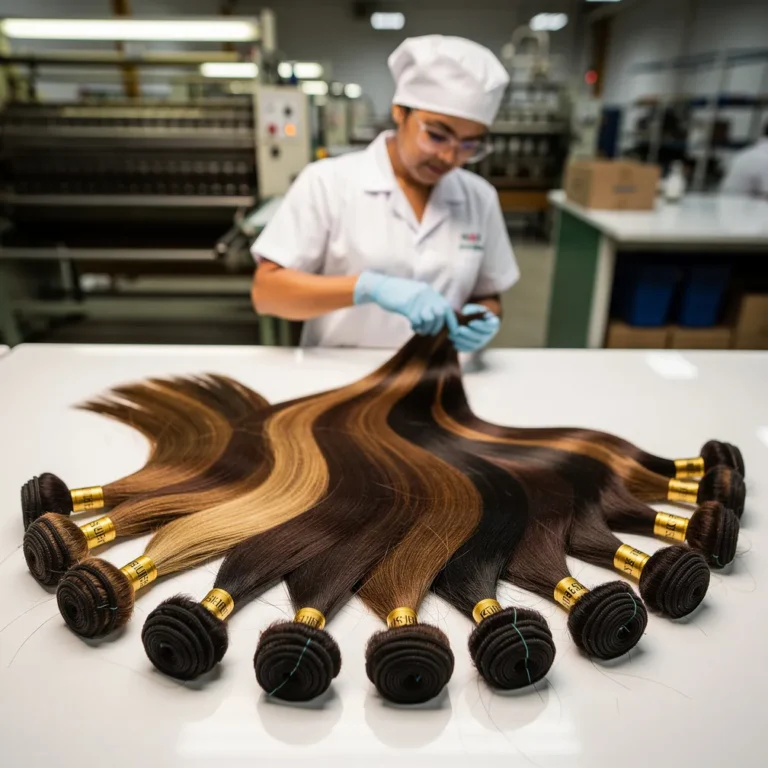
Hair Extensions By Nature supplies wholesale human hair extensions from our factory in Faridabad, Haryana, India. Many of our clients are hair extension brands building influencer programs, and we see directly how different approaches to influencer marketing affect brand growth and wholesale ordering patterns. This guide reflects that real-world perspective.
Influencer Tiers — Understanding the Landscape
| Tier | Follower Range | Typical Engagement Rate | Compensation Model | Best For | Avg. Cost per Post |
|---|---|---|---|---|---|
| Nano | 1,000–10,000 | 4–8% | Gifted product only | Building content volume; local community reach | $0 (product cost only) |
| Micro | 10,000–100,000 | 2–5% | Gifted + small fee OR affiliate commission only | Targeted niche reach; high engagement; best ROI tier | $150–$1,500 |
| Mid-tier | 100,000–500,000 | 1.5–3% | Paid partnership + affiliate | Broader reach; brand awareness campaigns | $1,500–$5,000 |
| Macro | 500,000–1 million | 1–2% | Paid partnership | Mass awareness; credibility signal | $5,000–$15,000 |
| Mega / Celebrity | 1 million+ | 0.5–1.5% | Paid partnership + exclusivity | Brand building at scale; not recommended for most growth-stage brands | $15,000–$100,000+ |
Why Micro-Influencers Outperform Macro in Hair Extension Marketing
The micro-influencer advantage in hair extension marketing comes from a combination of engagement rate, audience trust, and content quality dynamics. Micro-influencers — particularly those in the 15,000–80,000 follower range — tend to have highly engaged audiences of followers who actively seek hair and beauty content. Their recommendations carry a peer-recommendation quality that macro-influencers often lose as their follower counts grow and their content becomes perceived as primarily commercial. A micro-influencer posting a genuine transformation result using your hair extensions generates more real purchase intent among her 40,000 followers than a macro-influencer’s polished sponsored post does among 500,000 followers who have seen her promote dozens of brands.
The other critical advantage is scalability. A single macro-influencer partnership costing $8,000 is a high-risk, low-frequency strategy — if the content underperforms, a significant budget allocation has produced minimal return. Twenty micro-influencer partnerships at $400 each (product + small fee) produce twenty pieces of content, twenty audiences reached, and twenty data points on what content styles and messaging resonate with your target customer. The portfolio approach is inherently more risk-tolerant and generates actionable learning at much lower cost.
Building your hair extension brand with influencer marketing? Contact us on WhatsApp for wholesale pricing that supports your influencer product gifting budget.
Finding the Right Hair Influencers
Finding appropriate hair influencers for a partnership program requires more precision than simply searching for accounts with large follower counts. The following search and qualification criteria produce the most effective partnerships for hair extension brands.
Content focus: The influencer should post primarily beauty and hair content — a general lifestyle influencer who occasionally posts about hair is not a hair influencer. Look for accounts where 60%+ of posts are hair or beauty related. Their audience has followed them specifically for hair content and is therefore qualified for your product.
Hair type alignment: Consider which hair types and textures your products work best with, and find influencers whose own hair type matches your product’s target customer. A straight-hair-focused influencer is not the right partner for an Afro-texture extension line, and vice versa.
Content quality: Review the visual quality, styling sensibility, and production quality of their content. Even if an influencer is in the micro tier, their content should look professional and appealing — poor quality content creates poor quality associations with your brand regardless of the influencer’s engagement rate.
Audience demographics: Request demographic data from potential influencer partners before committing to paid partnerships. You want to confirm that their audience is predominantly in your target markets (USA, UK, Australia, etc.) and in your target age demographic (typically 20–45 for extension clients).
Practical search approaches include: Instagram and TikTok hashtag search (#hairextensions, #hairtransformation, #beforeandafter, #hairstylist + location); influencer discovery platforms including Upfluence, Grin, AspireIQ, and Creator.co; and manual review of the comment sections on high-performing hair extension brand accounts to identify the engaged community members who are potential micro-influencer partners.
Content Types That Convert for Hair Extensions
Not all influencer content performs equally for hair extension brands. The following content types are ranked by their typical conversion impact, based on observed performance across hair extension brand campaigns.
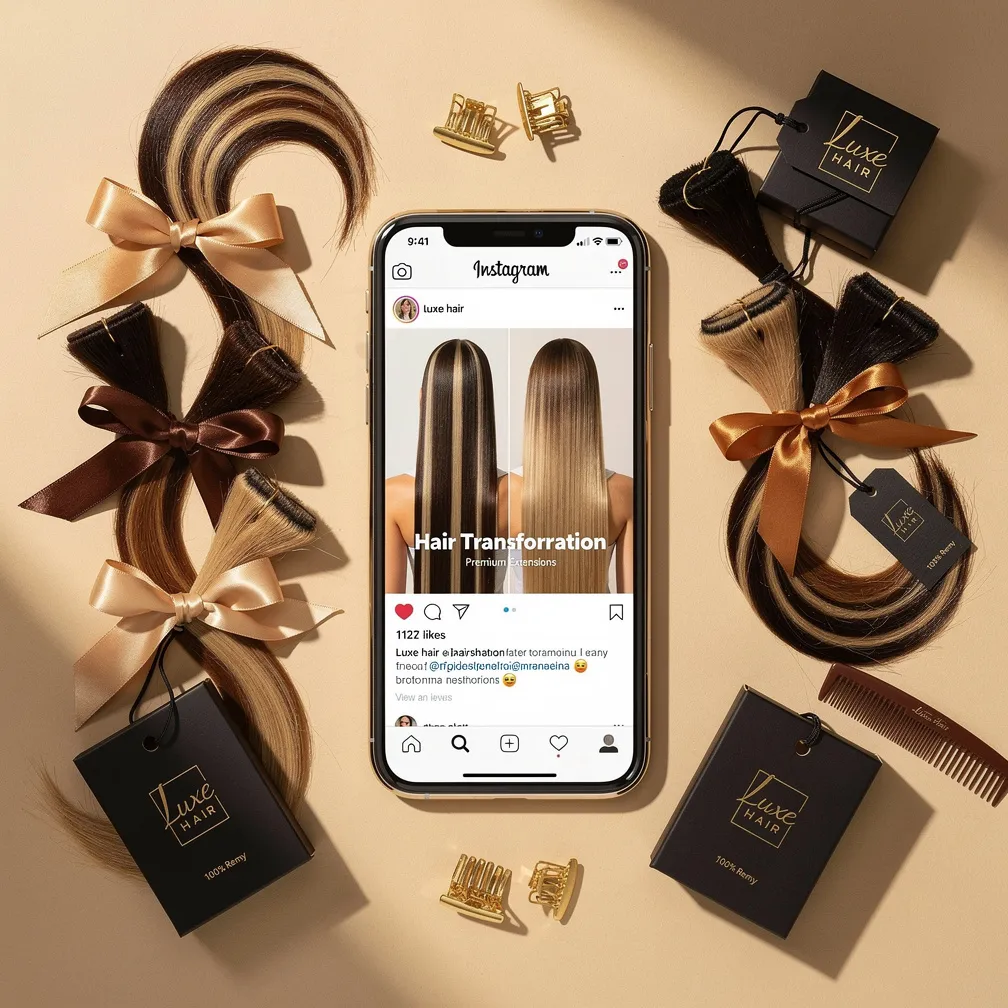
1. Before-and-after transformation videos: The highest-converting content type for hair extensions, without close competition. A video showing natural hair before application, the application or styling process, and the dramatic final result after extensions generates significantly more purchase intent than any other format. Keep these under 60 seconds for TikTok and Reels; longer versions (5–15 minutes) perform well on YouTube for educational content.
2. Application tutorial videos: Step-by-step application tutorials (particularly for clip-in and tape-in extensions, which can be self-applied) educate the viewer, demonstrate the product quality, and simultaneously position the creator as an authority. These also generate disproportionate long-term ROI on YouTube due to searchability — a well-produced tutorial video can generate views and referred sales for 2–5 years after posting.
3. Honest review videos: Content where the influencer genuinely evaluates the product — discussing quality, longevity, styling versatility, and value — is more trusted by audiences than promotional content. Some of the most effective hair extension influencer content is candid reviews that acknowledge minor limitations while highlighting genuine strengths.
4. Styling inspiration content: Static images or short styling inspiration videos showing creative styling with the extensions, without explicit promotion, build brand aesthetic associations and generate organic saves and shares. These do not drive immediate purchases but contribute to brand awareness and aspiration.
5. Lifestyle integration content: Showing the influencer wearing extensions in everyday or aspirational lifestyle contexts (work, travel, events) normalizes extension use and reaches audiences who have not yet considered extensions as a personal option.
Want to see samples of our hair before building your influencer content? Message us on WhatsApp to arrange sample pricing before your influencer campaign launch.
Compensation Models — Structuring Influencer Agreements
The most effective compensation models for hair extension brands at different stages are as follows.
Product gifting only: Appropriate for nano and small micro-influencers with under 20,000 followers and no established paid partnership track record. The influencer receives free product in exchange for honest content. Make clear in your outreach whether you expect posting to be guaranteed or if you are offering product in exchange for a best-effort post if they love the product. Product gifting programs require volume — gift to 50–100 influencers to reliably generate 30–60 pieces of content.
Product + flat fee: For micro-influencers with 20,000–100,000 followers and a track record of professional collaborations. A flat fee of $150–$800 per post (depending on follower count, engagement rate, and content type) plus free product is standard. Lock down usage rights, posting timeframe, and content requirements clearly in a written brief or simple partnership agreement.
Affiliate commission: Provide the influencer with a unique discount code or affiliate link (10–20% commission on referred sales). This aligns the influencer’s incentive with actual sales rather than just views, and allows precise tracking of ROI per influencer. Many micro-influencers prefer this structure because it allows them to earn on an ongoing basis from content they have already created. Some brands use affiliate-only compensation with no upfront fee; others combine a reduced flat fee with affiliate tracking.
Long-term ambassador relationships: For the best-performing micro-influencers identified through early campaign data, convert from one-off collaboration to a quarterly or annual ambassador arrangement with a monthly retainer, exclusive discount for their audience, and regular product gifting. Ambassador relationships generate more authentic, consistent content than one-off campaigns and build genuine brand association.
ROI Measurement for Hair Extension Influencer Programs
Measuring influencer marketing ROI requires setting clear metrics before campaigns launch and using the right tracking tools. The following measurement framework is appropriate for most hair extension brand influencer programs.
Primary conversion tracking: Use unique discount codes per influencer (for example, SARAHSHAIR15 for 15% off) or unique affiliate UTM-tracked links to attribute direct sales to each influencer. Track: number of orders, total revenue, and average order value attributed to each influencer code or link. This gives you a direct cost-per-acquisition figure for each relationship.
Content performance metrics: Track views, reach, saves, and shares (not just likes) for each piece of influencer content. Saves are particularly valuable for conversion — a viewer who saves a post is significantly more likely to return and purchase than one who merely likes. Track which content types (transformation videos vs. tutorials vs. lifestyle) generate the most saves and conversions.
Audience growth attribution: Track your brand’s own follower growth and profile visits during and after influencer campaigns. While not directly attributable to revenue, audience growth compounds over time and contributes to long-term brand value.
Target benchmarks: For a well-managed micro-influencer program with affiliate tracking, target a return on investment of 3–8x marketing spend (product cost + fees) within 90 days. Programs with YouTube tutorial content can have significantly longer ROI horizons — 12–24 months of continued returns from a single well-placed tutorial is achievable.
Influencer Marketing on Different Platforms in 2026
Platform characteristics in 2026 continue to shape which types of influencer content work best for hair extension brands. TikTok remains the dominant platform for discovery and viral reach, with short transformation and tutorial videos regularly achieving organic reach well beyond the creator’s follower base. Instagram is the primary platform for branded aesthetic content, ambassador relationships, and shopping integration via Instagram Shopping tags. YouTube remains essential for long-form tutorial content that drives high-intent search traffic. Pinterest is an underutilized platform for hair extension brands — high-quality styling inspiration pins drive consistent, long-tail referred traffic to ecommerce stores, and Pinterest content has a significantly longer lifespan than any other platform.
Frequently Asked Questions
How much should I pay hair extension influencers?
Nano: gifted product only. Micro (10K–100K): product + $150–$1,500 per post, or 10–20% affiliate commission. Mid-tier (100K–500K): $1,500–$5,000. Always use affiliate tracking to link compensation to actual sales performance.
What content type converts best for hair extensions?
Before-and-after transformation videos. Application tutorials on YouTube for long-term ROI. Honest reviews for considered purchase decisions.
Should I use micro or macro influencers for my hair brand?
Micro-influencers for most brands — better engagement, lower cost, more actionable data, and better cost-per-acquisition than single large macro partnerships.
Stock Your Influencer Campaign with Wholesale Indian Hair
Hair Extensions By Nature supplies wholesale human hair extensions at factory-direct prices, making your influencer gifting budget go further without compromising product quality.
For the full hair extension brand marketing strategy, read our guide to marketing hair extension brands.
Get wholesale pricing for influencer gifting programs: WhatsApp or email info@hairextensionsbynature.com.
Hair Extensions By Nature
Booth No 71, Sector 16 Huda Market, Faridabad, Haryana, India – 121002
Phone/WhatsApp: +91 9289358222
Start Your Hair Extensions Dropship Business
Zero inventory. Premium Indian Remy hair. Ship worldwide under your brand. MOQ as low as 5 pieces.