Hair Extension Supplier Due Diligence
Hair Extension Supplier Due Diligence — The 2026 5-Step Framework
Hair extension supplier due diligence follows a five-step sequence: legal verification, financial health check, production capacity validation, reference verification, and commercial terms testing. The full framework takes 2 to 3 weeks from first supplier contact to signed first purchase order. Total cost, including third-party verification fees where used, is USD 500 to 1,500 per supplier. This guide walks through each step with concrete tools, what to check, and how to score the results. It is the framework enterprise salon chains, distributor networks, and private-label brands actually run against prospective Indian manufacturers before committing meaningful annual volume.
Hair Extensions By Nature is a Faridabad-based manufacturer that passes every step of this framework, and we encourage prospective customers to run it against us. The scrutiny benefits both sides — a supplier that can clear the diligence in the first place is a supplier worth building a long relationship with.
Running formal due diligence? Request our due-diligence pack: IEC, GSTIN, MCA filings, factory video, 3 references, financial summary. Response in 4 business hours.
Step 1 — Legal and Regulatory Verification
The goal of Step 1 is to confirm the supplier is a legally registered entity authorized to export from India. Three verifications:
- IEC (Import Export Code) via dgft.gov.in → IEC Holder Search. Confirms active export authorization. Check status is “Active” and entity name matches the supplier’s domain and commercial invoice.
- GSTIN (Goods and Services Tax Identification Number) via gst.gov.in → Search Taxpayer. Confirms tax compliance. Status should be “Active” with GSTR filings current.
- Company registration via mca.gov.in → View Company/LLP Master Data. Confirms legal entity type (Private Limited, LLP, OPC), incorporation date, and registered directors.
Total time: 15 to 20 minutes. Total cost: free.
Step 2 — Financial Health Check
Step 2 assesses the supplier’s financial capacity to deliver on the commitment you are planning. For small first orders (under USD 5,000), a light-touch check is sufficient. For annual commitments above USD 50,000, a formal credit report is worth the cost.
- MCA financial filings (free): Indian Pvt Ltd companies file annual financial statements with MCA. View them via mca.gov.in → View Public Documents. Look for revenue trend, profitability, and debt structure.
- D&B business credit report (USD 80 to 200): Commercial-grade credit report including payment behavior, trade references, legal filings, and risk score.
- CRISIL / Experian India reports (USD 100 to 250): Indian-specific credit bureau reports with detailed payment history.
- Bank references (free): Ask the supplier for a bank reference letter confirming the relationship and no adverse credit events.
Step 3 — Production Capacity Validation
Step 3 confirms the supplier can actually produce what you will order. This is where traders masquerading as manufacturers get caught out, because they cannot demonstrate production capacity under scrutiny.
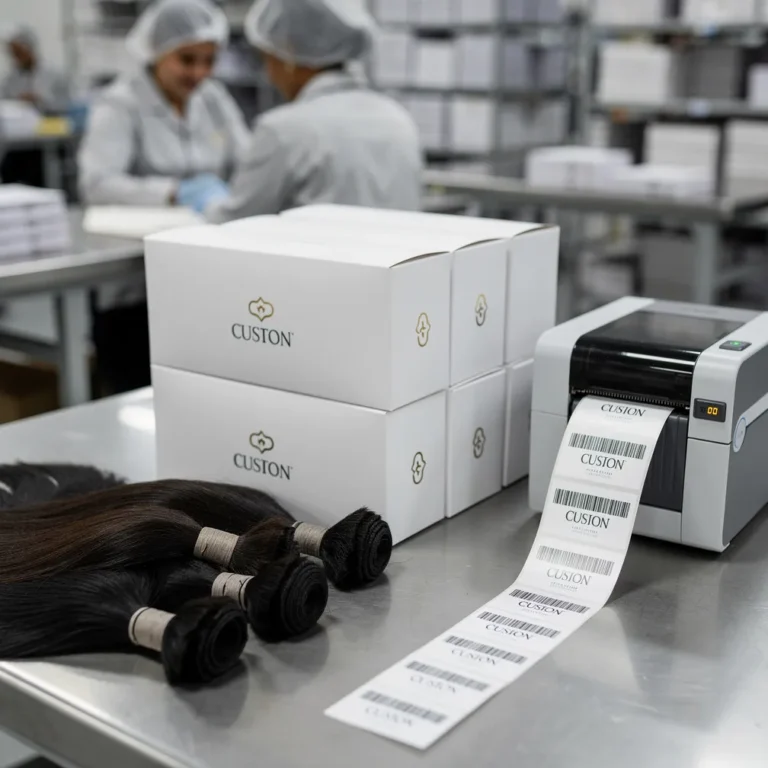
- Live factory video walkthrough: 15 to 30 minutes showing raw material, production floor, QC, packing.
- Capacity math: monthly output claim should be consistent with staff count and machinery. Rule of thumb: 1 wefting machine produces 15 to 30 kg of finished weft per month per operator; 1 sorting worker can process 50 to 80 kg of raw hair per month.
- Current production evidence: photos of work-in-progress (dated), recent batch records, current PO list.
- Raw material pipeline: how much raw hair is on-site, inbound in the next 30 days, and where it comes from.
Step 4 — Reference Verification
Step 4 is a peer-validation step. A supplier who passes all technical checks but has no verifiable reference clients may still be running a legitimate but unscalable one-person operation, which creates delivery risk at volume. Ideal references are:
- Existing customers with 12+ months of supply history.
- Cover multiple product categories if the supplier claims multi-category manufacturing.
- Based in different countries (a single-market reference list is less informative).
- Willing to take a 15 to 20 minute phone call.
Ask each reference: how long have you been buying, typical order size, defect-handling experience, on-time delivery rate, would you repeat-order today. Listen for specifics; vague praise is less informative than detailed but moderate feedback.
Step 5 — Commercial Terms Testing
Step 5 is the paid-sample-order test that validates everything in steps 1 through 4 under real commercial conditions. A sample kit order of USD 150 to 400 tests: responsiveness, documentation quality, shipping reliability, product-as-described, and after-sale behavior when questions arise post-shipment.
Score the sample experience on:
- Quote response time (within 2 business days = good).
- Proforma invoice completeness (all fields, valid payment instructions).
- Production lead time vs stated (within 2 business days of promise).
- Shipment documentation (AWB, commercial invoice, packing list all accurate).
- Product match to specification (weight, length, color, grade).
- Post-sale responsiveness (answer to a test question about re-order or MOQ within 24 hours).
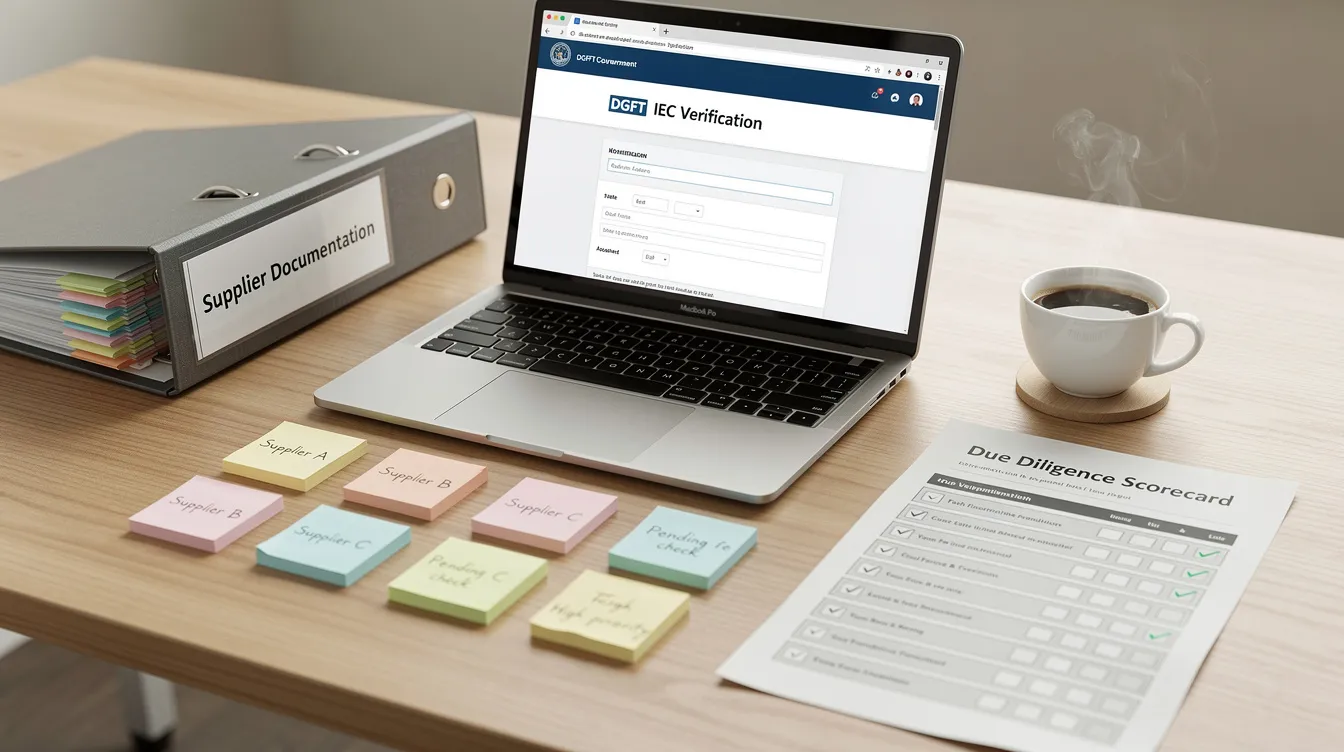
Due Diligence Scorecard
| Step | Maximum Score | Minimum Acceptable |
|---|---|---|
| 1. Legal / Regulatory | 15 | 14 (all three verifications pass) |
| 2. Financial Health | 20 | 14 (70 percent) |
| 3. Production Capacity | 25 | 18 (72 percent) |
| 4. References | 20 | 14 (70 percent) |
| 5. Commercial Terms | 20 | 15 (75 percent) |
| Total | 100 | 75 (minimum to proceed) |
Why Source From Hair Extensions By Nature?
Hair Extensions By Nature’s internal due-diligence score on this framework, based on customer-run evaluations we have received back, averages 88 out of 100. Our weakest category is typically Step 2 (Financial Health) where formal credit reports are not yet routine for our size of operation, though our MCA filings and bank references are in good order. Strongest categories are Step 1 (Legal — clean IEC, GSTIN, MCA) and Step 5 (Commercial Terms — sample orders typically score 19 of 20).
We share our full due-diligence pack on first request: IEC, GSTIN, MCA Master Data extract, 3 reference clients, factory video, 2025 annual summary, and a standard proforma invoice template. Most prospective customers complete the full framework in 2 to 3 weeks and move to a first PO.
Frequently Asked Questions
How long does formal supplier due diligence take on an Indian manufacturer?
2 to 3 weeks from start to signed first order. Step 1 takes 20 minutes; Step 2 takes 3 to 5 business days (credit report turnaround); Step 3 takes 1 week (scheduling and video); Step 4 takes 1 week (reference calls); Step 5 takes 2 weeks (sample production and shipping).
Do I need a third-party credit report on every Indian supplier?
No. For first orders under USD 10,000, MCA filings and bank references are typically sufficient. For annual commitments above USD 50,000 or multi-year exclusive distributor agreements, a commercial credit report is worth USD 80 to 200.
What does a minimum-acceptable supplier due-diligence score look like?
75 out of 100 on the five-step framework. Below that threshold, proceed only with structural mitigations (smaller first order, LC payment, shorter commitment). Above 85 is a strong candidate for long-term partnership.
Can I skip due diligence if a supplier is referred by an existing client?
Shorten, do not skip. Referrals accelerate Step 4 (references) and reduce risk on Steps 1-3, but Step 5 (commercial terms testing on a sample order) should still run regardless of how strong the referral is.
What if a supplier scores well on Steps 1-4 but poorly on Step 5?
Step 5 is the most predictive of ongoing relationship quality. A supplier who passes legal/financial/capacity/reference checks but fails commercial-terms testing usually has scaling or service-quality problems that will surface over time. Treat a Step 5 failure as more serious than a Step 2 shortfall.
Should I do due diligence on traders the same as manufacturers?
Yes, with one modification: in Step 3, the focus shifts from “own production capacity” to “upstream manufacturer quality.” A legitimate trader should disclose their manufacturers and allow you to audit the upstream chain.
How often should I re-run due diligence on an existing supplier?
Light-touch re-check annually: MCA filings, IEC status, GSTIN status, any adverse-event searches. Full re-diligence every 3 years or when a material change happens (ownership change, new factory, significant price change).
Ready to Start the Due Diligence?
Our due-diligence pack covers all five steps’ documentation. Request it, run your checks, and score us against the framework. We commit to a 4-business-hour response on the pack.
Request the Due Diligence Pack →
Prefer email? info@hairextensionsbynature.com or quote request form.
Hair Extensions By Nature — Manufacturer and Exporter of Premium Indian Human Hair Extensions. Factory: Booth No 71, Sector 16 Huda Market, Faridabad, Haryana, India — 121002. Serving salons, distributors, and brands in 40+ countries.
Start Your Hair Extensions Dropship Business
Zero inventory. Premium Indian Remy hair. Ship worldwide under your brand. MOQ as low as 5 pieces.