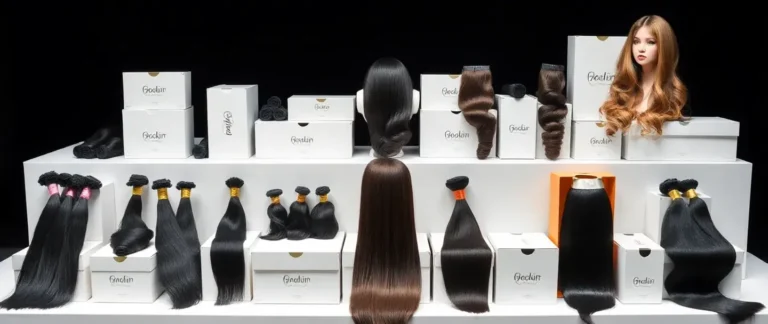
How to Become a Hair Vendor
How to Become a Wholesale Hair Vendor — The 2026 Launch Roadmap
Becoming a wholesale hair vendor is the natural scaling step for a salon owner who already sells hair extensions consistently, or for an entrepreneur with access to a salon customer base. You register a business entity, secure a direct manufacturer partnership (typically in India), build initial inventory of 20 to 50 kilograms across 6 to 10 SKUs with USD 3,000 to 8,000 of working capital, set pricing at 30 to 50 percent margin over cost, and recruit your first 5 to 10 salon or reseller customers through direct outreach. The full transition from “salon owner who sells hair” to “functioning wholesale vendor with recurring B2B revenue” takes 3 to 6 months for most operators. This guide maps each phase.
Hair Extensions By Nature supports new wholesale vendors across more than 40 countries — we see the typical obstacles, and we see what the operators who succeed do differently. What follows is a practical roadmap written for the operator who wants to build a real business, not just a supplier-purchase hobby.
Launching a wholesale operation? Request our New Vendor Launch Kit: wholesale-tier pricing, flexible MOQ from 1 kg, dropship-hybrid options for early-stage buyers, and a 12-month scaling plan.
Why Salon Owners Become Wholesale Vendors
The economic case is straightforward. A salon buying hair extensions from a domestic wholesaler in the US, UK, or Europe pays 1.8 to 2.5 times what the same product costs ex-factory in India. If your salon already sells 50 to 100 bundles a month, you are already operating at a scale that justifies direct-from-manufacturer sourcing. The margin you currently lose to the domestic wholesaler is the margin that funds your own wholesale operation when you flip the model.
A second driver: your existing relationships. Five years of running a salon in a city means you know other salon owners. Those relationships convert to B2B customers faster than any cold-outreach campaign. A functional wholesale operation typically covers 10 to 30 regional salons in year 1 from an existing operator’s network.
Phase 1 — Business Setup (Month 1)
Legal structure first. Operating hair wholesale out of your existing salon entity is possible but creates tax and liability complications. Most wholesale vendors set up a separate entity:
- USA: LLC in your state of operation. USD 100 to 500 registration, 1 to 2 weeks processing.
- UK: Limited company through Companies House. GBP 50 to 200, same-day online registration.
- Nigeria: Business Name or Limited through CAC. NGN 10,000 to 25,000, 2 to 4 weeks processing.
- India: Pvt Ltd through MCA. INR 8,000 to 15,000, 2 to 3 weeks processing.
- UAE: Free-zone or mainland license. AED 12,000 to 30,000 annually depending on zone.
Open a business bank account in the same name. Get a basic accounting setup (QuickBooks, Xero, or local equivalent). Secure a simple one-page wholesale agreement template — you will send this to your customers.
Phase 2 — Manufacturer Partnership (Month 1 to 2)
Use the supplier-sourcing playbook: build a longlist, verify credentials, order parallel samples, pick one primary manufacturer. For a new wholesale vendor, working with a single primary manufacturer for the first 12 months is usually the right call. Relationship depth matters more than sourcing diversity at this stage.
Negotiate for:
- Wholesale-vendor pricing tier: 15 to 25 percent off published wholesale, in exchange for a quarterly volume commitment.
- Flexible MOQ: 1 kg wefts, 50 pieces tape-in, 5 pieces wigs. Anything higher is hard to move as a new vendor.
- Sample allowance: 1 kg free or heavily discounted sample per quarter for salon demonstrations.
- Marketing asset access: product photos, video content, tech-spec sheets.
- Dropship-hybrid option: for SKUs you do not yet stock, the manufacturer ships directly to your salon customer on your behalf.
Phase 3 — Initial Inventory and SKU Selection (Month 2 to 3)
First inventory sizing is where most new vendors over-commit. A common mistake is buying 100 kg of inventory “to be ready” and ending up with 18 months of stuck SKUs. Recommended first inventory for a small operation:
| Category | Initial Volume | SKUs | Indicative Cost (USD) |
|---|---|---|---|
| Machine weft | 10 kg | 18, 22, 26 inch × 1B, #4 | 1,800 – 2,400 |
| Tape-in 40-pc sets | 150 pieces | 20, 24 inch × 1B, #4, #6 | 1,200 – 1,600 |
| Clip-in 7-pc sets | 30 sets | 18, 22 inch × 1B, #4 | 900 – 1,200 |
| Lace-front wig | 5 pieces | 18, 22 inch × 1B | 900 – 1,400 |
| Total first inventory | 30 kg effective | 10 SKUs | 4,800 – 6,600 |
Budget an additional USD 300 to 500 for sample kits, packaging, marketing photography, and basic website or catalog. Total launch cost: USD 5,100 to 7,100.
Phase 4 — Wholesale Pricing Architecture (Month 2 to 3)
Set up a three-tier wholesale price sheet:
- Tier 1 — Salon retail partner (USD 500 to 2,000 / order): cost + 50 percent margin. The salon partner sells to their clients at roughly 2 to 2.5x your price.
- Tier 2 — Bulk salon / small distributor (USD 2,000 to 5,000 / order): cost + 35 percent margin.
- Tier 3 — Regional wholesaler (USD 5,000+ / order): cost + 25 percent margin.
Publish tier thresholds clearly. It signals professionalism and makes negotiation easier — customers self-select into the tier that fits their volume.
Phase 5 — First Customers (Month 3 to 4)
Ten first customers, typically drawn from your network. A realistic breakdown:
- 3 to 5 salons from your direct professional network.
- 2 to 3 salons introduced by your existing customers (referral-led).
- 1 to 2 small online retailers through Instagram or LinkedIn outreach.
- 1 small-volume private-label brand testing your manufacturing access.
First-customer acquisition: offer a sample kit, a one-page trade-account agreement, a 20 percent first-order discount, and a clear re-order system via WhatsApp. Most first customers convert within 2 to 4 weeks of initial outreach.
Phase 6 — Scale and Operational Discipline (Month 6 onwards)
Once 10 customers are placing orders, operational discipline becomes the bottleneck. Add:
- Inventory tracking spreadsheet or lightweight ERP (Sortly, Zoho Inventory).
- Standardized invoicing through QuickBooks, Xero, or Wave.
- Weekly re-order window with your Indian manufacturer (predictable production planning).
- Monthly P&L review (know your actual margin, not just your listed margin).
- Customer retention program — birthday discounts, priority allocation during new SKU launches, quarterly newsletter.
Why Source From Hair Extensions By Nature?
Hair Extensions By Nature has a dedicated New Vendor Program for operators launching their first wholesale operation. What the program includes: wholesale-tier pricing from month 1 with a non-binding quarterly target (no hard commitment for the first quarter), flexible MOQ starting at 1 kg or 50 pieces, dropship-hybrid fulfillment for SKUs you do not yet stock, free product photography rights on your website, product training for your sales team, and priority lead times on re-orders.
The typical Hair Extensions By Nature New Vendor customer ships their first wholesale inventory in month 2, recruits 5 to 8 first customers by month 4, and establishes a predictable monthly re-order rhythm by month 6. We currently support New Vendor partners in the US Midwest, UK, Nigeria, South Africa, UAE, and several emerging markets.
Frequently Asked Questions
How much capital do I need to become a wholesale hair vendor?
USD 5,000 to 8,000 covers business registration, first inventory (about 30 kg across 10 SKUs), sample kits, packaging, and basic marketing. USD 3,000 to 5,000 is possible with a dropship-hybrid model where you carry less physical inventory.
Do I need a physical warehouse to become a wholesale hair vendor?
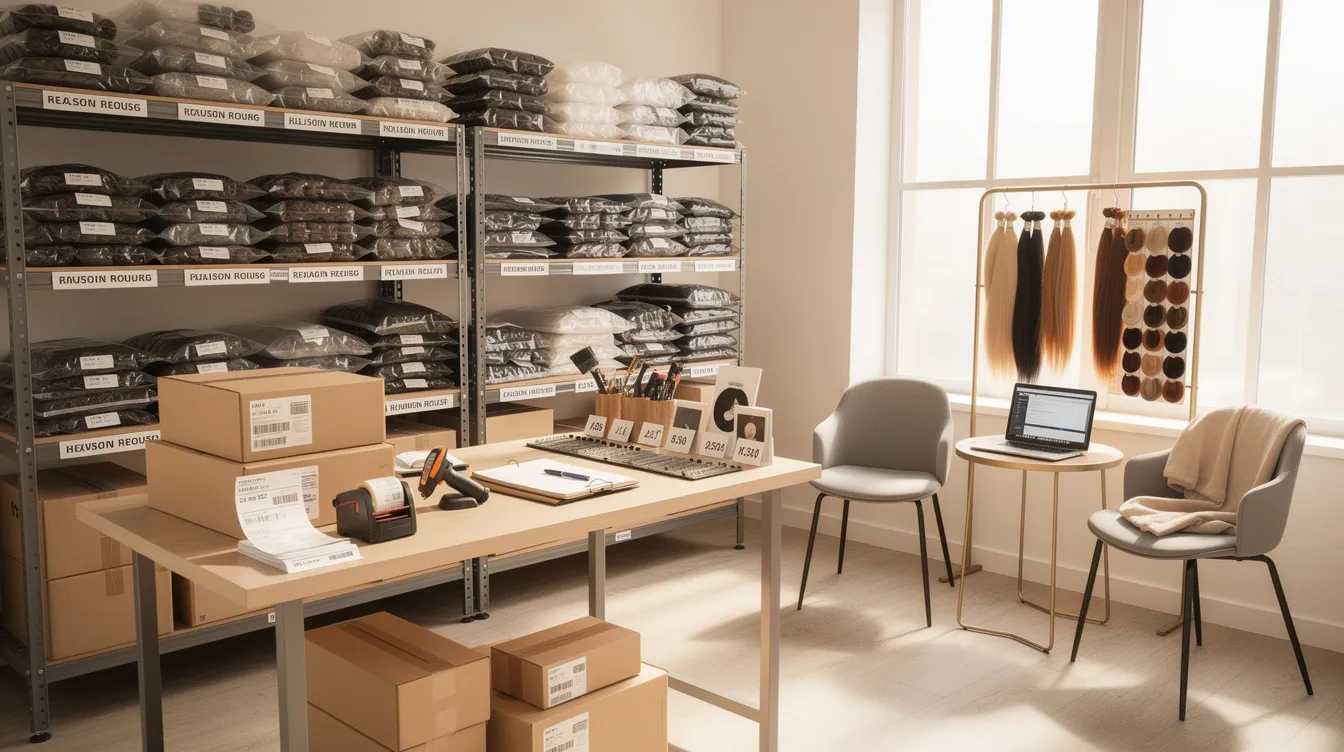
No. A shelf system in your existing salon or a dedicated room in your home works for the first 12 months at small volumes. A dedicated warehouse becomes necessary when you exceed 100 to 150 kg of standing inventory, which usually corresponds to 30+ active customer accounts.
How long before a new wholesale vendor is profitable?
Most operators reach breakeven on operating cost in month 4 to 6. Initial inventory investment is typically recovered in month 8 to 12. Month 13+ is generally net-positive on all investment.
Can I run my wholesale business part-time alongside my salon?
Yes, and most new vendors do. Budget 8 to 12 hours per week on wholesale in the launch phase, dropping to 4 to 8 hours per week once operations stabilize. The part-time model caps total volume but lowers risk.
Do I need my own brand and packaging to be a wholesale vendor?
Not necessarily. Many new vendors start by selling their manufacturer’s products under the manufacturer’s brand (authorized reseller model), and move to private-label packaging only in year 2 or 3 once repeat demand proves stable. Private label adds USD 2,000 to 5,000 in packaging design and MOQ cost upfront.
How do I handle customer credit as a wholesale vendor?
Start with cash-on-order for all new customers for the first 6 months. After 3 clean orders, you can offer net-15 terms for trusted accounts. Never offer net-30 or longer until you have 6+ months of payment history and are well-capitalized enough to absorb a bad-debt write-off.
What happens if a wholesale customer returns defective product?
Inspect the returned product within 48 hours. Document with photos. Raise the defect with your manufacturer under their defect-handling policy. Typical good practice is to ship a replacement to the customer from your own stock within 3 days, then settle with the manufacturer on their next shipment. Speed matters more than the USD amount.
Ready to Launch Your Wholesale Operation?
If your salon already sells hair extensions at meaningful volume and you have 3 to 5 potential salon customers in your network willing to buy from you, you have the minimum viable starting point. The Launch Roadmap above fits into 90 to 120 days of focused work. Hair Extensions By Nature’s New Vendor Program is built to reduce the friction on your first 6 months. The first step is a 15-minute WhatsApp conversation.
Enrol in the New Vendor Program →
Prefer email? Reach us at info@hairextensionsbynature.com or complete our quote request form.
Hair Extensions By Nature — Manufacturer and Exporter of Premium Indian Human Hair Extensions. Factory: Booth No 71, Sector 16 Huda Market, Faridabad, Haryana, India — 121002. Serving salons, distributors, and brands in 40+ countries.
Start Your Hair Extensions Dropship Business
Zero inventory. Premium Indian Remy hair. Ship worldwide under your brand. MOQ as low as 5 pieces.