
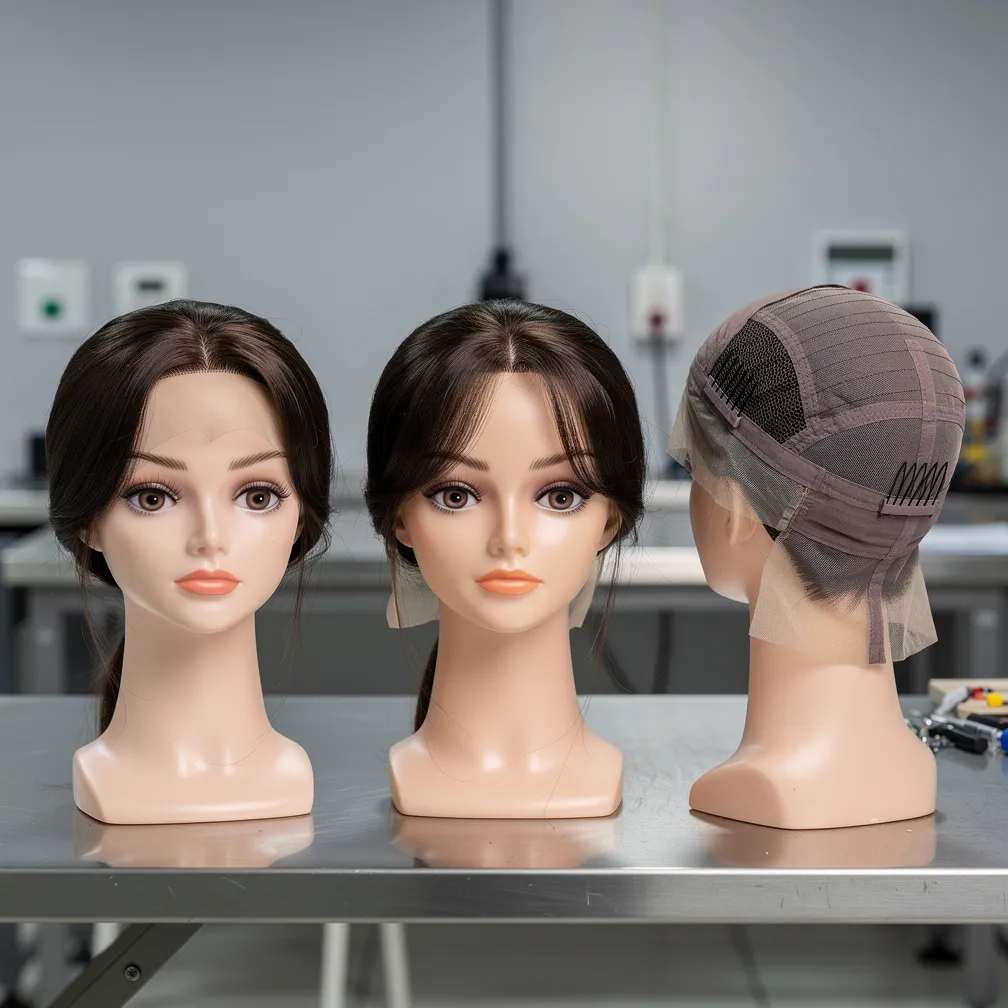
Wholesale Hair Toppers from India — Manufacturer Guide for Salons [2026]
Wholesale hair toppers from Indian manufacturers are available in mono base, lace, and silk base constructions, in base sizes from 2×2 inches (for concentrated crown coverage) to 6×6 inches and larger (for extensive thinning or receding hairlines), at wholesale prices of $40–$180 per unit. Hair toppers are the fastest-growing segment within the professional hair industry, driven by increasing awareness of alopecia solutions, aging demographics in the USA and UK, and the medical hair loss channel’s growing demand for quality human hair products. For salons, trichologists, and medical hair specialists looking to expand into the hair loss segment, sourcing toppers direct from an Indian manufacturer delivers both the quality and margin structure that makes this a commercially attractive product line. For more details, see our guide on Hair Extension Payment Methods. For more details, see our guide on Wholesale Men’s Hair Systems from India.
Hair Extensions By Nature manufactures human hair toppers at our factory in Faridabad, Haryana, supplying salon accounts, medical hair specialists, and private label brands across more than 40 countries. This guide covers all the key information professional buyers need: construction types, base size options, specialty toppers, pricing, and customization options.
What Is a Hair Topper?
A hair topper (also called a wiglet, half wig, or volumizer) is a hairpiece designed to cover a specific area of the scalp where thinning or hair loss is occurring, rather than covering the entire head like a full wig. Toppers clip or attach directly to existing hair around the thinning area and blend seamlessly with the wearer’s natural hair.
Toppers are the preferred solution for clients experiencing:
- Crown thinning (the most common presentation in women with androgenetic alopecia)
- Diffuse thinning across the top of the scalp
- Receding hairline (frontal thinning)
- Postpartum hair loss in localized areas
- Thinning caused by medical treatments or nutritional deficiencies
Unlike wigs, toppers allow the client to maintain their natural hair where it remains full, which most clients strongly prefer psychologically. They are also faster to fit and adjust, less expensive than full wigs, and more comfortable for everyday wear.
Hair Topper Construction Types
The construction of the topper base determines comfort, natural appearance, durability, and price. The three main base types are monofilament (mono), lace, and silk.
| Base Type | Description | Scalp Appearance | Durability | Breathability | Wholesale Price Impact |
|---|---|---|---|---|---|
| Monofilament (Mono) | Thin mesh base with individually hand-knotted hair; appears to grow from scalp | Very natural — multi-directional parting | High | Good | Standard — most affordable premium option |
| Silk Base | Three-layer silk with concealed knots; knots completely invisible | Excellent — most natural of all constructions | High | Moderate (less than mono) | Higher — 20–35% premium over mono |
| Lace Base | Fine lace with hand-knotted hair; lightest option | Natural — more transparent than mono | Moderate (lace is more delicate) | Excellent | Similar to mono or slightly lower |
| Mono + Lace Perimeter | Mono crown with lace around the edges | Very natural at all edges and parting | High | Good | Moderate premium over standard mono |
| Machine-Made Wefted | Sewn weft construction; less natural but more durable | Less natural — fixed parting only | Very High | Good | Lowest — budget segment |
For professional salon and medical hair specialist use, monofilament (mono) base is the industry standard. It provides the best combination of natural appearance, durability, and price accessibility. Silk base is preferred for medical clients who require the most natural appearance possible — such as post-chemotherapy clients or those with very minimal remaining hair where the base will be highly visible.
Want samples of our mono and silk base toppers before placing a wholesale order? Message us on WhatsApp and we will send you our current topper catalogue with specifications and pricing.
Hair Topper Size Guide — Base Dimensions and Coverage Areas
The base size of a hair topper determines how much of the scalp it covers. Selecting the right size requires accurate measurement of the client’s thinning area, plus a buffer of approximately 1 inch on all sides for blending and security.
| Base Size | Coverage Area | Best For | Common Name |
|---|---|---|---|
| 2 x 2 inches | Small concentrated area | Early crown thinning; small parting coverage | Mini topper / spot topper |
| 3 x 3 inches | Small to medium crown area | Moderate crown thinning; parting coverage | Small crown topper |
| 4 x 4 inches | Medium crown coverage | Moderate to significant crown thinning | Medium crown topper |
| 5 x 5 inches | Large crown / top area | Significant diffuse thinning; larger coverage | Large crown topper |
| 6 x 6 inches | Very large top coverage | Extensive thinning; advanced alopecia | Full top topper / half wig |
| 6 x 9 inches and larger | Full top to back coverage | Near-total coverage; early full wig territory | Large coverage piece / topper-wig |
| Custom dimensions | Tailored to client measurement | Medical clients with atypical thinning patterns | Custom base (requires measurement form) |
Base sizing must be measured precisely for each client. The standard measurement tool for hair loss professionals is a flexible ruler or measuring tape, recording both the front-to-back dimension and the side-to-side dimension of the thinning area. When ordering wholesale stock for salon inventory, the 4×4 and 5×5 sizes typically represent the highest volume for crown thinning clients.
Specialty Toppers for Specific Hair Loss Patterns
Beyond standard crown coverage toppers, Indian manufacturers can produce specialty toppers designed for specific hair loss presentations that salons and medical hair specialists encounter regularly.
Receding Hairline Toppers
Some clients experience frontal hair loss — a receding hairline at the temples or across the front of the scalp — rather than crown thinning. Standard crown toppers are not designed for this presentation. Receding hairline toppers have an elongated base that extends from the front hairline area backward, with a lace or mono front edge that can be positioned at the desired hairline position. These toppers are often custom-ordered to match the client’s specific recession pattern.
Back Comb (Nape) Toppers
A smaller segment of clients experience thinning at the nape of the neck or the back crown area. Back comb toppers have bases designed to sit lower on the head and integrate with the back sections of natural hair. These are less commonly stocked as ready inventory but are important for salons serving medical hair loss clients with diverse thinning patterns.
Combination / Full Coverage Toppers
For clients with extensive diffuse thinning across the entire top and back of the scalp (a common presentation in late-stage androgenetic alopecia), combination toppers or large coverage pieces may be more appropriate than a standard topper. These bridge the gap between a topper and a full wig and may have base sizes of 8×10 inches or larger.
Hair Specifications for Toppers
The hair specifications for toppers differ from standard extensions in several important ways.
Hair grade: Virgin or raw Remy hair is strongly recommended for toppers, particularly for medical clients. Toppers are long-wear pieces that the client may wear for 8–16+ hours daily. The hair must maintain its appearance and texture through extensive daily wear without tangling or degrading. Virgin Remy hair is the minimum appropriate grade; raw single-donor hair is the premium option for the most demanding clients.
Hair density: Toppers are available in 80%, 100%, 120%, and 150% hair density. For clients with fine remaining natural hair, a lower density (80–100%) creates a more natural blend. For clients with minimal remaining hair, higher density (120–150%) provides better coverage and visual fullness.
Hair length: Topper hair length is measured from the base to the end of the hair. Common lengths are 10, 12, 14, 16, and 18 inches. The appropriate length depends on the client’s natural hair length — the topper should match or be slightly shorter than the natural hair it is blending with.
Hair color: For the most natural result, toppers should be color-matched to the client’s natural hair. Standard stock toppers are available in the natural color range (#1B, #2, #4, #6, #8, #60). Custom color-matched toppers can be produced for individual clients, though this typically requires a minimum order of 5–10 units per color to justify the dye batch.
For a comprehensive guide to sourcing from India, read our complete guide to sourcing hair extensions from India.
Wholesale Pricing Guide — Hair Toppers from India
| Base Size | Construction | Hair Length | India Wholesale Price (approx.) | Typical US Retail / Salon Price |
|---|---|---|---|---|
| 3 x 3 inches | Mono base | 12–14 inches | $40–$65 | $180–$280 |
| 4 x 4 inches | Mono base | 14–16 inches | $55–$85 | $220–$350 |
| 5 x 5 inches | Mono base | 14–16 inches | $65–$100 | $250–$400 |
| 4 x 4 inches | Silk base | 14–16 inches | $75–$110 | $300–$450 |
| 5 x 5 inches | Silk base | 14–16 inches | $90–$135 | $350–$520 |
| 6 x 6 inches | Mono base | 14–18 inches | $90–$140 | $350–$550 |
| 6 x 6 inches | Silk base | 14–18 inches | $115–$180 | $400–$650 |
| Custom dimensions | Mono or silk | Per client spec | $80–$200+ | $350–$800+ |
These margins (typically 70–75% gross margin at salon retail pricing) make the hair topper segment one of the most attractive product lines a professional salon can offer. The combination of high product value, strong client need, and the professional service component (fitting, customization, styling) creates an exceptionally strong revenue and margin profile.
Request wholesale pricing for our hair topper range: WhatsApp us or email info@hairextensionsbynature.com with your required sizes and base types.
Attachment Methods and Clip Specifications
Hair toppers attach to the client’s natural hair using clips sewn into the base perimeter. Standard clip configurations include:
4-clip toppers: One clip at the front, one at the back, one on each side. Suitable for smaller bases (2×2 to 4×4) and clients with adequate natural hair to grip the clips securely.
6-clip toppers: Additional clips at the front corners and possibly the back corners. Better security for medium to large bases and clients who are active or wear the topper for extended daily wear.
8-clip toppers: Maximum clip security for large coverage pieces and clients with very fine remaining hair. More attachment points distribute the weight of the topper more evenly across the remaining natural hair.
Some clients prefer tape attachment rather than clips, particularly those with very little remaining natural hair who cannot use clip attachment. Tape-compatible bases are available without pre-sewn clips for this application.
MOQ for Wholesale Hair Topper Orders
Hair toppers are a specialty product with lower production volumes than standard extensions. Most Indian manufacturers have MOQs of 5–10 units per style (base size + construction type) for stock designs, and 10–20 units for custom specifications. Ready-stock toppers in the most popular sizes (4×4 and 5×5 mono in natural colors) may be available with lower MOQs or no minimum.
For salons building an initial hair topper inventory, a recommended starting assortment might include: 5 units each of 4×4 mono in #1B and #4 at 14 inches, 3 units each of 5×5 mono in #1B and #4 at 16 inches, and 2 units of 4×4 silk base in #1B for premium client presentations. This provides a starter inventory across the most common thinning presentations without excessive initial capital commitment.
Frequently Asked Questions
What is the difference between a topper and a wig?
A topper covers only the thinning area and blends with the wearer’s remaining natural hair. A wig covers the entire head. Toppers are preferred by clients with significant remaining hair who want to maintain their natural hair’s look and feel.
What base construction is best for professional use?
Mono base is the professional standard — natural appearance, good durability, comfortable wear. Silk base is the premium choice for medical clients needing maximum realism. Lace is the lightest and most breathable option.
What size should I stock for a salon topper inventory?
4×4 and 5×5 cover the majority of crown thinning presentations. Stock 3×3 for early-stage thinning and have 6×6 available for advanced cases. Always measure individual clients before ordering their specific topper.
What is the wholesale price range from India?
$40–$65 for 3×3 mono base; $90–$180 for 6×6 silk base. Factory prices are 50–70% below US specialty retail prices for equivalent constructions.
Source Wholesale Hair Toppers Direct from Our Factory
Hair Extensions By Nature manufactures the full range of mono, lace, and silk base hair toppers from our factory in Faridabad, Haryana. We supply salon accounts, trichology practices, and medical hair specialists across the USA, UK, and beyond.
For a complete overview of sourcing from India, read our complete guide to sourcing hair extensions from India.
Request our hair topper catalogue and wholesale pricing: WhatsApp us or email info@hairextensionsbynature.com.
Hair Extensions By Nature
Booth No 71, Sector 16 Huda Market, Faridabad, Haryana, India – 121002
Phone/WhatsApp: +91 9289358222
![Wholesale Men’s Hair Systems from India — Manufacturer Guide [2026]](https://hairextensionsbynature.com/wp-content/uploads/2026/04/30-wholesale-mens-hair-systems-india-hero-768x768.webp)
![Wholesale I-Tip and U-Tip Extensions from India — Complete Guide [2026]](https://hairextensionsbynature.com/wp-content/uploads/2026/03/18-wholesale-i-tip-u-tip-extensions-india-hero-768x768.webp)
![Remy vs Virgin Hair — What Wholesale Buyers Need to Understand [2026]](https://hairextensionsbynature.com/wp-content/uploads/2026/03/16-remy-vs-virgin-hair-difference-wholesale-hero-768x768.webp)
![Wholesale Tape-In Hair Extensions from India — Salon Supplier Guide [2026]](https://hairextensionsbynature.com/wp-content/uploads/2026/03/17-wholesale-tape-in-extensions-india-hero-768x768.webp)
![Wholesale Nano Tip and Flat Tip Extensions from India — Salon Buyer Guide [2026]](https://hairextensionsbynature.com/wp-content/uploads/2026/04/36-wholesale-nano-tip-flat-tip-extensions-india-hero-768x768.webp)
![Machine Weft vs Hand-Tied Weft Extensions — Wholesale Comparison [2026]](https://hairextensionsbynature.com/wp-content/uploads/2026/03/24-machine-weft-vs-hand-tied-weft-wholesale-hero-768x768.webp)