
Remy vs Virgin Hair
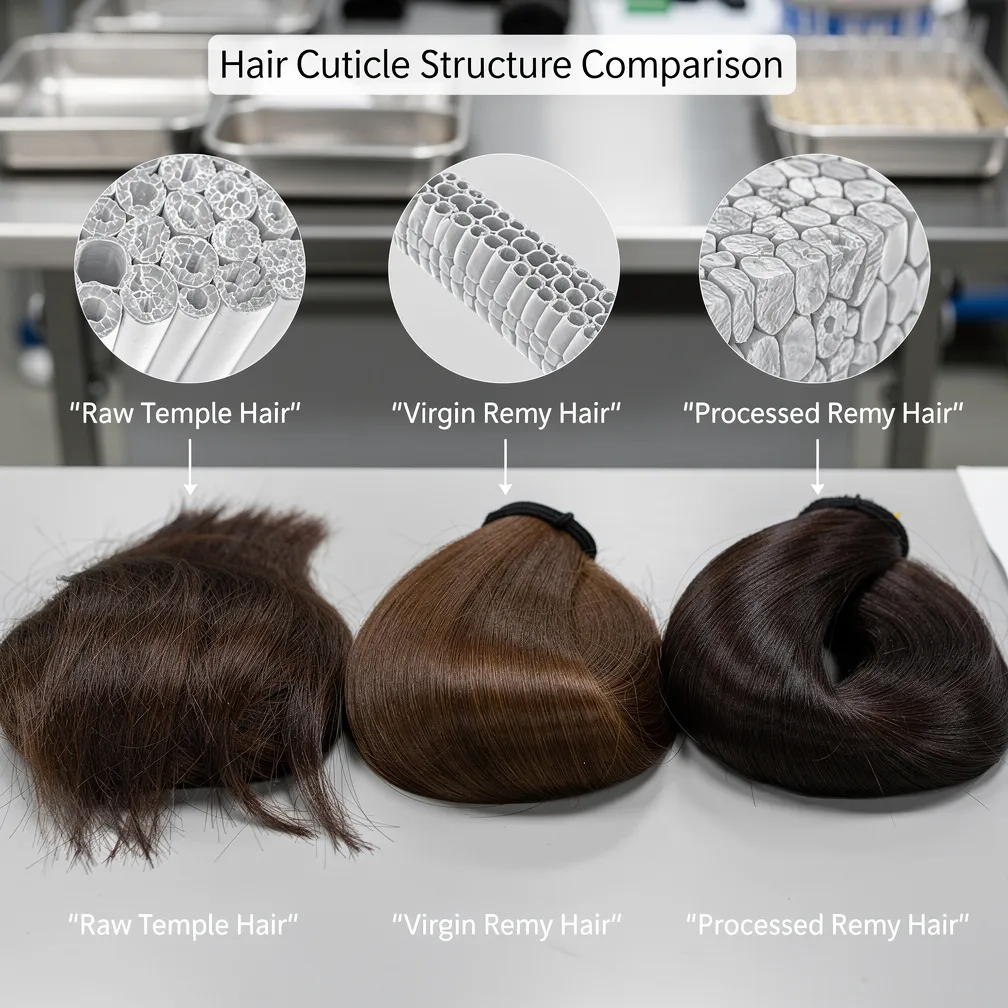
The difference between Remy and virgin hair is that Remy refers to cuticle alignment (all cuticles run root to tip in the same direction), while virgin hair refers to chemical processing history (hair that has never been dyed, permed, bleached, or chemically treated). All virgin hair is Remy, but not all Remy hair is virgin — Remy hair can be lightly processed while maintaining cuticle alignment. Above both is raw hair: single-donor, unprocessed hair collected directly from one individual, with perfectly intact and naturally aligned cuticles. Understanding this hierarchy is fundamental for wholesale buyers who need to specify quality accurately, communicate it to clients, and price their products competitively. For more details, see our guide on Cuticle Aligned Hair Extensions.
Confusing these terms — or purchasing from suppliers who use them interchangeably — is one of the most common and costly sourcing mistakes in the hair extension industry. This guide provides the clear, technically accurate definitions that wholesale buyers need, along with a pricing comparison across grades and guidance on which grades suit which products and markets.
The Complete Hair Quality Hierarchy
There are four distinct quality grades in human hair extensions, listed here from highest to lowest quality and price:
Grade 1: Raw Hair (Single-Donor, Unprocessed)
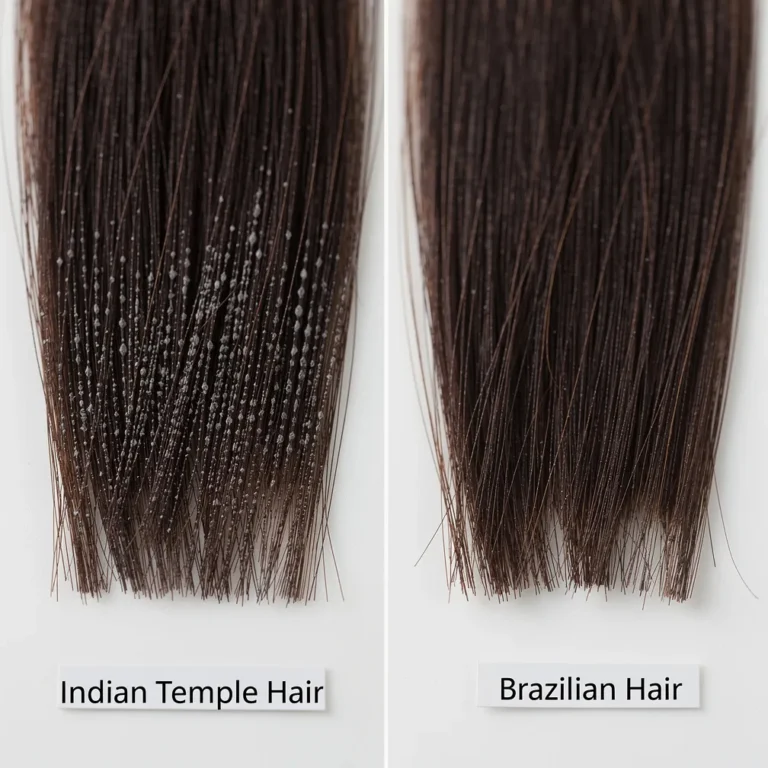
Raw hair is the highest quality grade and the most precise term in the industry. It describes hair that has been collected from a single donor (typically at a South Indian temple), has never been washed with chemicals or stripped with acid, has never been sorted or processed to realign cuticles, and retains its natural texture, wave, and color exactly as it grew. Because raw hair comes from a single person, all strands share the same diameter, natural color, and growth pattern — resulting in exceptional uniformity.
Raw temple hair from India is the primary global source for this grade. The collection method — tonsuring at Hindu temples — produces hair that arrives in its fully natural state. Buyers who purchase raw hair are typically processors (who sort, wash, and prepare it for extension manufacturing) or premium wig makers who want to maintain the natural character of the hair throughout the product lifecycle.
Grade 2: Virgin Hair
Virgin hair has aligned cuticles (it qualifies as Remy) and has never been chemically processed — no colorants, no perms, no bleach. However, it may have been collected from multiple donors (pooled and sorted for consistency) and may have been washed with gentle cleansers to remove natural oils or dirt. The key distinction from raw hair is that virgin hair may be multi-donor and may have undergone light physical processing (sorting, washing), but has no chemical treatment history.
Virgin hair is the preferred grade for most wholesale hair extension products because it can be styled with heat, can accept color treatments applied by salon professionals, and retains good cuticle integrity. It is also more available in consistent supply than single-donor raw hair, making it easier for manufacturers to produce large quantities in uniform specifications.
Grade 3: Remy Hair (Processed, Cuticle-Aligned)
Remy hair has aligned cuticles but may have undergone chemical processing — most commonly light coloring or conditioning treatments. The defining characteristic is cuticle alignment, not processing history. The term “Remy” describes a structural characteristic of the hair, not a quality grade in itself — though in practice, professionally processed Remy hair is significantly higher quality than non-Remy hair.
Well-processed Remy hair — where cuticle alignment is maintained throughout chemical treatment — is the standard for professional salon extensions globally. The challenge is that the term “Remy” is widely misused in the industry, with many suppliers labeling non-Remy or borderline-quality hair as Remy. Buyers must verify cuticle alignment through physical testing, not just labeling. For more details, see our guide on How to Verify Indian Hair Extension Quality Before Buying….
Grade 4: Non-Remy Hair
Non-Remy hair has cuticles running in mixed directions — some root-to-tip, some tip-to-root — because it has been collected from brushes, salon floors, or hair pools where multiple sources and directions have been combined. This mixed cuticle direction causes the hair strands to catch on each other and tangle severely during wear.
To address this, non-Remy hair is typically treated with an acid bath to strip the cuticle layer, then coated with silicone to restore a smooth feel. This silicone-treated hair feels smooth and shiny initially but becomes dry, brittle, and prone to severe tangling within 2–6 weeks of wear as the silicone coating washes off. Non-Remy hair is not appropriate for professional salon use.
Not sure which hair grade is right for your market? Message us on WhatsApp — we will help you select the right specification for your price point and client profile.
Remy vs Virgin vs Raw — Comparison Table
| Characteristic | Raw Hair | Virgin Hair | Remy Hair (Processed) | Non-Remy Hair |
|---|---|---|---|---|
| Cuticle alignment | Perfectly intact, naturally aligned | Aligned, intact | Aligned (maintained through processing) | Mixed / stripped |
| Chemical processing | None | None | Light to moderate | Acid-bathed, silicone-coated |
| Donor source | Single donor | Single or multi-donor | Multi-donor, sorted | Mixed sources |
| Natural texture preserved | Yes — fully intact | Yes | Partially — may be altered | No — cuticle stripped |
| Colorable by salon | Yes — excellent uptake | Yes — excellent uptake | Yes — good uptake | No — poor color adhesion |
| Lifespan (with proper care) | 2–4 years | 1–3 years | 6–18 months | 2–8 weeks |
| Typical wholesale price premium vs. Non-Remy | 200–400% more | 100–200% more | 50–100% more | Baseline (lowest cost) |
| Best application | Premium wigs, luxury extensions, raw hair processing | Premium salon extensions, wigs, toppers | Standard salon extensions, tape-ins, clip-ins | Not recommended for professional use |
How to Verify Hair Grade When Sourcing
Supplier labeling cannot be trusted without physical verification. The following tests are simple and reliable ways to determine the actual quality grade of hair samples before placing a bulk order.
The Cuticle Direction Test (Remy Verification)
Take a small bundle of hair strands and run your fingers from root to tip. Then run your fingers from tip to root. Remy hair will feel smooth in both directions, though slightly less smooth tip-to-root due to natural cuticle scale direction. Non-Remy hair will feel significantly rougher tip-to-root because cuticles are running in both directions and catching on each other. This test does not require equipment and takes 30 seconds per sample.
The Water Test (Processing Detection)
Submerge a few strands in water. Unprocessed or minimally processed Remy hair will feel soft and maintain its texture when wet. Silicone-coated non-Remy hair will feel notably different wet — often heavier, and the silicone may feel slippery. After air drying, silicone-coated hair may feel crunchy or stiff.
The Bleach Strand Test (Grade Confirmation)
For buyers who need to verify virgin or raw grade, a strand of hair can be bleached with a 30-volume developer and bleach powder. Virgin and raw hair will bleach cleanly and evenly to a consistent level. Previously colored or processed hair will show uneven bleaching, bands of different lift levels, or unexpected tonal results.
The Burn Test (Human Hair vs Synthetic)
Burn a few strands with a lighter. Human hair — regardless of grade — smells like burning protein (similar to burning keratin or feathers), turns to a crushable ash, and extinguishes quickly when the flame is removed. Synthetic hair smells like burning plastic, melts rather than burns, and continues burning when the flame is removed.
Which Hair Grade Suits Which Products and Markets?
Selecting the right grade for your product line is as important as the grade itself. Sourcing raw hair for a product category that does not justify the premium cost wastes margin; sourcing standard Remy for premium salon clients who expect virgin quality leads to complaints and returns.
| Product / Market | Recommended Grade | Reason |
|---|---|---|
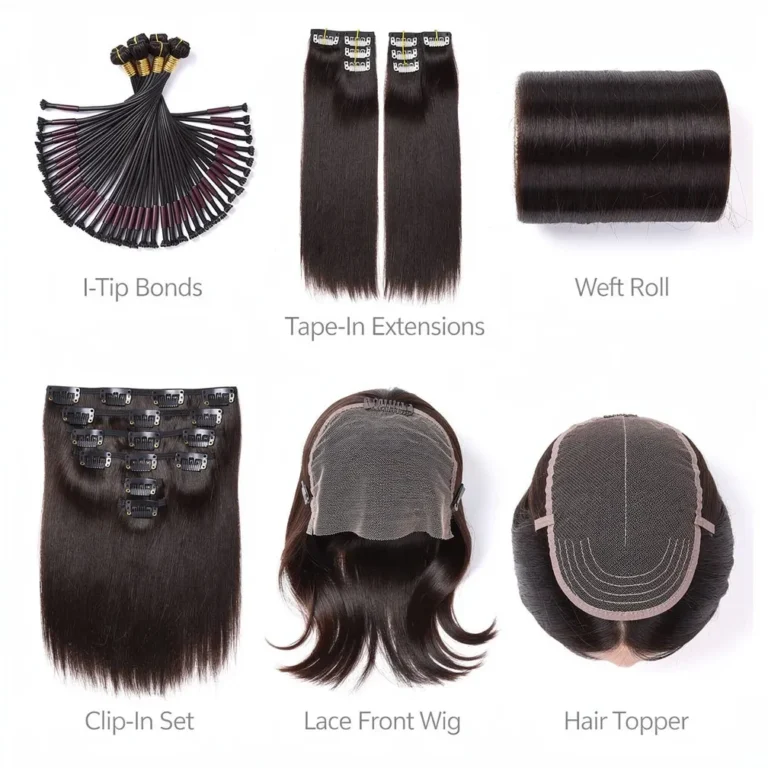
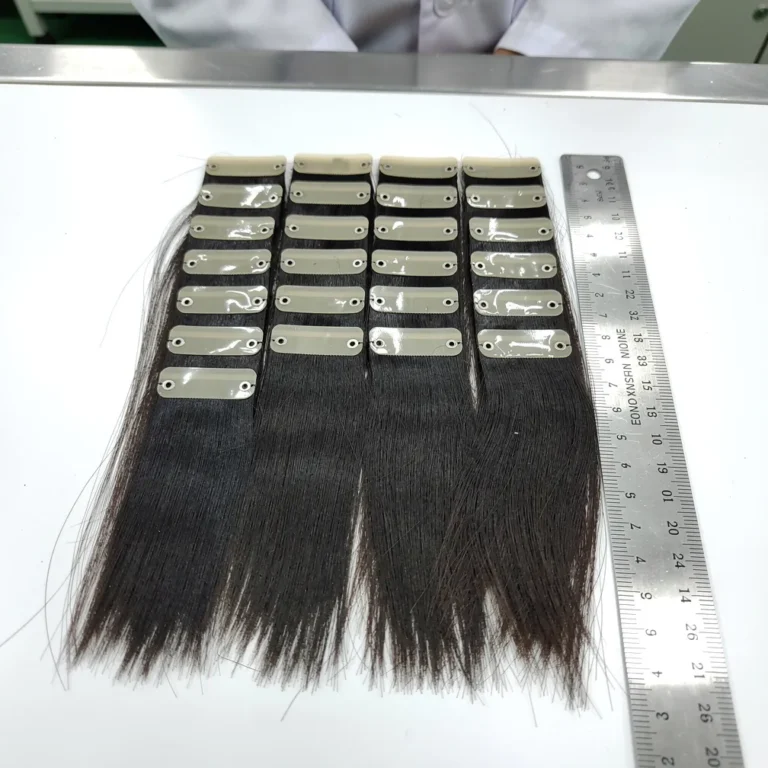
| Premium salon tape-in extensions (USA, UK) | Virgin Remy | Clients expect long wear life and colorability |
| Standard salon tape-in extensions | Remy (processed) | Good wear life; cost-effective for high volume |
| Clip-in extensions (retail) | Remy (processed) | Temporary wear; full cuticle integrity less critical |
| Hand-tied weft (premium salons) | Virgin Remy | Long installation life; client invests more in service |
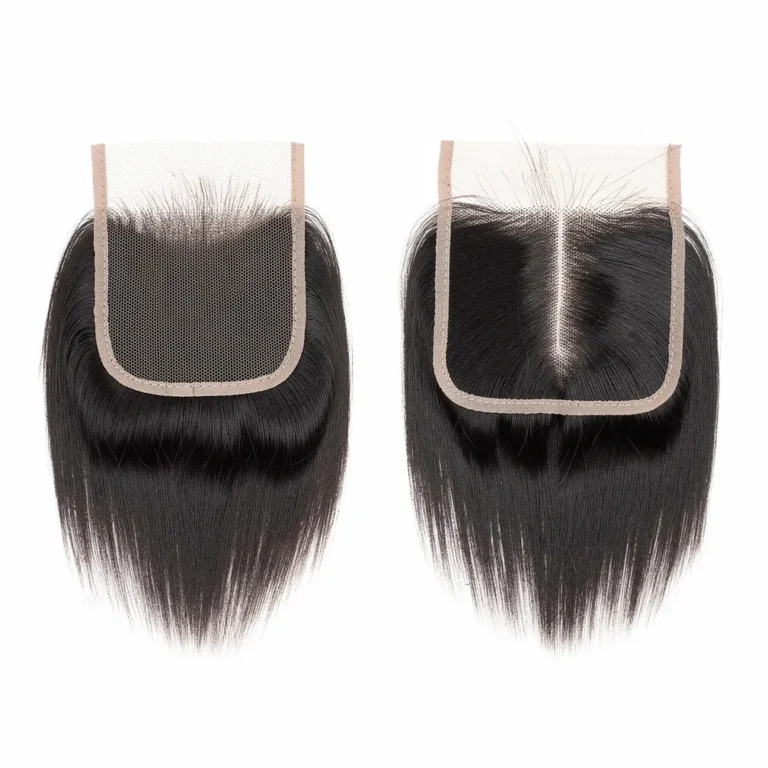
| Premium lace front wig | Virgin or Raw | Colorability, extended wear, client quality expectations |
| Medical wigs (alopecia, chemotherapy) | Virgin or Raw | Gentle on scalp, longest possible lifespan |
| Wigs for volume retail (budget segment) | Remy (processed) | Price accessibility while maintaining acceptable quality |
| Raw hair processing / re-manufacturing | Raw temple hair | Buyers adding processing and value themselves |
| Private label mid-range extension brand | Virgin Remy | Strong quality story; supports premium positioning |
Ready to discuss the right hair grade for your product line? Contact us on WhatsApp — we manufacture across all Remy grades and can advise on the best specification for your budget and market.
Pricing Differences by Hair Grade
The wholesale price difference between hair grades is substantial and directly affects your product positioning and margins. As a general guide (prices vary by length, product type, and manufacturer — these are relative comparisons):
Raw temple hair commands the highest prices — typically 2–4x the price of processed Remy for equivalent weights and lengths. The premium reflects single-donor collection, intact cuticle structure, and limited supply relative to demand.
Virgin Remy is typically 50–100% more expensive than processed Remy. The price premium reflects higher raw material cost and the care required in processing to maintain cuticle integrity through any washing or sorting steps.
Processed Remy is the most widely available grade and the standard for the professional salon extension market. It offers the best balance of quality, price, and supply consistency for most wholesale buyers.
Non-Remy is the cheapest option but carries significant risk of client complaints, returns, and damage to your professional reputation. No professional salon or reputable brand should be selling non-Remy extensions under a quality positioning.
Frequently Asked Questions
What is the difference between Remy and virgin hair?
Remy = cuticles aligned root to tip (structural). Virgin = never chemically processed (treatment history). All virgin hair is Remy, but Remy hair may be lightly processed. Raw hair is the top grade: single-donor, unprocessed, perfectly intact cuticles.
How can I verify Remy quality when sampling?
Run your fingers root to tip, then tip to root. Remy hair feels smooth in both directions with only slight resistance tip-to-root. Non-Remy feels significantly rougher tip-to-root. This physical test is more reliable than labeling claims.
What hair grade should I specify for premium salon extensions?
Virgin Remy for premium-positioned products — clients expect long wear life and colorability. Processed Remy works well for standard salon tape-ins and clip-ins where price accessibility matters.
What is the lifespan difference between grades?
Raw and virgin hair last 1–4 years with proper care. Processed Remy lasts 6–18 months. Non-Remy lasts 2–8 weeks before silicone coating degrades and tangling begins.
Source the Right Grade for Your Market
Hair Extensions By Nature manufactures across all Remy grades — from processed Remy for cost-effective salon products to virgin and raw temple hair for premium wigs and extensions. Our team can advise on the right specification for your price point, market, and client profile.
For a complete guide to the Indian hair sourcing process, read our complete guide to sourcing hair extensions from India.
Request a sample order to compare grades side by side: WhatsApp us or email info@hairextensionsbynature.com.
Hair Extensions By Nature
Booth No 71, Sector 16 Huda Market, Faridabad, Haryana, India – 121002
Phone/WhatsApp: +91 9289358222
One Comment
Comments are closed.