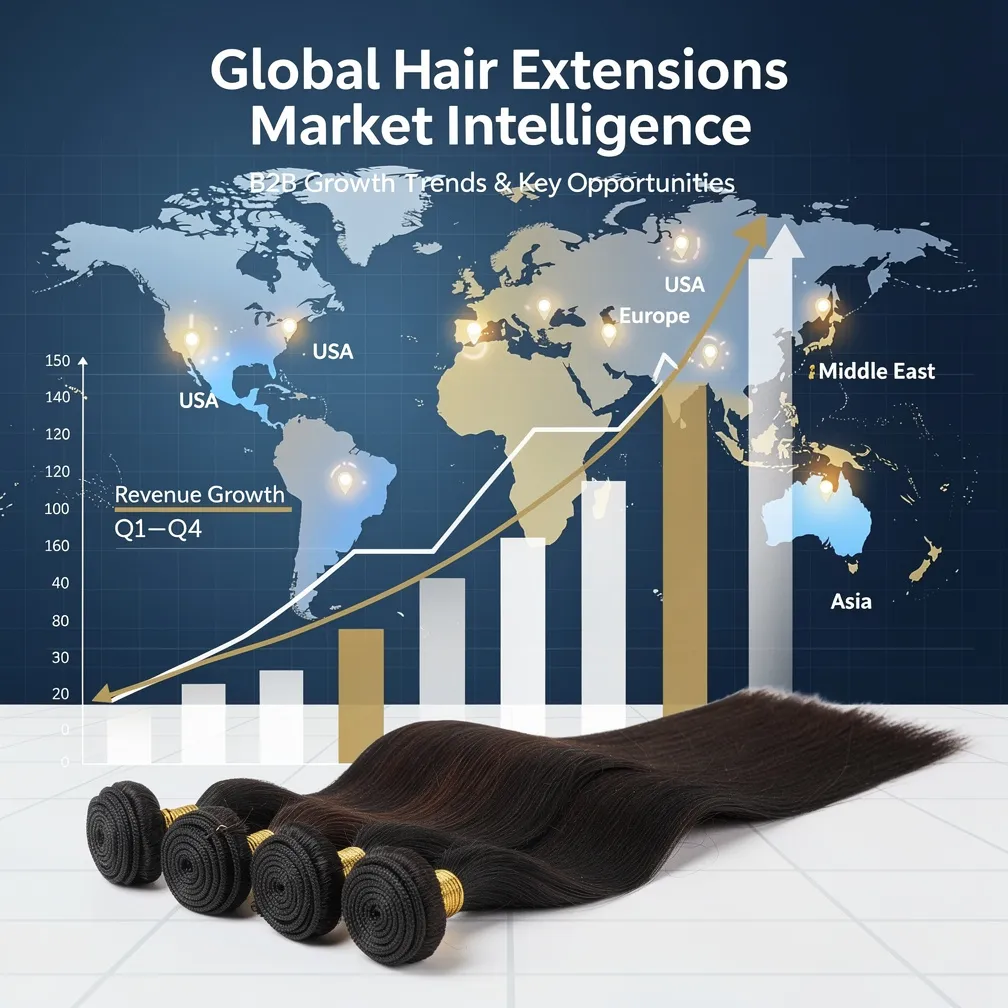
Global Hair Extension Market Trends 2026
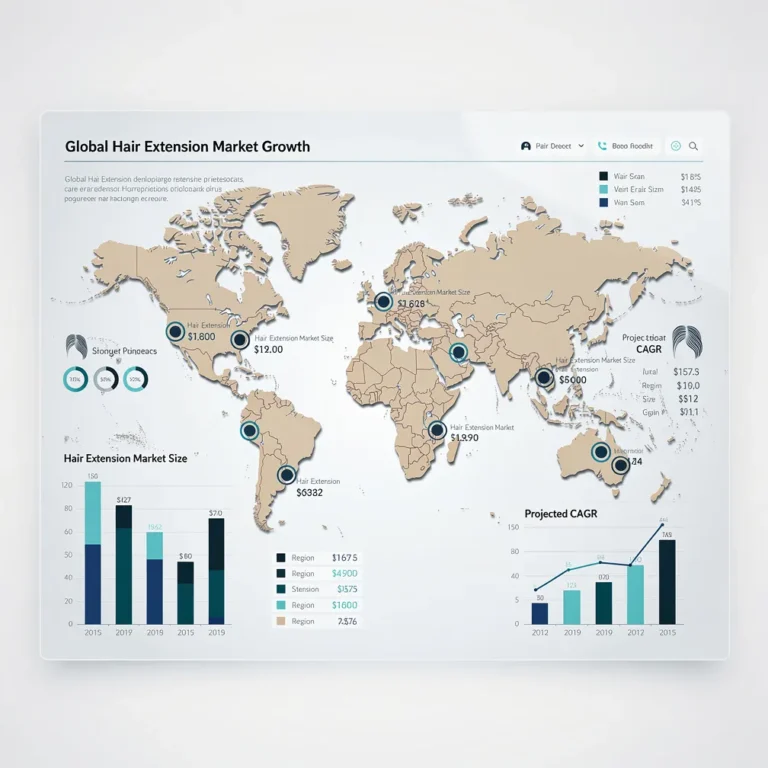
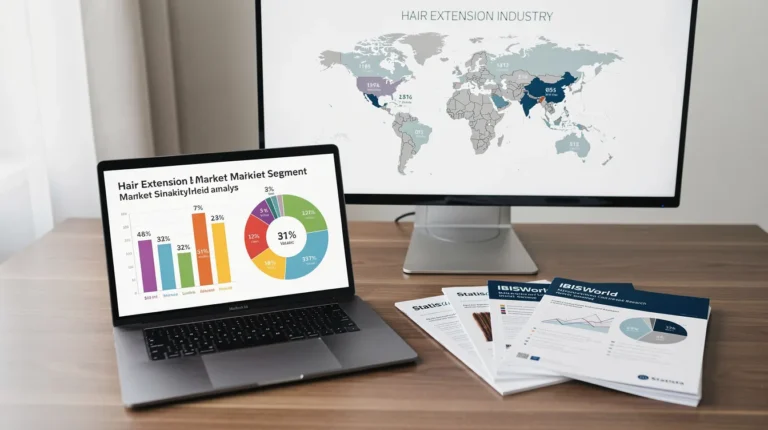
The global hair extension market in 2026 is estimated at $4–4.5 billion, growing at a compound annual growth rate of 9–11%, with no signs of slowing through the end of the decade. For wholesale buyers, distributors, and brand owners, understanding where the market is heading — which product categories are growing, which regions are expanding, and which sourcing strategies are gaining ground — is essential business intelligence, not background noise. This report synthesizes current market data and our own buyer order trends to give you a clear picture of the hair extension landscape heading into 2026 and beyond. For more details, see our guide on Hair Extension Trade Shows 2026. For more details, see our guide on Indian Hair Extension Export Statistics 2026.
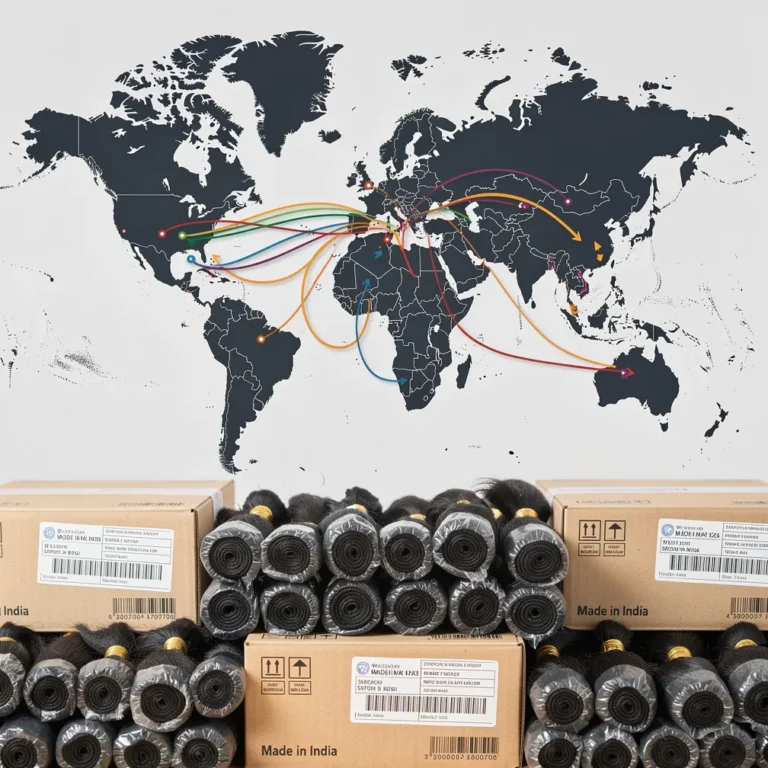
At Hair Extensions By Nature, we manufacture and export Remy human hair extensions from Faridabad, India, and track demand signals across our global buyer network spanning 40+ countries. The patterns we observe in buyer behavior are reflected in the market data — and the direction of growth is clear.
Global Hair Extension Market Size and Growth
The hair extension and wig industry crossed $3.5 billion in global market value in 2024, driven by accelerating demand across both established markets (USA, UK, Western Europe) and rapidly expanding markets in Africa, the Middle East, and Southeast Asia. By 2026, the global market is projected at $4.0–4.5 billion. By 2030, forecasts from major industry research firms place the market between $6 and $7 billion.
This is not a niche market. Hair extensions are now a mainstream professional salon service in most major markets, and the transition from a specialty product to a regular professional offering has fundamentally changed the demand profile. Salons that did not offer extensions a decade ago now have extensions as a standard service line.
Key Growth Drivers in 2026
- Rising income in emerging markets: Growing middle classes in Nigeria, Kenya, Brazil, Indonesia, and Vietnam are accessing professional hair services for the first time, creating new wholesale demand in markets that barely registered a decade ago
- Hair loss solutions segment: The growing awareness of female hair loss — estimated to affect 40% of women by age 50 — is driving demand for hair toppers, wigs, and integration systems beyond traditional salon extension use
- Social media influence: Instagram and TikTok creators globally have normalized hair extensions, reducing stigma and expanding the consumer base
- Professional training proliferation: More hair stylists are trained in extension application, expanding the professional distribution channel
- E-commerce growth: Online beauty supply and direct brand sales have opened new distribution channels that bypass traditional wholesale
Fastest-Growing Product Categories in 2026
Hair Toppers — The Standout Growth Story
Hair toppers are the single fastest-growing product category in the global hair extension market in 2025–2026. Designed to add volume and coverage to the crown and top of the head — rather than extending length — toppers address the hair loss and thinning concerns of the fastest-growing consumer demographic: women over 40.
The hair topper market is growing at an estimated 15–20% annually, outpacing all other extension categories. Indian human hair toppers with mono base, silk base, and lace base constructions are in high demand from distributors serving the US, European, and Australian markets. Wholesale buyers who have not yet added toppers to their catalog are missing the fastest-growing segment.
Tape-In Extensions — Professional Salon Growth Driver
Tape-in extensions have become the dominant extension method in professional Western salon markets, overtaking sew-in and fusion methods in market share among premium salons. The reasons are practical: tape-ins are faster to apply (1–2 hours vs. 4–6 hours for sew-in), reusable with retaping, and produce a flatter, more natural result for clients with fine or medium-density hair.
Demand for medical-grade tape-in extensions from Indian manufacturers has grown significantly over the past 3 years. This is a wholesale category where quality differentiation is very visible — low-quality tape creates adhesion problems that high-quality manufacturers have solved.
Weft Extensions — Hand-Tied Weft Growth
Within the weft category, hand-tied wefts have displaced machine wefts as the premium salon offering. Hand-tied wefts are thinner, more flexible, and cause less tension on the scalp compared to machine wefts. The wholesale price premium is significant (hand-tied wefts cost 2–3x more than machine wefts), but the salon demand justifies the premium in established markets.
Full Lace Wigs and Glueless Wigs
The wig category has undergone a fundamental consumer shift. Full lace wigs and HD lace wigs — which provide an invisible hairline for a natural-looking install — have moved from specialist products to mainstream salon and retail offerings, driven by social media content creators. The glueless wig segment (wigs that can be worn without adhesive) is particularly strong in the UK and US markets.
Regional Market Overview — Where Growth Is Happening
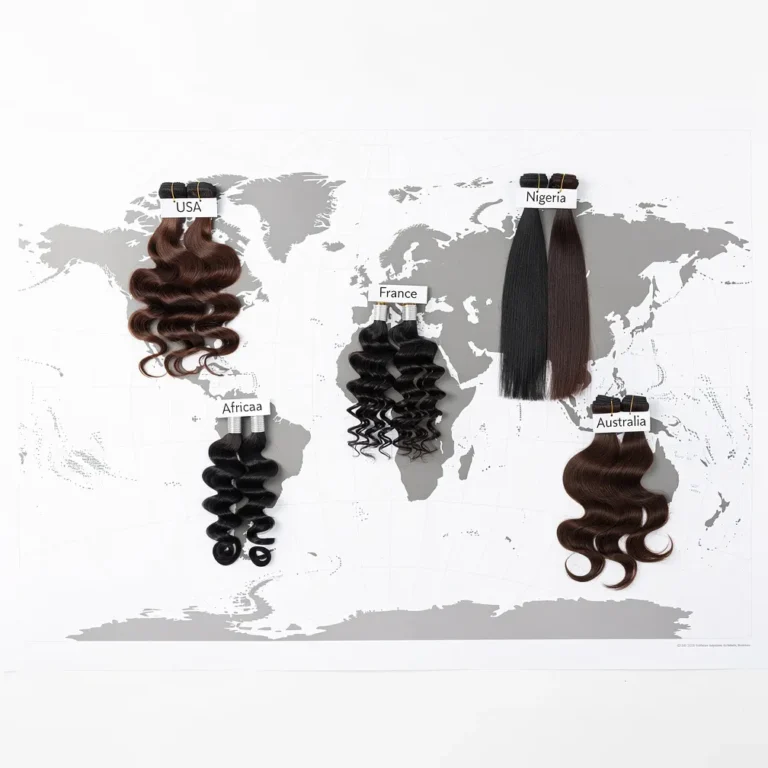
| Region | Market Size (2026 Est.) | Growth Rate | Trending Products | Key Demand Driver |
|---|---|---|---|---|
| North America (USA, Canada) | $1.4B+ | 8–10% CAGR | Toppers, tape-in, hand-tied weft, kinky curly wigs | Salon professionalization, hair loss awareness |
| Sub-Saharan Africa (led by Nigeria) | $800M+ | 12–15% CAGR | Bone straight, full lace wigs, deep wave bundles | Rising income, large youth population |
| Middle East (UAE, Saudi Arabia) | $500M+ | 10–12% CAGR | Bone straight, long-length clip-in, luxury wigs | High disposable income, premium quality demand |
| Europe (UK, Germany, France) | $600M+ | 7–9% CAGR | Tape-in, hand-tied weft, toppers, Afro textures | Professional salon growth, diverse demographics |
| Southeast Asia (Vietnam, Indonesia, Thailand) | $250M+ | 10–13% CAGR | Raw hair (for processing), bone straight, natural wave | Domestic manufacturing growth, export processing |
| Australia and New Zealand | $150M+ | 8–10% CAGR | Tape-in, toppers, nano-tip | Salon network growth, premium positioning |
| Latin America (Brazil, Colombia) | $300M+ | 9–11% CAGR | Body wave bundles, wigs, keratin-tip | Large urban population, hair culture heritage |
The Sustainability Movement — What Wholesale Buyers Need to Know
Sustainability is becoming a meaningful consideration in hair extension purchasing decisions, particularly among premium buyers in Europe and North America. Key sustainability themes in 2026 include:
Ethically Sourced Raw Hair
Demand for documentation of ethical hair sourcing is increasing among premium Western buyers. Temple-sourced Indian hair — where donors voluntarily shave their heads as a religious offering — is already the most ethically documented raw material in the global hair industry. Buyers should ask manufacturers for documentation of sourcing practices, particularly for export to German, French, and Dutch markets where ethical sourcing expectations are most stringent.
Reduced Chemical Processing
Steam-processed and minimally processed hair extensions are gaining preference over heavily chemically processed alternatives, particularly among natural beauty and clean beauty-aligned brands. Indian raw temple hair, which requires less chemical intervention than recycled or brush-collected hair, benefits from this trend.
Reusable and Long-Lasting Products
Sustainability-conscious consumers are moving toward higher-quality, longer-lasting extensions rather than cheaper disposable alternatives. This benefits Indian Remy human hair over synthetic or non-Remy alternatives, as properly maintained Remy extensions last 12–18 months versus 3–6 months for synthetic or low-grade human hair products.
Technology and AI — Impact on the Hair Extension Market
Technology is beginning to reshape the hair extension market in ways that create both opportunities and disruption for wholesale buyers.
Virtual Try-On
AI-powered virtual try-on tools — available through brands like L’Oreal, several e-commerce platforms, and standalone apps — are reducing purchase hesitation for consumers and driving more online extension sales. Wholesale buyers who supply brands with strong online presence benefit from this trend.
E-Commerce Marketplaces and Global Trade Platforms
Amazon Business, Faire, and category-specific B2B platforms are creating new wholesale channels that did not exist five years ago. Distributors who position themselves on these platforms are accessing buyers they could not have reached through traditional trade show and sales rep networks.
Supply Chain Transparency Tools
Blockchain-based supply chain tracking and QR code authentication are beginning to enter the premium hair extension market, allowing end consumers to verify the origin of their extensions. This is still emerging, but premium brands in the US and Europe are beginning to invest in provenance documentation as a differentiator.
What Wholesale Buyers Should Be Doing Now
Based on the trends outlined above, here are the highest-priority actions for wholesale buyers and distributors heading into the second half of 2026:
Add hair toppers to your catalog. If you are not selling toppers, you are missing the fastest-growing category. Start with a small assortment (2×2 through 4×4 base sizes, mono and lace base) and expand based on demand signals.
Review your tape-in offering. Tape-in is the dominant professional method in Western markets. If you are not stocking quality tape-in extensions with medical-grade adhesive, you are ceding professional salon business to competitors.
Develop a bone straight SKU. Demand for bone straight has grown sharply in both Western and African markets. Buyers who added bone straight to their catalog in 2024 have seen strong sell-through rates.
Evaluate ethical sourcing documentation. Even if your current buyers are not asking for sourcing provenance, they will be. Getting ahead of this requirement by working with manufacturers who can document ethical sourcing gives you a competitive advantage.
For a comprehensive guide to sourcing from Indian manufacturers, visit our complete sourcing guide.
Contact Hair Extensions By Nature
We manufacture and export across all major product categories and can supply based on 2026 market demand trends. Contact our team to discuss your wholesale requirements.
- WhatsApp / Phone: +91 9289358222
- Email: info@hairextensionsbynature.com
- Factory: Booth No 71, Sector 16 Huda Market, Faridabad, Haryana, India – 121002
Frequently Asked Questions — Hair Extension Market Trends 2026
Align your wholesale business with 2026 market trends — contact Hair Extensions By Nature today →