
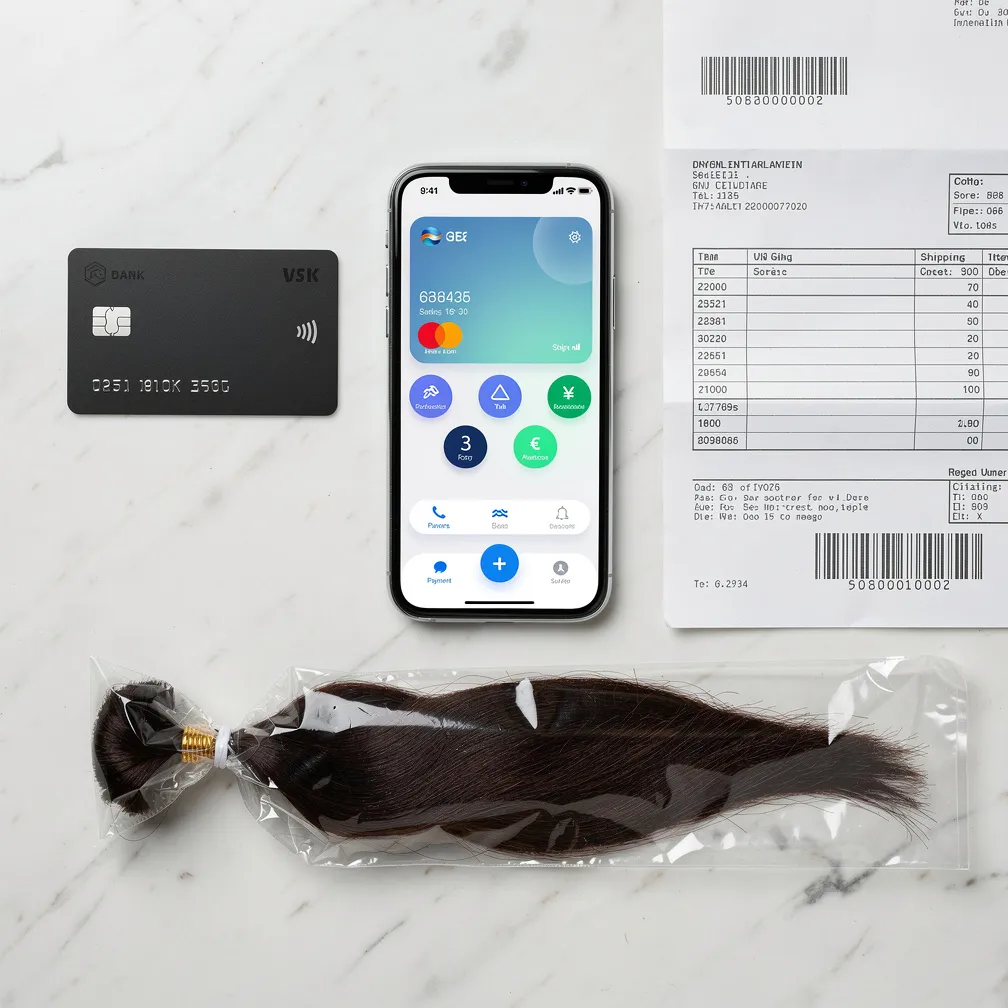
Hair Extension Payment Methods
Paying an Indian hair extension manufacturer safely requires understanding which payment methods are standard in international B2B trade, what protections each method offers, and how to structure payment terms that protect your business while being acceptable to legitimate suppliers. The most widely used method for Indian manufacturing payments is bank wire transfer (Telegraphic Transfer or T/T), typically structured as 30% advance at order confirmation and 70% balance before shipment. This guide explains every major payment option available to international buyers, compares their costs and protection levels, and gives you a practical framework for negotiating payment terms with Indian suppliers. For more details, see our guide on Wholesale Men’s Hair Systems from India. For more details, see our guide on Wholesale Indian Hair Extensions for UK Buyers.
At Hair Extensions By Nature, we work with buyers from over 40 countries and accept multiple international payment methods. Our experience with buyers at every stage — from first sample orders to multi-container annual supply contracts — has given us clear insight into what works for buyers, what creates friction, and what red flags to watch for when evaluating a supplier’s payment requests.
Payment Method 1 — Telegraphic Transfer (T/T / Wire Transfer)
Telegraphic Transfer, commonly called T/T or wire transfer, is the standard B2B payment method for international trade with Indian manufacturers. You initiate a transfer directly from your bank to the manufacturer’s Indian bank account. The funds arrive typically within 2–5 business days.
How T/T Payment Terms Work
The most common T/T structure in hair extension wholesale is:
- 30% advance: Paid at order confirmation, covers raw material procurement
- 70% balance: Paid before dispatch (against scan of shipping documents) or after receiving a copy of the bill of lading
Some manufacturers offer 50/50 terms for new buyers, or 100% advance for very small first orders. Established buyers with a track record may negotiate better terms — 30% advance with 70% net 30 days from shipment date — once mutual trust is established.
T/T Costs and Considerations
Your bank will charge a wire transfer fee (typically $15–$50 per transfer) and apply an exchange rate markup on the currency conversion. The manufacturer’s bank may also deduct a receiving fee from the transfer amount. To ensure the manufacturer receives the full invoiced amount, buyers can send the payment as “beneficiary receives full amount” which covers correspondent bank charges, or simply add a small buffer to cover fees.
Buyer Protection with T/T
T/T provides limited buyer protection compared to card-based payment methods. Once the transfer is sent, it cannot typically be reversed. This is why the advance/balance structure is important — you limit your financial exposure by only advancing 30% until the order is ready to ship. Always require pre-shipment photos of packed goods before releasing the balance payment.
Payment Method 2 — PayPal
PayPal is accepted by many Indian manufacturers for smaller orders and sample payments. PayPal’s key advantage is its buyer protection program, which allows buyers to raise disputes for items not received or not as described. For first sample orders where trust has not yet been established, PayPal provides meaningful protection.
PayPal Costs and Limitations
PayPal charges significant fees on cross-border B2B transactions — typically 3–5% of the transaction value plus a fixed fee, plus an unfavorable currency conversion rate. These fees add up quickly on large orders: a $2,000 order could incur $80–$100 in PayPal fees. As a result, most manufacturers prefer T/T for orders above $500 and may add a PayPal surcharge to offset the fees they absorb.
PayPal’s buyer protection is strongest for consumer goods transactions. For B2B manufacturing orders, especially those involving custom products, PayPal disputes can be complex. Use PayPal for initial sample orders but transition to T/T for commercial volumes.
Contact Hair Extensions By Nature to discuss payment options for your first order →
Payment Method 3 — Wise (Formerly TransferWise)
Wise is an international money transfer platform that offers exchange rates much closer to the mid-market rate than traditional banks, with transparent, low fixed fees. For buyers in the USA, UK, Europe, or Australia sending USD, GBP, EUR, or AUD to an Indian manufacturer’s USD or INR account, Wise is often the most cost-effective option.
Wise Advantages for Hair Extension Buyers
On a $1,000 payment, Wise fees are typically $8–$20 versus $40–$80+ via bank wire. For buyers who place monthly orders, this saving is meaningful. Wise transfers to Indian bank accounts typically arrive within 1–3 business days. Wise does not offer buyer protection on B2B manufacturing orders, so use the same advance/balance payment term structure as with T/T to manage risk.
Payment Method 4 — Letter of Credit (L/C)
A Letter of Credit is a formal bank guarantee mechanism used in international trade for larger transactions, typically $10,000 and above. The buyer’s bank issues a guarantee to pay the manufacturer’s bank when specific shipping documents are presented — confirming that goods have been shipped as specified.
When to Use a Letter of Credit
L/C is appropriate for large first orders with a new supplier where significant money is at risk, or for large ongoing orders where bank-level transaction security is required. L/C involves bank fees on both sides (typically 1–3% of the transaction value total) and requires specific documentation to be prepared correctly by the manufacturer. It is more complex to set up than T/T but provides the strongest available protection for large transactions.
Payment Method 5 — Western Union and MoneyGram
Western Union and MoneyGram are money transfer services more commonly used for personal remittances than B2B trade. They can be used to pay Indian manufacturers but are generally not recommended as a primary payment method for hair extension wholesale orders.
Why Western Union Is Not Recommended for Most B2B Orders
Western Union transfers are largely irreversible once sent, provide no buyer protection, and the cash pickup format used in some regions is harder to document for accounting purposes. Additionally, Western Union is commonly associated with fraud attempts — legitimate manufacturers generally do not require Western Union as their only payment method. If a supplier insists on Western Union exclusively, treat this as a significant red flag.
Payment Method 6 — Escrow Services (Alibaba Trade Assurance and Similar)
If ordering through a B2B platform like Alibaba or TradeIndia, platform escrow services hold your payment until you confirm receipt of goods. Alibaba Trade Assurance is the best-known example — your payment is held by Alibaba and released to the manufacturer only after you confirm order receipt and satisfaction.
Escrow provides strong buyer protection for first orders with unverified suppliers, but fees apply (typically 2–4% of transaction value) and dispute resolution processes can be slow. If you have verified a manufacturer’s credentials directly (factory visit, video call, references), escrow adds cost without necessarily adding meaningful protection beyond what a well-structured T/T deal provides.
Payment Method Comparison Table
| Method | Typical Fee | Speed | Buyer Protection | Best For | Recommended? |
|---|---|---|---|---|---|
| T/T Wire Transfer (Bank) | $15–$50 + FX markup | 2–5 days | Low (structure mitigates risk) | All order sizes, ongoing business | Yes — primary method |
| Wise Transfer | $8–$20 flat | 1–3 days | Low (structure mitigates risk) | Regular orders, cost-conscious buyers | Yes — cost-effective |
| PayPal | 3–5% + fee | Instant | Medium (buyer protection program) | First sample orders only | Yes for samples only |
| Letter of Credit | 1–3% bank fees | 3–7 days setup | Very High (bank guarantee) | Orders $10,000+ with new suppliers | Yes for large orders |
| Alibaba Trade Assurance | 2–4% | 2–3 days | High (platform escrow) | First orders via Alibaba platform | Acceptable with caveats |
| Western Union / MoneyGram | Variable, often high | Same day | None | Not recommended for B2B | Not recommended |
| Cryptocurrency | Network fees (variable) | Minutes–hours | None (irreversible) | Niche use, only if both parties agree | With caution only |
Ask our team about payment terms for your first wholesale order →
Standard Payment Terms in Indian Hair Extension Wholesale
Understanding standard industry payment terms helps buyers negotiate confidently and spot unusual requests that may indicate risk.
First orders: 30–50% advance, balance before shipment. This is universal and reasonable — the manufacturer needs to procure raw materials and dedicate production capacity to your order.
Repeat orders (established buyers): 30% advance, 70% against shipping documents (copy of bill of lading or airway bill). Some manufacturers offer net 30 terms after a solid order history is established, but this is the exception rather than the rule for international buyers.
Sample orders: 100% advance is standard and reasonable for small sample orders where the total value is low. Most manufacturers do not extend partial-advance terms to sample orders.
Large orders ($10,000+): 30% advance, 70% against L/C or against a full set of shipping documents. For very large orders, buyers should strongly consider requesting L/C terms even if the manufacturer does not initially offer them.
Fraud Protection — Red Flags to Watch For
The international hair extension trade includes a small percentage of fraudulent actors. Protect yourself by recognizing these warning signs:
- Request for 100% advance on a large first order: Legitimate manufacturers do not require full payment upfront for large orders from new buyers. They understand risk is mutual.
- Insistence on Western Union or informal transfer only: Established manufacturers accept bank transfers. Exclusive insistence on cash-like methods is a red flag.
- Prices dramatically below market: If bundles are priced 50–70% below industry benchmarks, the product will be substandard or the order will not arrive.
- No factory address or refusal to do a video call: A real manufacturer has a verifiable physical location and is happy to demonstrate it.
- Payment details change after order confirmation: If bank account details change between quotation and invoice, verify the change through a separate communication channel before sending payment. This is a common fraud vector.
For a comprehensive supplier verification process, see our complete guide to sourcing hair extensions from India.
Contact Hair Extensions By Nature
We accept T/T bank transfers, Wise, PayPal (for sample orders), and can arrange L/C for large orders. Our payment terms are transparent and our bank details are verified with each order confirmation.
- WhatsApp / Phone: +91 9289358222
- Email: info@hairextensionsbynature.com
- Factory: Booth No 71, Sector 16 Huda Market, Faridabad, Haryana, India – 121002
Frequently Asked Questions — Paying Indian Hair Extension Manufacturers
Ready to place your first order? Contact Hair Extensions By Nature to discuss payment terms →
One Comment
Comments are closed.