Hair Extension Inventory Management
Hair extension inventory management is one of the most impactful operational disciplines for wholesale distributors and salon owners — yet it receives far less attention than sourcing, marketing, or pricing strategy. Poor inventory management manifests in two damaging ways: stockouts (running out of bestsellers, losing sales, and disappointing clients) and overstock (locking up working capital in slow-moving SKUs that degrade in storage). For wholesale buyers sourcing from India, where lead times range from 10 to 35 days, building a systematic inventory management approach is essential for maintaining service levels without over-investing in stock. This guide provides the practical framework for managing hair extension inventory across a wholesale distribution or salon retail operation.
Hair Extensions By Nature manufactures and exports Remy human hair extensions from Faridabad, India. We work with distributors, salon chains, and online brands to plan order schedules, optimize SKU ranges, and manage replenishment cycles. For related guidance on starting and scaling your hair extension business, see our guides on hair extension MOQ for first-time buyers and hair extension business plan.
The Foundation: Categorizing Your SKUs
Before building an inventory management system, you need a consistent method for categorizing your products. In the hair extension industry, each unique combination of product type, length, texture, color, and density constitutes a distinct SKU (stock keeping unit) that requires individual tracking.
A typical wholesale hair extension distributor might stock:
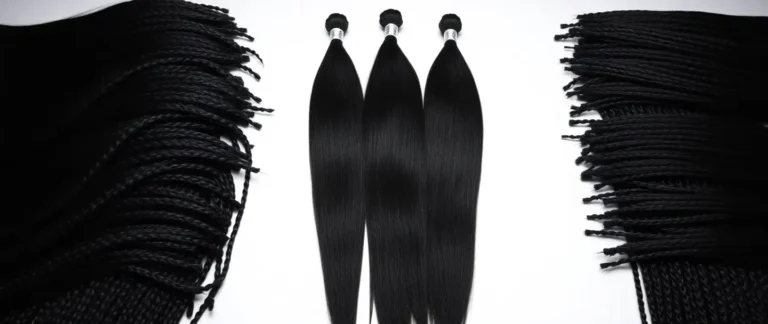
- Product types: weft, tape-in, clip-in, I-tip, U-tip, ponytail, lace front wig, closure wig
- Lengths: 14, 16, 18, 20, 22, 24 inches (each a separate SKU)
- Textures: straight, body wave, deep wave, loose wave
- Colors: 1 (jet black), 1B (natural black), 2 (darkest brown), 4 (dark brown)
- Densities (for wigs): 150%, 180%
A full product matrix across all these variables can easily generate 200+ SKUs. Managing all of these equally is neither practical nor economically rational. The first task is to identify your core SKUs — the items that generate the majority of revenue — versus your peripheral range.
The 80/20 Rule in Hair Extension Inventory
In virtually every hair extension business, the Pareto principle (80/20 rule) applies: approximately 80% of sales revenue comes from approximately 20% of SKUs. Identifying which SKUs fall in that 20% and ensuring they are always in stock is the single highest-impact inventory management action you can take.
To identify your top 20% SKUs, analyze your sales data by SKU over the past 6-12 months and rank by units sold and revenue generated. The top-ranked items are your core inventory that should have robust safety stock levels and regular replenishment cycles. The bottom-ranked items are candidates for discontinuation or very low stock levels.
For new businesses without historical sales data, the following product configuration typically represents the starting core range for most wholesale buyers, based on global demand patterns across the US, UK, and African markets:
Straight weft extensions in 18 and 20 inches in color 1B (natural black) and color 2 (dark brown) are almost universally among the top-selling SKUs for any buyer serving a diverse client base. Adding 16-inch and 22-inch in the same textures and colors completes a strong starting core range. For buyers specifically in the wig category, a 13×4 lace front in Swiss lace, body wave, 150% density at 20-22 inches is typically the top seller.
Plan your next wholesale hair extension order with our team — WhatsApp +91 9289358222
Calculating Your Reorder Points
A reorder point (ROP) is the stock level at which you need to place a new order to avoid running out before the replacement order arrives. Calculating accurate reorder points prevents the most costly inventory failure: stockouts on core SKUs.
The formula is straightforward:
Reorder Point = (Average Weekly Sales x Lead Time in Weeks) + Safety Stock
Where:
- Average weekly sales is the average number of units of that SKU you sell per week (calculate from past 90-180 days of sales data)
- Lead time in weeks is the total time from placing an order with your manufacturer to receiving stock — for Indian manufacturers, this is typically 2-5 weeks depending on product type
- Safety stock is a buffer to cover demand variability and any supplier delays — typically 2-4 weeks of average demand
Example: If you sell an average of 8 units per week of 20-inch straight weft in 1B, your Indian manufacturer has a 3-week lead time, and you want 2 weeks of safety stock, your reorder point is: (8 x 3) + (8 x 2) = 24 + 16 = 40 units. When your stock of that SKU falls to 40 units, place a new order.
Inventory Planning Table by Product Type
| Product Type | Typical Lead Time from India | Recommended Safety Stock | Seasonal Peak Period | Storage Priority | Shelf Life Notes |
|---|---|---|---|---|---|
| Machine weft extensions | 2-3 weeks | 3-4 weeks demand | Pre-summer (April-June), Pre-Christmas | Medium | 12+ months in proper storage |
| Tape-in extensions | 2-3 weeks | 3-4 weeks demand | Pre-summer, Pre-autumn | High (adhesive sensitivity) | Adhesive degrades in heat — climate-controlled storage essential |
| Clip-in extensions | 2-3 weeks | 2-3 weeks demand | Pre-Christmas, Prom (April-May USA) | Low-medium | 12+ months in proper storage |
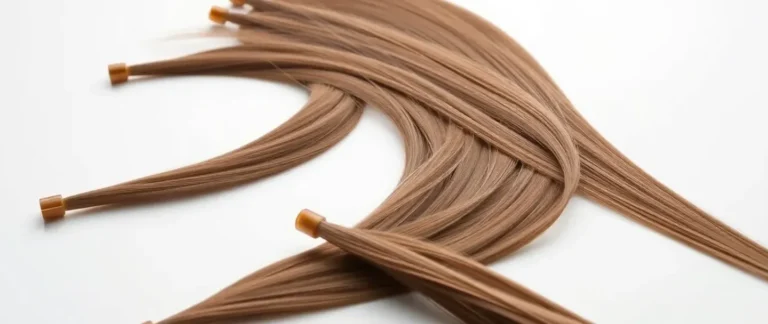
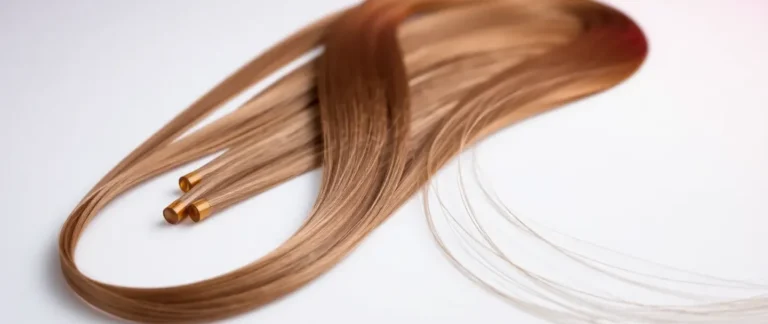
| I-tip / U-tip extensions | 2-4 weeks | 2-3 weeks demand | Pre-summer, back-to-school (August-September) | Medium | Bond tips can be affected by humidity |
| Lace front wigs (standard) | 3-4 weeks | 4-6 weeks demand | Pre-Christmas, Pre-summer | High (lace fragility) | Store flat on wig head; avoid compression |
| Closure wigs | 2-3 weeks | 3-4 weeks demand | Pre-Christmas, Pre-summer | High (lace fragility) | Same as lace front wigs |
| Silk base toppers | 3-5 weeks | 4-8 weeks demand | Steady year-round (low seasonality) | High (delicate construction) | Store in individual boxes; avoid stacking |
| Ponytail extensions | 2-3 weeks | 2-3 weeks demand | Prom (April-June USA), Wedding season | Low-medium | 12+ months in proper storage |
Seasonal Demand Planning
Hair extension demand is not uniform throughout the year. Understanding seasonal peaks allows buyers to plan orders ahead of demand surges rather than reacting to stockouts after sales are already missed.
Pre-summer surge (March-June, Northern Hemisphere): The strongest annual demand period in the US and European markets. Prom season in the US (April-June) drives strong clip-in, ponytail, and updo-style extension demand. Wedding season (April-September) sustains demand through summer. Buyers serving these markets should place their largest pre-summer orders in January-February to receive stock well before the peak.
Pre-Christmas surge (October-November): The second-largest annual demand peak. Holiday parties, family events, and gift purchases drive strong wig and extension sales in November and early December. Stock for Christmas should arrive no later than late October. Place orders in August-September.
Back-to-school (August-September, USA/UK): A secondary peak with moderate demand increase as students return to university and begin new routines including professional hair services. Particularly relevant for salons near university campuses.
Nigerian market peaks: The Nigerian market has additional cultural demand peaks around major celebration periods — Christmas/New Year (December), Easter (March-April), and Owambe season (the Nigerian social event calendar, concentrated in May-June and October-November). Buyers serving Nigeria should plan inventory around these events.
For a detailed analysis of global hair extension market demand patterns, see our guide on global hair extension market trends 2026.
Plan your seasonal inventory order with us — WhatsApp +91 9289358222
MOQ Optimization: Getting More Range for the Same Minimum
A common challenge for hair extension buyers is that manufacturer MOQs require a minimum quantity per SKU that may be higher than demand for some individual items. If a manufacturer requires a minimum of 20 pieces per SKU and you only expect to sell 8 pieces of a specialty color or length, ordering the full MOQ ties up capital in slow-moving stock.
MOQ optimization strategies allow buyers to access a wider range while staying at or above supplier minimums:
SKU bundling: Rather than ordering 20 units of a single SKU, negotiate a combined minimum of 20 units across multiple related SKUs. For example, 10 units of 18-inch straight in 1B plus 10 units of 18-inch straight in color 2 might be accepted at the same combined MOQ threshold. Discuss this with your supplier — many manufacturers accommodate bundled minimums for repeat or established buyers.
Core + peripheral ordering ratio: Order your core bestseller SKUs at full MOQ or above (to build adequate safety stock) and use any additional supplier allocation for smaller quantities of new or specialty items. This allows you to test new SKUs — new textures, colors, lengths — at lower risk while ensuring your volume items are well-stocked.
Seasonal pre-builds: Increase orders of core SKUs pre-peak (as described in the seasonal section above) to build safety stock for high-demand periods. This effectively uses the same MOQ order to accomplish two goals: regular replenishment plus seasonal buffer.
For a detailed guide on navigating MOQ requirements, see our article on hair extension MOQ for first-time buyers.
Storage Requirements for Hair Extensions
Hair extensions are a perishable product in the sense that incorrect storage conditions can degrade quality before sale — which is both a financial loss and a client satisfaction risk. The following storage guidelines apply:
Temperature: Store in a cool, dry environment. Ideal storage temperature is 15-25°C (60-77°F). Avoid storing in areas that experience temperature extremes — very hot storage (above 35°C) accelerates degradation of tape adhesives on tape-in extensions and can affect the structure of keratin bond tips on I-tip and U-tip extensions.
Humidity: Moderate humidity (40-60% relative humidity) is ideal. Very high humidity causes hair to frizz and may promote mold growth in improperly packaged products. Very low humidity causes static and brittleness.
Light exposure: Avoid prolonged exposure to direct sunlight or strong artificial UV light. UV radiation fades hair color over time, especially in processed or colored products. Store in closed boxes or on shelving with UV-filtering covers.
Compression: Do not store wigs and toppers under heavy compression. Lace structures flatten and distort under pressure. Store wigs either on wig heads or loosely in individual boxes. If stacking boxes of wigs, limit the stack height to avoid compression damage to items at the bottom.
Packaging integrity: Maintain original factory packaging where possible. Hair packed in sealed polybags with the original product label is protected from dust, humidity, and handling damage. Only open packaging for quality inspection or sale. Re-seal opened bundles in clean polybags if not immediately sold.
Digital Inventory Tracking: Minimum Viable System
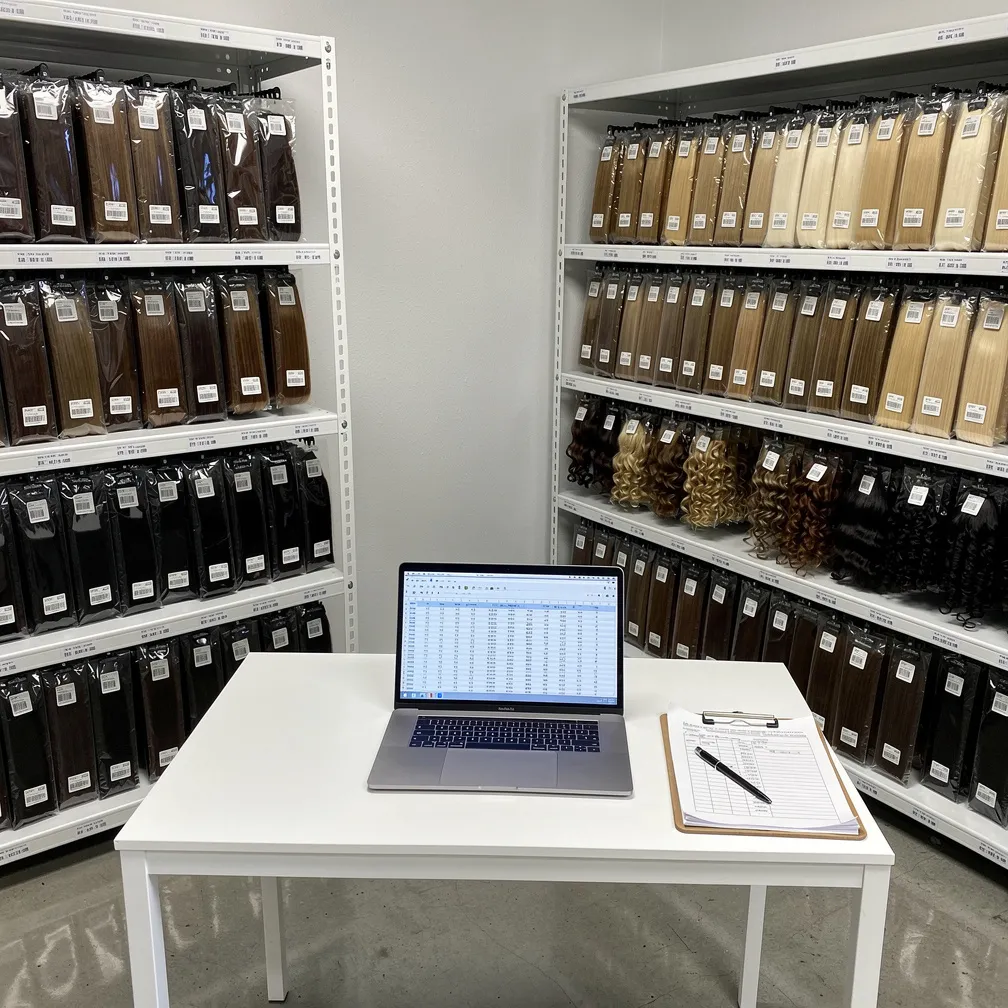
A manual inventory count is sufficient for very small operations (under 100 total SKU units), but as operations grow, a digital system saves time and prevents errors. You do not need expensive dedicated software to manage a hair extension inventory effectively. A well-structured spreadsheet (Google Sheets or Excel) with the following columns for each SKU provides an effective minimum viable system:
- SKU ID and description (product type, length, texture, color, density)
- Current stock quantity
- Average weekly sales (updated monthly)
- Lead time from supplier (weeks)
- Reorder point (calculated from formula above)
- Stock on order (units ordered but not yet received)
- Last order date and quantity
- Notes (seasonal adjustments, pending promotional demand)
Review your inventory spreadsheet weekly, updating current stock quantities based on sales and incoming stock. Flag any SKUs where current stock has fallen below the reorder point for immediate order action. This weekly discipline — 30-60 minutes per week — prevents the majority of stockout events that cost revenue.
Working Capital Implications of Inventory Decisions
Inventory is working capital. Every unit sitting on your shelf represents money that could be deployed elsewhere. For hair extension distributors, the optimal inventory level is the minimum quantity that keeps you from stocking out on core SKUs during the longest realistic lead time scenario (standard lead time plus any potential supplier delay buffer).
Over-investing in inventory is a common business failure mode for new distributors who are excited by the product range and order broadly across many SKUs. Focus initially on depth (adequate safety stock) in the few SKUs you know will sell before breadth (variety of SKUs across many types and colors). As your sales data builds, expand the range based on demonstrated demand rather than anticipated demand. For guidance on building a sustainable financial model for your hair extension business, see our guide on hair extension business profit margins.
Frequently Asked Questions
Q: How do I calculate a reorder point for hair extensions?
Formula: (Average Weekly Sales x Lead Time in Weeks) + Safety Stock. Example: 8 units/week x 3-week lead time + 16 units (2-week safety stock) = reorder point of 40 units. When stock falls to 40, order immediately.
Q: How should hair extensions be stored?
Cool (15-25°C), dry (40-60% humidity), away from UV light. Tape-in adhesives are heat-sensitive — do not store above 30°C. Wigs need storage on wig heads or in individual boxes without compression. Keep original sealed packaging until point of sale.
Q: When should I order for peak seasons?
For the pre-summer peak (April-June), order in January-February. For pre-Christmas (November-December), order in August-September. Always factor in supplier lead time plus a buffer for potential delays.
Work With Hair Extensions By Nature to Plan Your Wholesale Inventory
Our team at Hair Extensions By Nature works with wholesale distributors and salon buyers to plan order schedules, optimize SKU ranges, and manage replenishment cycles. We manufacture all product types — weft extensions, tape-in, clip-in, I-tip, U-tip, wigs, toppers, and ponytail extensions — from our Faridabad, India factory, giving you a single-source option for your full product range.
- WhatsApp / Phone: +91 9289358222
- Email: info@hairextensionsbynature.com
- Factory: Booth No 71, Sector 16 Huda Market, Faridabad, Haryana, India – 121002
WhatsApp us to discuss your inventory planning and next wholesale order — +91 9289358222
Start Your Hair Extensions Dropship Business
Zero inventory. Premium Indian Remy hair. Ship worldwide under your brand. MOQ as low as 5 pieces.