Hair Extension Cost Per Kg India 2026
Hair Extension Cost Per Kg India 2026 — Complete Pricing Reference
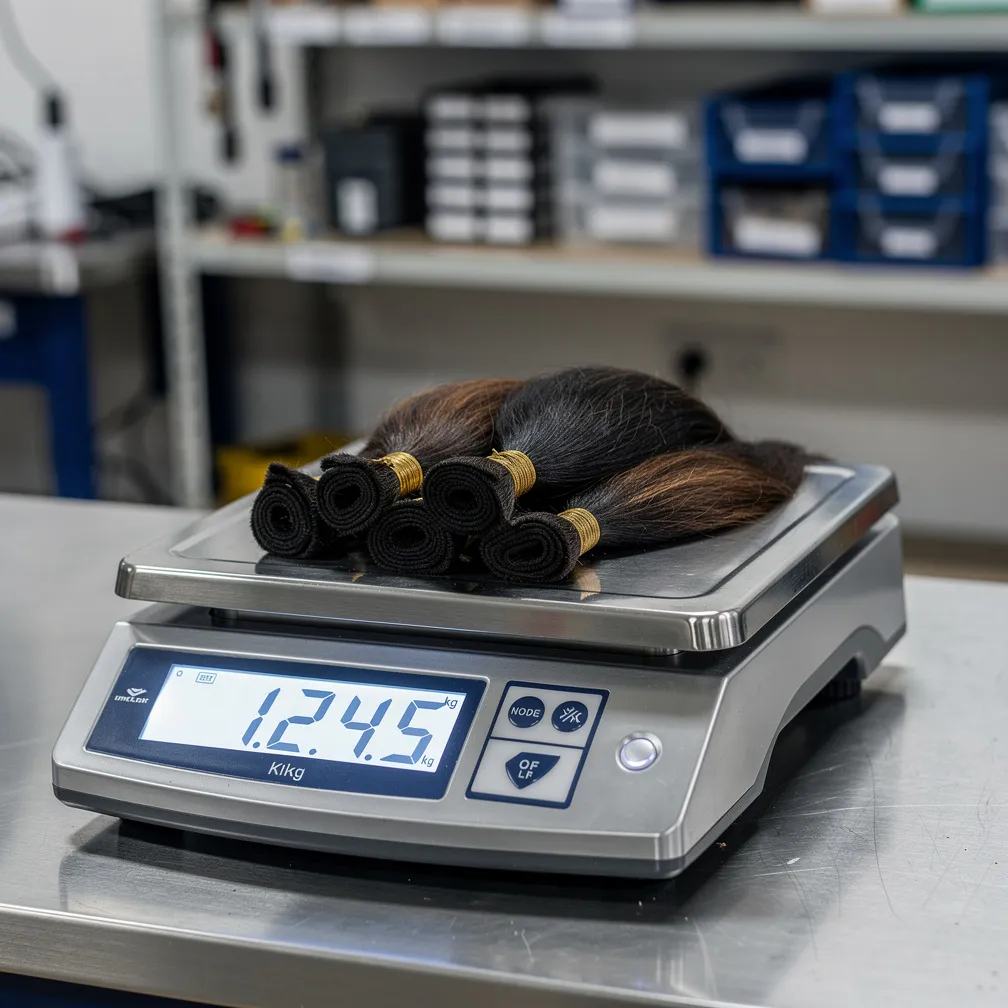
Hair extension cost per kg from India in 2026 ranges from USD 80 to USD 500, with the price determined primarily by hair grade (raw temple, Remy processed, or non-Remy), length, and whether the hair is single-drawn or double-drawn. India remains the dominant global source, accounting for approximately 93% of the world’s raw human hair exports, and understanding the current per-kilogram pricing structure is essential for any wholesale buyer planning procurement budgets, negotiating with suppliers, or benchmarking existing supplier pricing against market rates.
This pricing reference is published by Hair Extensions By Nature, a direct manufacturer based in Faridabad, Haryana, India. The figures below reflect actual factory-gate and FOB pricing ranges as of early 2026, drawn from our manufacturing and export operations serving buyers in over 30 countries. Prices fluctuate based on raw material availability, seasonal collection cycles, and global demand — the ranges provided here represent the middle of the market for genuine, quality-verified product.
Get exact pricing for your specific requirements. These are market ranges — your actual cost depends on grade, length, volume, and processing specifications. WhatsApp us with your product list for a precise quotation.
Pricing by Hair Grade
The grade of hair is the primary price determinant. In 2026, the Indian hair extension market recognizes three broad grade categories, each with distinct sourcing, processing, and pricing characteristics.
| Hair Grade | Price per Kg (USD) | Source | Processing |
|---|---|---|---|
| Raw Temple Hair | $150 – $500 | Temple donations (Tirupati, Tirumala, Palani) | Unprocessed; sorted and washed only |
| Remy Processed Hair | $100 – $350 | Temple hair and direct village collection | Cuticle-aligned, colored, or treated |
| Non-Remy / Fallen Hair | $80 – $150 | Comb waste, salon floor collection | Acid-bathed, silicone-coated |
A critical distinction buyers must understand: non-Remy hair is significantly cheaper because it has been acid-washed to strip cuticles and then coated with silicone to simulate smoothness. This coating washes out within 5-10 shampoos, resulting in severe tangling and customer complaints. The price difference between non-Remy and genuine Remy hair is the cost of quality — and of customer retention.
Pricing by Length
Length is the second-largest price driver. Longer hair requires longer donor hair, which is rarer and commands a significant premium. The following table shows approximate per-kilogram pricing for Remy processed hair across standard lengths:
| Length (inches) | Remy Processed (per kg) | Raw Temple (per kg) | Price Index |
|---|---|---|---|
| 8-10″ | $100 – $130 | $150 – $200 | 1.0x (base) |
| 12-14″ | $130 – $170 | $200 – $260 | 1.3x |
| 16-18″ | $170 – $230 | $260 – $340 | 1.7x |
| 20-22″ | $230 – $300 | $340 – $420 | 2.3x |
| 24-26″ | $300 – $350 | $420 – $500 | 3.0x |
| 28-30″ | $350 – $400+ | $500+ | 3.5x+ |
Note that hair above 26 inches is exceptionally rare in Indian sourcing and may require extended lead times. Buyers requesting 28-30 inch hair should expect longer production timelines and limited batch quantities.
Single-Drawn vs. Double-Drawn Pricing
The draw type significantly affects both the weight-to-volume ratio and the price. Double-drawn hair has all shorter strands removed, resulting in bundles that are uniformly full from root to tip. This additional hand-processing step adds 30-50% to the cost.
For example, a kilogram of 18-inch single-drawn Remy hair priced at $200 would cost $260-$300 in double-drawn form. The premium is justified by the dramatically better appearance and customer satisfaction — double-drawn hair looks thicker at the ends, reduces the number of bundles a client needs, and generates significantly fewer complaints about thin or tapered ends.
Most experienced wholesale buyers serving premium markets order exclusively double-drawn. Buyers serving price-sensitive markets often start with single-drawn and upgrade their product line as their brand gains traction.
Seasonal Price Variations
Hair extension prices from India follow seasonal patterns driven by raw material collection cycles and global demand fluctuations:
- April through June: Peak temple collection season in South India. Raw material supply is highest, but prices do not always drop because global demand is simultaneously strong for wedding and summer seasons in the Northern Hemisphere
- July through September: Post-collection processing period. Factories have strong inventory, and this is often the best window for negotiating favorable per-kg rates
- October through December: Pre-holiday and festive season demand drives prices upward, particularly for processed and ready-to-ship inventory. Lead times also extend
- January through March: A relatively stable pricing period. Temple collections slow during this period, but factory inventory from the previous cycle is usually sufficient to maintain supply
Buyers who plan procurement around these cycles can save 5-10% on annual purchasing costs by placing larger orders during July-September when factory capacity is available and raw material stocks are fresh.
Bulk Discount Tiers
Volume purchasing directly from a manufacturer produces significant cost savings. The table below illustrates typical discount structures available from established Indian manufacturers like Hair Extensions By Nature:
| Order Size | Discount Range | Buyer Profile |
|---|---|---|
| 1-5 kg | Standard pricing | New buyers, sample/trial orders |
| 5-10 kg | 5-10% off | Small salon owners, online retailers |
| 10-25 kg | 10-15% off | Regional distributors, multi-salon chains |
| 25-50 kg | 15-20% off | National distributors, brand builders |
| 50+ kg | 20-25% off | Large-scale importers, private label brands |
Ready to place a bulk order? Hair Extensions By Nature offers factory-direct per-kg pricing with volume discounts up to 25%. Tell us your required grade, length, and quantity, and we will send a detailed quotation within 24 hours.
Factors That Affect Your Final Per-Kg Cost
Beyond grade, length, draw type, and volume, several additional factors influence the per-kg price you ultimately pay:
- Color processing: Natural black hair is cheapest. Light brown and blonde colors add $20-60 per kg due to bleaching and dyeing costs
- Texture: Straight hair is standard-priced. Body wave adds a small premium. Deep curly or custom textures add 10-20% due to additional steam or perming processing
- Construction type: Raw bulk hair is priced per kg. Machine weft, hand-tied weft, tape-in, and clip-in constructions add labor costs that range from $15-80 per kg depending on complexity
- Packaging: Standard polybag packaging is included. Custom branded boxes, satin bags, and printed inserts add $1-5 per unit
- Incoterms: FOB pricing is lower than CIF or DDP because shipping and insurance are buyer-paid. Always clarify which Incoterm applies when comparing quotes
Why Source From Hair Extensions By Nature
Hair Extensions By Nature (legal entity: Hair Envy LLP) provides transparent per-kg pricing directly from our manufacturing facility in Faridabad, Haryana. As a direct manufacturer — not a trading company — our prices reflect actual production costs plus a fair margin, with no intermediary markups. We source raw temple hair through verified, ethical channels and process it in our own facility, giving us full control over quality and cost at every stage.
Our export team provides itemized quotations that break down product cost, processing fees, packaging, and shipping so buyers know exactly what they are paying for. We welcome factory visits and video walkthroughs for any buyer who wants to verify our operations firsthand. Contact us at +91 9289358222 (WhatsApp) or info@hairextensionsbynature.com.
Frequently Asked Questions
What is the cost of raw temple hair per kg in India in 2026?
Raw temple hair from India costs between USD 150 and USD 500 per kilogram in 2026, depending on length and quality. Shorter lengths (8-12 inches) are at the lower end of the range, while lengths above 22 inches command $400-500+ per kg. Raw temple hair is unprocessed and retains all original cuticles, making it the most sought-after grade globally.
Why is there such a wide price range for Indian hair extensions?
The wide price range reflects differences in hair grade (raw temple vs. Remy processed vs. non-Remy), length, draw type (single vs. double-drawn), color processing, and construction method. A kilogram of 10-inch non-Remy hair at $80 and a kilogram of 24-inch raw temple double-drawn hair at $500 represent entirely different products in terms of sourcing difficulty, processing labor, and end-use quality.
When is the cheapest time to buy hair extensions from India?
July through September is typically the most favorable buying window for Indian hair extensions. This period follows the peak temple collection season (April-June), meaning factories have strong raw material inventory and available production capacity. Buyers can often negotiate 5-10% better rates during this window compared to peak demand periods in October-December.
How many bundles does 1 kg of hair extensions yield?
One kilogram of hair extensions yields approximately 10 standard bundles at 100 grams each, or 6-7 double-drawn bundles at 150 grams each. The exact yield depends on the bundle weight specification and construction type. Weft extensions typically use 100g bundles, while clip-in sets range from 100-220g per set depending on piece count.
Is it cheaper to buy hair extensions by kg or by piece from India?
Buying by kilogram is almost always cheaper than buying by piece for raw and bulk hair. Per-kg pricing from a direct manufacturer eliminates the per-unit packaging and handling costs that are built into per-piece pricing. However, finished products like clip-in sets and tape-in packs are typically quoted per piece since their construction labor cost varies independently of weight.
What is the minimum order quantity for per-kg hair purchases from India?
Most direct Indian manufacturers accept minimum orders of 1 kg for raw hair and bulk hair. For specific length and grade combinations, the practical minimum may be 2-3 kg to ensure batch consistency. Custom color orders typically require a minimum of 3-5 kg per color. Hair Extensions By Nature accepts orders starting from 1 kg for standard grades and lengths.
Start Your Hair Extensions Dropship Business
Zero inventory. Premium Indian Remy hair. Ship worldwide under your brand. MOQ as low as 5 pieces.