How Much Is the Hair Extension Industry Worth
How Much Is the Hair Extension Industry Worth in 2026?
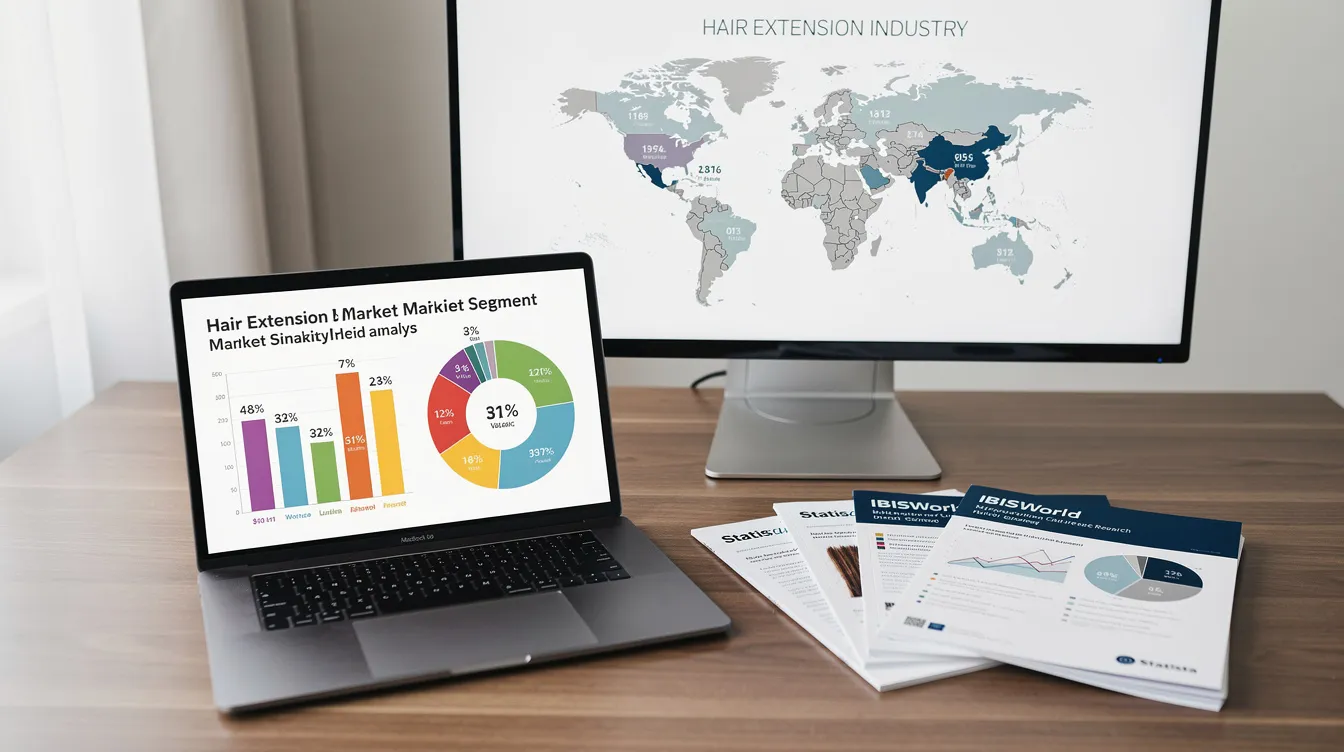
The global hair extension industry is worth approximately USD 12-14 billion in 2026, growing at 7-9 percent CAGR toward an estimated USD 16-19 billion by 2030. Key breakdown: human hair segment USD 8.4-9.8 billion (70 percent of total), synthetic segment USD 3.6-4.2 billion (30 percent). By category, extensions (non-wig) represent USD 7-8 billion, wigs USD 4-5 billion, and men’s hair systems USD 1.2-1.5 billion. By channel: B2B wholesale to salons and distributors is USD 7-8 billion (60 percent), D2C retail USD 4-5 billion (35 percent), salon-service embedded USD 1-1.5 billion (5-10 percent). North America is the largest single regional market at USD 4-4.5 billion. India is the largest human-hair producer globally, supplying approximately 60-70 percent of global human hair extension volume. This guide provides the 2026 market-size deep dive with source references, regional breakdown, and channel mix that serious buyers, investors, and brand builders need for strategic planning.
Hair Extensions By Nature tracks market-sizing data through IBISWorld, Statista, Grand View Research, and Mordor Intelligence reports, cross-referenced with our own export data and partner network feedback. Full 2026 Industry Value Report available to distribution partners.
Need market-size data for strategy or investor decks? Request our 2026 Industry Value Report with source-attributed breakdown.
Global Market Size — 2026 Snapshot
| Segment | 2026 Value | Share of Global |
|---|---|---|
| Total global hair extension industry | USD 12-14 billion | 100 percent |
| Human hair extensions | USD 8.4-9.8 billion | ~70 percent |
| Synthetic extensions | USD 3.6-4.2 billion | ~30 percent |
| Extensions (non-wig) | USD 7-8 billion | ~55 percent |
| Wigs | USD 4-5 billion | ~33 percent |
| Men’s hair systems | USD 1.2-1.5 billion | ~10 percent |
Regional Breakdown
| Region | 2026 Value | YoY Growth |
|---|---|---|
| North America (USA, Canada) | USD 4-4.5 billion | +3-5 percent |
| Europe (UK, Germany, Italy, France) | USD 2.5-3 billion | +5-7 percent |
| Asia Pacific (Japan, Korea, SEA, Australia) | USD 2-2.5 billion | +6-9 percent |
| Africa (Nigeria, South Africa, Ghana) | USD 1.5-2 billion | +18 percent |
| Middle East (UAE, Saudi, Kuwait) | USD 1-1.2 billion | +8 percent |
| Latin America | USD 0.6-0.8 billion | +12-15 percent |
Channel Mix
| Channel | 2026 Value | Share |
|---|---|---|
| B2B wholesale (salons, distributors) | USD 7-8 billion | ~60 percent |
| D2C retail (brands, ecommerce) | USD 4-5 billion | ~35 percent |
| Salon-service embedded (bundled with install) | USD 1-1.5 billion | ~5-10 percent |
Production Side — Where the Supply Comes From
- India: Largest producer globally — approximately 60-70 percent of global human hair extension volume. Temple-donation supply plus integrated processing creates dominant position.
- China: Synthetic-hair manufacturing dominance; also significant human-hair processing (often of Indian-origin raw material imported for finishing).
- Vietnam and Myanmar: Secondary raw hair sources complementing Indian supply.
- Brazil and Peru: Regional human-hair production serving Latin America.
- Ukraine and Russia: European and Slavic virgin hair — premium niche for luxury wigs.
Growth Drivers and Headwinds
Growth drivers:
- Male grooming market expansion driving men’s hair systems.
- African middle-class growth driving volume demand in Nigeria, South Africa, Ghana.
- D2C brand proliferation expanding retail channel.
- Social media influence on styling trends.
- Medical wig demand (alopecia, oncology) steady baseline growth.
Headwinds:
- Raw Indian temple hair supply tightening.
- Labor cost inflation at manufacturer level.
- EU and US regulatory tightening on personal-care imports.
- Sustainability and ethical-sourcing documentation costs.
2030 Forecast
At a 7-9 percent CAGR from 2026 base, the industry reaches USD 16-19 billion by 2030. Key shifts expected:
- Men’s systems category grows to USD 2.5-3 billion (from USD 1.2-1.5 billion in 2026).
- African regional market grows to USD 3.5-4 billion (from USD 1.5-2 billion).
- Private label and OEM share of B2B rises from ~25 percent to ~40 percent.
- Synthetic share rises modestly from 30 to 33-35 percent of total market.
- India retains 60-70 percent share of human hair supply but faces competition from Vietnam in raw-hair sourcing.
Source References
- IBISWorld — Global Hair Extension Manufacturing industry report.
- Statista — Hair extension market size and forecast.
- Grand View Research — Hair Extensions Market Size, Share & Trends Analysis Report.
- Mordor Intelligence — Hair Extensions Market industry analysis.
- Indian DGFT — HS 6703 export data.
- Euromonitor — Personal care and beauty industry statistics.
Why Strategic Partners Work With Hair Extensions By Nature?
Hair Extensions By Nature combines export data from our own shipments to 40+ countries with syndicated market research to provide our distributor and brand partners with actionable industry intelligence. Our Industry Value Report is updated quarterly and distributed to active partnership accounts.
Frequently Asked Questions
How much is the hair extension industry worth in 2026?
USD 12-14 billion globally. Human hair segment 70 percent (USD 8.4-9.8B). Synthetic 30 percent (USD 3.6-4.2B). Projected 2030 size USD 16-19 billion at 7-9 percent CAGR.
What is the largest hair extension regional market?
North America at USD 4-4.5 billion (approximately 30 percent of global). Europe second at USD 2.5-3 billion. Asia Pacific third at USD 2-2.5 billion.
Which country produces the most hair extensions?
India produces 60-70 percent of global human hair extension volume. Temple-donation supply plus integrated processing creates dominant position. China dominates synthetic-hair manufacturing and also processes some Indian-origin raw material.
What is the CAGR of the hair extension industry?
7-9 percent annually projected through 2030. Growth varies significantly by region: Africa +18 percent, Latin America +12-15 percent, Asia Pacific +6-9 percent, Europe +5-7 percent, North America +3-5 percent.
What percentage of hair extensions is human vs synthetic?
70 percent human hair, 30 percent synthetic by 2026 market value. Synthetic share expanding modestly toward 33-35 percent by 2030 due to improved synthetic fiber quality and volume D2C brand growth.
How much of the industry is B2B vs D2C?
60 percent B2B wholesale to salons and distributors. 35 percent D2C retail through brands and ecommerce. 5-10 percent salon-service embedded (extensions bundled with install service pricing).
What is the fastest-growing category?
Men’s hair systems at 22 percent annual growth. Private label and OEM programs at 25 percent growth. Africa regional market at 18 percent growth. These three are the fastest-growing sub-segments in 2026.
Ready for Industry Intelligence?
info@hairextensionsbynature.com or quote request form.
Hair Extensions By Nature — Manufacturer and Exporter of Premium Indian Human Hair Extensions. Factory: Booth No 71, Sector 16 Huda Market, Faridabad, Haryana, India — 121002. Serving salons, distributors, and brands in 40+ countries.
Start Your Hair Extensions Dropship Business
Zero inventory. Premium Indian Remy hair. Ship worldwide under your brand. MOQ as low as 5 pieces.