Hair Extension OEM Manufacturing in India
Hair extension OEM manufacturing in India is the most cost-effective and technically capable route for brand owners, entrepreneurs, and distributors who want to launch or scale a private label hair extension business. India’s position as the world’s largest human hair exporter — supplying over $400 million in hair annually — combined with a mature, experienced OEM manufacturing sector means that anyone from a startup brand owner to a large retail chain can access factory-direct private label production with full customization capability. This guide explains what OEM manufacturing means in the hair extension context, how it differs from ODM (Original Design Manufacturer) arrangements, what the complete production process looks like from brief to brand launch, and what you need to know to build a successful OEM relationship with an Indian manufacturer.
Hair Extensions By Nature operates a full OEM manufacturing program from our factory in Faridabad, Haryana, India. We manufacture private label hair extensions for brands in the USA, UK, UAE, Germany, Italy, and Australia across all major extension methods — tape-in, machine weft, hand-tied weft, clip-in, and keratin bond — with complete custom packaging, labeling, and branding services. This guide is built on our direct OEM manufacturing experience.
OEM vs ODM — Understanding the Difference
The terms OEM (Original Equipment Manufacturer) and ODM (Original Design Manufacturer) are used somewhat interchangeably in the hair extension industry but have distinct technical meanings that are worth understanding.
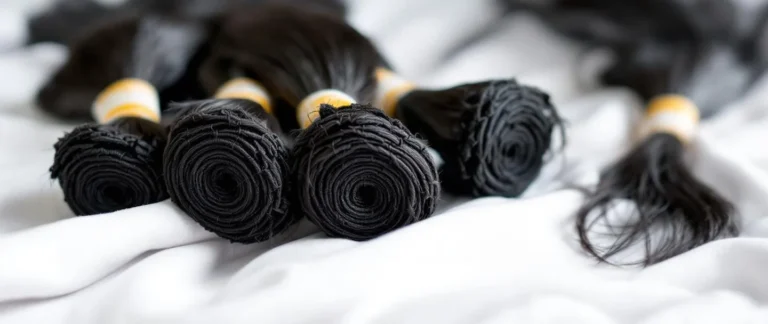
OEM manufacturing means the manufacturer produces a product according to the buyer’s specifications, under the buyer’s brand. The buyer owns the product design, brand name, and packaging — the manufacturer provides the production capability, raw materials, and manufacturing expertise. In hair extension terms, OEM means you specify the hair type (Indian Remy, virgin, processed), texture (straight, body wave, curly), length (12-30 inches), weight (100g, 150g), extension method (tape-in, weft, keratin bond), color range, and packaging design — and the manufacturer produces exactly what you specify under your brand name.
ODM manufacturing means the manufacturer designs and develops the product, and the buyer licenses that product for their brand. The manufacturer owns the underlying product design. In practice, most Indian hair extension manufacturers offer a hybrid: they have standard product lines (ODM baseline) that buyers can customize with their own branding and packaging (OEM element), often with some product specification adjustments possible. This hybrid is the most accessible entry point for new brand owners, because it reduces development time and minimum investment while still delivering a branded product.
For buyers with specific, differentiated product requirements — a unique texture blend, a proprietary bond formulation, a specific raw hair grade — full OEM manufacturing where all specifications are buyer-defined is the right approach. For buyers launching a first brand or testing a new market, ODM-plus-branding (manufacturer’s standard product with your packaging) reduces time-to-market and initial investment significantly.
To explore OEM manufacturing options for your brand, contact Hair Extensions By Nature via WhatsApp: https://wa.me/919289358222
The OEM Hair Extension Production Process
Understanding the complete OEM production workflow helps brand owners set realistic timelines, ask the right questions, and manage their business planning around the production cycle. The process has five phases:
Phase 1: Briefing and Specification
The OEM process begins with a detailed product brief. This document defines every aspect of the product you want manufactured: hair type and grade (raw temple, Remy processed, single donor), texture and curl pattern, length range (e.g., 12, 16, 20, 24 inches), bundle weight (100g standard or custom), color range, extension method, and any special processing requirements (e.g., steam processed only, ammonia-free color).
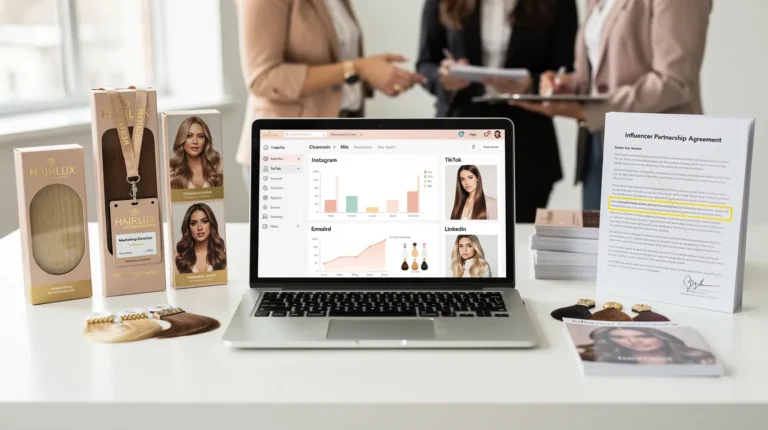
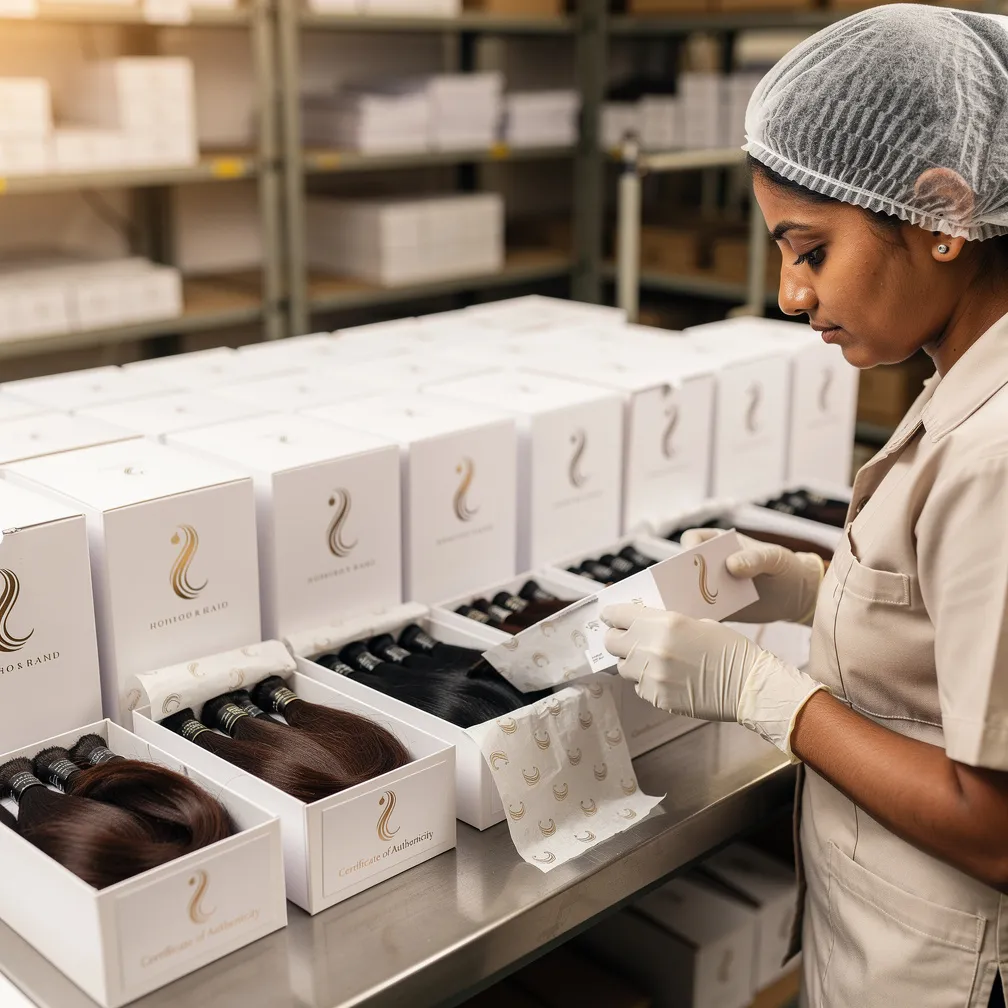
Packaging specifications should also be included in the brief: box dimensions and material, box printing design (you will supply print-ready artwork or the manufacturer can create it at additional cost), inner packaging (tissue, authenticity cards, care instructions), and any labels, tags, or holographic stickers. The more complete your brief, the more accurate the manufacturer’s quotation and the fewer revision cycles during sample development.
Phase 2: Sample Development
Once specifications are agreed and a deposit paid, the manufacturer produces product samples for your approval. For OEM hair extension samples, expect 2-3 week production time for hair product samples and 3-4 weeks if custom packaging samples are included. Review samples carefully against your specification document — check hair quality, weight accuracy, color accuracy (compare to your specified color chart reference), texture consistency, and packaging quality and print accuracy.
Most OEM buyers require 1-2 rounds of sample revisions before approving for production. Each revision round adds approximately 2-3 weeks to the timeline. Minimizing revision rounds requires precise, clear specifications upfront — ambiguous specifications produce inconsistent samples. When approving final samples, retain a physical approval sample for quality reference on the commercial order.
Phase 3: Commercial Order Production
After sample approval, commercial production begins. Production lead time for a typical OEM order (100-500 pieces per SKU) is 3-5 weeks from approval and deposit confirmation. Large orders (1,000+ pieces) may require 6-8 weeks, particularly if raw material procurement is required for non-standard specifications. Track your order through WhatsApp updates from your account manager — progress milestones (raw material received, production started, QC inspection date, packing completion) should be communicated proactively throughout the production period.
Phase 4: Quality Inspection
Professional OEM manufacturers conduct a comprehensive quality inspection before packing and shipping. This inspection should verify: correct product mix against your order, bundle weights within tolerance, color accuracy against approval samples, cuticle alignment and texture consistency, packaging integrity and print accuracy, and correct labeling. Request a pre-shipment inspection report with photographs from your manufacturer before authorizing shipment payment.
For large or critical orders, consider engaging a third-party inspection company (SGS, Bureau Veritas, QIMA) to conduct an independent pre-shipment inspection at the factory. The cost ($200-400 per inspection day) is modest relative to the risk reduction it provides, particularly for first commercial orders from a new manufacturing partner.
Phase 5: Shipment and Documentation
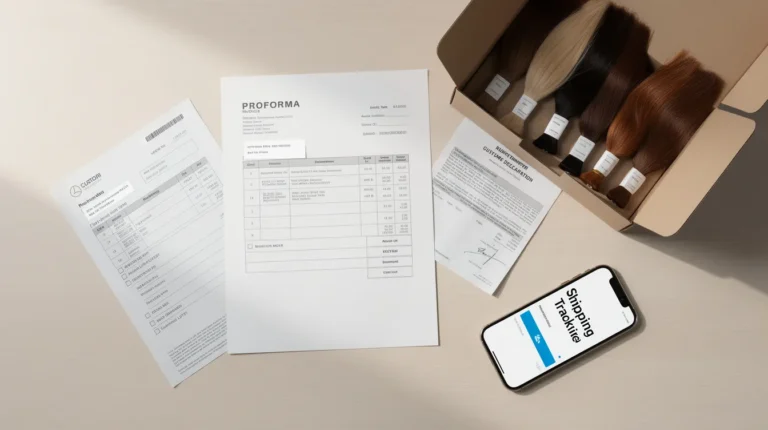
Once inspection is passed and final payment confirmed, the order is packed and shipped. Export documentation for an OEM hair extension shipment includes: commercial invoice (with your brand name and buyer details), packing list, airway bill or bill of lading, certificate of origin (for duty preference if applicable), and any regulatory documentation required for your destination market (EU GPSR product declaration, for example). Ensure your manufacturer provides complete, accurate documentation — customs delays caused by documentation errors are costly and avoidable.
For OEM production timeline and packaging development support, contact our team: https://wa.me/919289358222
OEM Timeline and Process Reference Table
| Phase | Activity | Duration | Buyer Responsibility | Manufacturer Responsibility | Key Milestone |
|---|---|---|---|---|---|
| Phase 1 | Brief and specification | 1-2 weeks | Complete product brief, packaging artwork | Quotation, feasibility review | Signed specification sheet |
| Phase 1 | Pricing and MOQ negotiation | 3-5 days | Review and approve quotation | Submit detailed quotation | PO and deposit payment |
| Phase 2 | Hair sample production | 2-3 weeks | Provide color reference, length specs | Produce product samples | Samples shipped to buyer |
| Phase 2 | Packaging sample production | 3-4 weeks (parallel) | Provide print-ready artwork | Produce packaging prototypes | Packaging sample approved |
| Phase 2 | Sample review and revision | 1-2 weeks per round | Detailed revision notes | Implement revisions | Final sample approval |
| Phase 3 | Commercial production | 3-5 weeks | Confirm final specifications | Full production run | Production completion notice |
| Phase 4 | Quality inspection | 2-3 days | Review inspection report | Conduct full QC inspection | Inspection report with photos |
| Phase 5 | Final payment and packing | 2-3 days | Confirm and pay balance | Pack and prepare shipment | Shipping booking confirmed |
| Phase 5 | Shipment and transit | 5-8 days (air) | Customs clearance at destination | Prepare and submit export docs | Delivery at destination |
Total timeline from initial inquiry to delivery: approximately 10-16 weeks for a standard first OEM order including sample development and commercial production.
Minimum Order Quantities for OEM Hair Extensions
OEM manufacturing MOQs vary significantly between manufacturers and between product types. Understanding realistic MOQ levels is essential for financial planning before approaching manufacturers. At Hair Extensions By Nature, our OEM MOQs are structured to be accessible for brand builders at various stages:
For ODM-plus-branding (our standard hair with your packaging): minimum 50 pieces per SKU for first orders, with packaging setup charges applying for custom box production. For full OEM custom specification products: minimum 100-150 pieces per SKU to support dedicated raw material procurement and production setup. For keratin bond and tape-in extensions: minimum 300-500 strands/pieces respectively per SKU. For custom packaging only (using our standard hair formulation): minimum printing run of 200 units for custom boxes is typical, though some printers accommodate lower runs at higher per-unit cost.
For brand owners launching a first collection across multiple SKUs (e.g., 5 textures x 4 lengths = 20 SKUs), the total first order investment at minimum MOQs is substantial. Many brands start with a focused assortment — 2-3 textures in 3-4 lengths — to minimize initial investment and test market response before scaling into a full range.
Quality Assurance in OEM Manufacturing
Quality assurance for OEM manufacturing requires the buyer to be more actively involved than for standard wholesale purchases, because the product carries your brand name and any quality failure is perceived as a brand failure rather than a supplier failure by your end customers. The key quality mechanisms for OEM buyers are:
Precise specification documentation that leaves no room for interpretation. Clear approval samples retained by both parties for batch-to-batch comparison. Pre-shipment inspection reports (from the manufacturer) with quantitative data on weight verification, color check, and defect rate. Independent third-party inspection for commercial orders above your personal risk threshold. And ongoing quality monitoring of live market product — testing product from stock, not just inspection samples, to catch any production drift over time.
For OEM manufacturing inquiries and a full capability discussion, contact Hair Extensions By Nature: WhatsApp: https://wa.me/919289358222 | Email: info@hairextensionsbynature.com | Factory: Booth No 71, Sector 16 Huda Market, Faridabad, Haryana, India – 121002 | Phone: +91 9289358222
Frequently Asked Questions
What is the minimum investment to launch a private label hair extension brand with Indian OEM manufacturing?
For a focused launch of 2-3 textures in 3-4 lengths (8-12 SKUs) using ODM-plus-branding, the minimum investment is approximately $3,000-8,000 USD including product cost, custom packaging setup, and shipping. Full OEM with custom-specified product formulations requires higher MOQs and typically a minimum investment of $8,000-15,000 for a first commercial order. Exact figures depend on product specifications, length mix, and packaging complexity.
How long does it take to launch a hair extension brand with an Indian OEM manufacturer?
The complete process from initial inquiry to delivery of your branded product typically takes 10-16 weeks: 1-2 weeks for brief and quotation, 3-5 weeks for sample development and approval, 3-5 weeks for commercial production, and 1-2 weeks for inspection and shipping. Brands that provide complete, detailed specifications and approve samples quickly can compress this timeline; those requiring multiple revision rounds should plan for the longer end.
What is the difference between OEM and private label hair extensions?
Private label is a consumer-facing concept — it describes a branded product produced by one manufacturer for another company’s brand. OEM (Original Equipment Manufacturer) is the manufacturing arrangement that enables private labeling. In practice, when a brand owner says they want “private label hair extensions from India,” they are describing an OEM manufacturing arrangement where the Indian manufacturer produces product to specification under the buyer’s brand name and packaging.
Can I visit the OEM factory before placing a commercial order?
Yes — visiting the factory before your first commercial OEM order is highly recommended. A factory visit allows you to verify production capability, quality control standards, packaging production quality, and the professionalism of the team you will be working with. Most manufacturers in Faridabad, India welcome pre-order factory visits with advance scheduling. See our factory visit guide for planning details.
How do I protect my brand design when using an OEM manufacturer in India?
Register your brand name, logo, and packaging design as trademarks in your home market and, if applicable, in India. Include a non-disclosure agreement (NDA) and non-compete clause in your OEM agreement covering your specific product designs and brand elements. Work with manufacturers who have an established track record and client references — reputable manufacturers protect their business reputation by honoring confidentiality agreements. Avoid manufacturers who cannot provide client references or who are reluctant to sign formal agreements.
What extension methods are available for OEM manufacturing from India?
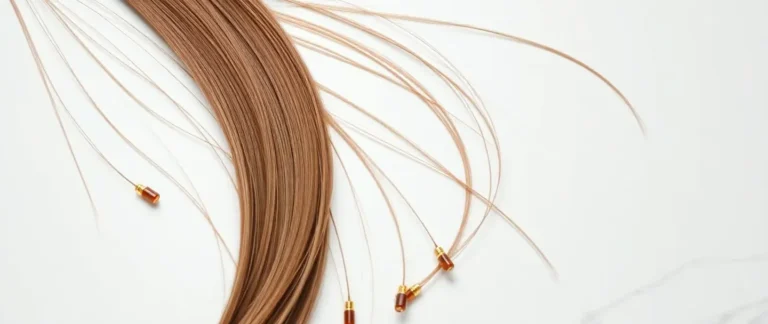
Professional Indian OEM manufacturers can produce across all major extension methods: machine weft (single and double drawn), hand-tied weft, tape-in extensions, clip-in extension sets, I-tip and flat-tip keratin bond extensions, nano-ring and micro-ring extensions, and halo/wire extensions. Some specialized methods (hand-tied by single craftsperson, bead-and-thread) may have higher minimum production quantities or longer lead times than standard machine-produced methods.
Start Your Hair Extensions Dropship Business
Zero inventory. Premium Indian Remy hair. Ship worldwide under your brand. MOQ as low as 5 pieces.