Raw Indian Temple Hair Manufacturing
Raw Indian Temple Hair Manufacturing — 2026 Temple-to-Bundle Guide
Raw Indian temple hair manufacturing is a 7-stage process from devotee tonsure donation at major South Indian temples to finished wholesale bundles ready for export. The full workflow takes 6-10 weeks and preserves virgin cuticle — no dye, no chemical smoothing, no heat re-texturing. The key stages: (1) collection at Tirumala, Palani, Srisailam, Srikalahasti, and other major temples where tonsure is a religious offering, (2) procurement from temple trusts via authorized buyers at public auction, (3) sorting by length and quality grade, (4) neutral-pH cleaning to remove scalp oils without stripping cuticle, (5) cuticle-alignment separation by root-to-tip natural orientation, (6) light plant-oil conditioning, and (7) bundling into wefts or ponytail units for export. Understanding this workflow helps buyers evaluate authenticity, pricing, and lead times. This guide documents each stage with buyer relevance.
Hair Extensions By Nature sources exclusively from Tirumala (Tirupati) and Palani temple donations via authorized agents, processes all stages in-house at our Faridabad facility, and ships with full chain-of-custody documentation from temple batch to finished bundle.
Sourcing raw temple hair for a brand or processor? Request our Temple-Source Program Brief with chain-of-custody docs and batch availability.
Stage 1 — Temple Collection
Tonsure (complete head shaving) is a religious offering performed at major South Indian Hindu temples. The largest single source is Tirumala Tirupati Devasthanams (TTD) in Andhra Pradesh, where an estimated 75,000 devotees tonsure daily. Other significant sources: Palani (Tamil Nadu), Srisailam (Andhra Pradesh), Srikalahasti (Andhra Pradesh), and Tiruchendur (Tamil Nadu). Temple staff collect cut ponytails, sort coarsely by length, and store in temple-managed warehouses for auction.
Stage 2 — Temple Auction and Procurement
Temple trusts auction collected hair to licensed buyers at public auctions (typically 4-8 times per year at TTD). Bids are publicly recorded; proceeds fund temple operations and charitable activities. Authorized agents win lots and move the hair to their own processing facilities. This step is where the ethical chain starts — only hair sourced through authorized trust auctions qualifies as authentically “temple hair.”
Stage 3 — Length Sorting
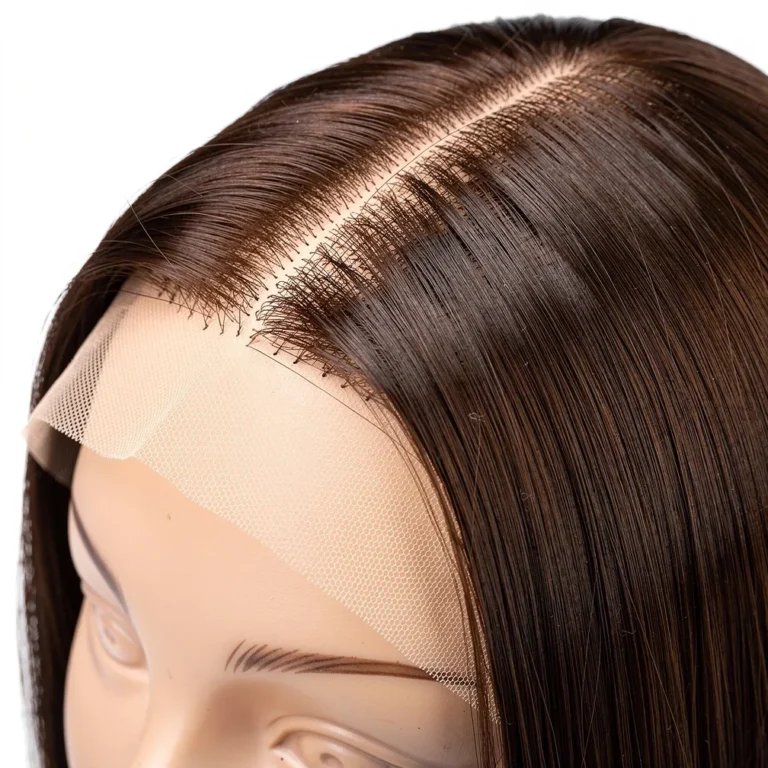
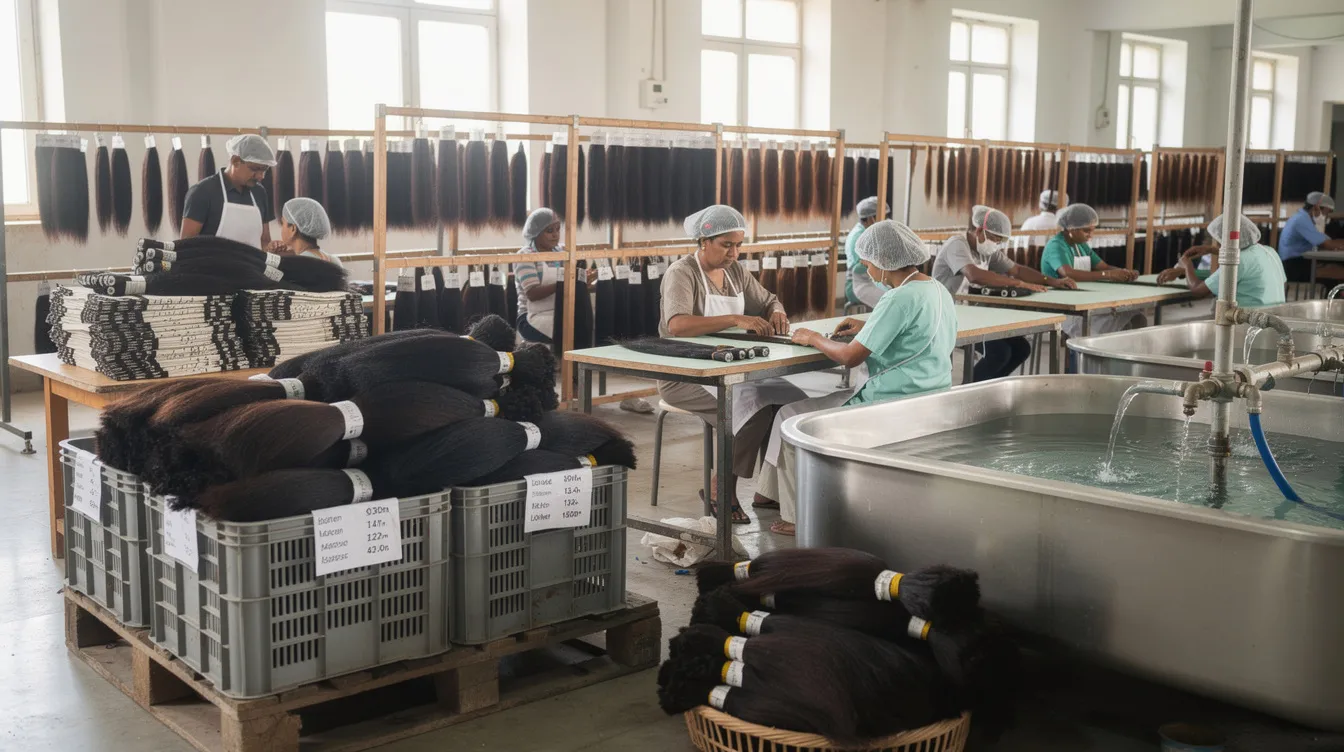
At the processing facility, hair is sorted by length in 2-inch increments from 8-10 inches up to 30-32 inches. Young-donor hair (typically 22-32 inches) is highest-value; short donor hair (8-14 inches) goes to shorter wholesale SKUs or wig-cap construction. Sorting is manual and labor-intensive — experienced sorters process 3-5 kg per worker per day.
| Length Grade | Typical Source | Use Case |
|---|---|---|
| 8-14 inches | Adult donors, older donors | Short SKUs, wig cap interior |
| 14-18 inches | Young adult donors | Medium SKUs, wefts |
| 18-24 inches | Young donors | Volume wholesale SKUs |
| 24-32 inches | Young donors, rare | Premium, single-donor |
Stage 4 — Neutral-pH Cleaning
Raw temple hair arrives coated with scalp oils, dust, and occasional pujā residue (turmeric, sandalwood). Cleaning uses neutral-pH shampoo (pH 5.5-6.5) in large stainless-steel tanks. Multiple gentle rinse cycles remove residues without chemically altering the cuticle. Hair is NOT bleached, acid-stripped, or chemically relaxed at this stage — doing so would destroy the virgin classification. After rinsing, hair is air-dried on racks (not heat-blown) for 24-48 hours.
Stage 5 — Cuticle-Alignment Separation
This is the defining step of Remy production. Each ponytail has cuticles naturally aligned root-to-tip. During collection and cleaning, strands from different ponytails may mix. In Remy processing, sorters manually feel each strand to determine cuticle direction and separate them into uniform-direction bundles. This step is slow (experienced worker processes 500g-1kg per day) and is the single biggest cost driver of Remy grade vs non-Remy grade hair.
Stage 6 — Light Conditioning
After alignment, hair receives a light conditioning treatment using plant oils (argan, coconut, almond) to restore sheen and reduce friction from cleaning. This is not a chemical smoothing — cuticle structure is preserved. Conditioning adds 15-30 grams per kg of raw hair in weight and adds 1-2 days to the workflow.
Stage 7 — Bundling and Packaging
Conditioned hair is finished into end-product formats:
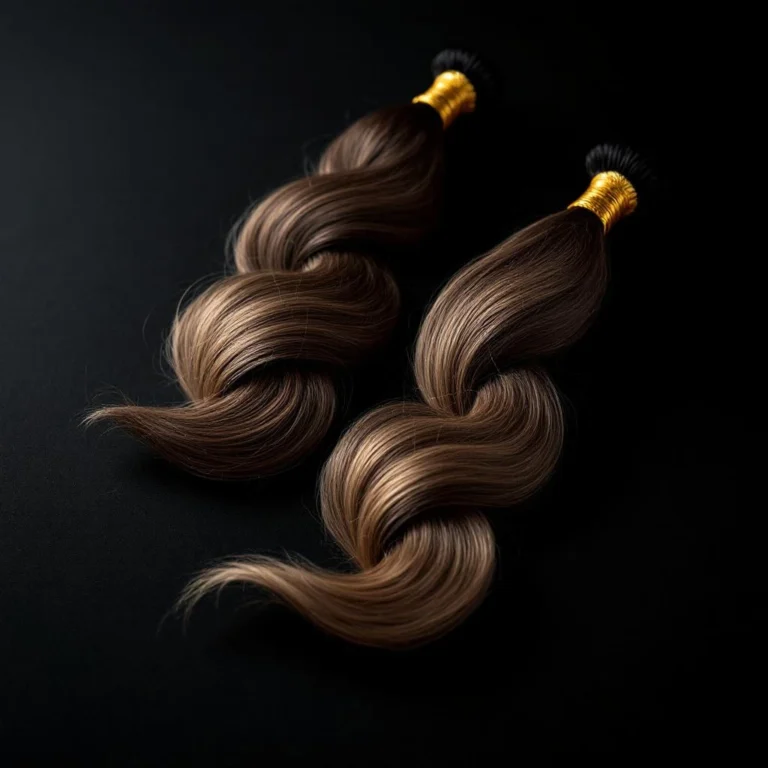
- Ponytail-tied bundles: 100-250g single-donor bundles for premium retail.
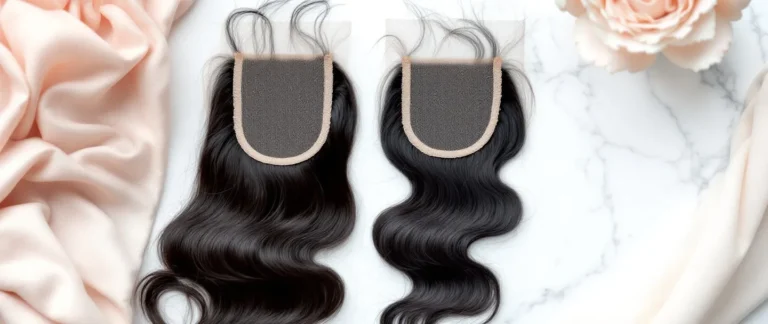
- Machine wefts: Cuticle-aligned hair machine-sewn onto fabric tape.
- Hand-tied wefts: Hand-sewn wefts for thinner, flatter profile.
- Clip-in sets: Wefts cut into 3-7 piece sets with clips attached.
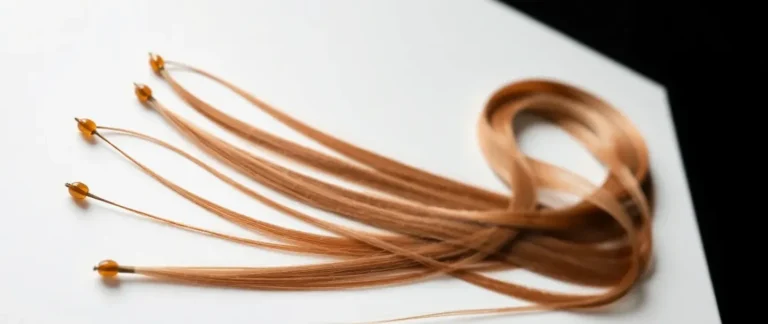
- I-tip / U-tip / flat-tip: Individual strands bonded with keratin tips.
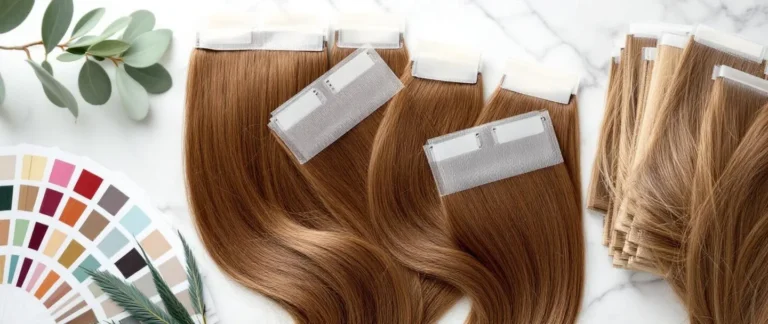
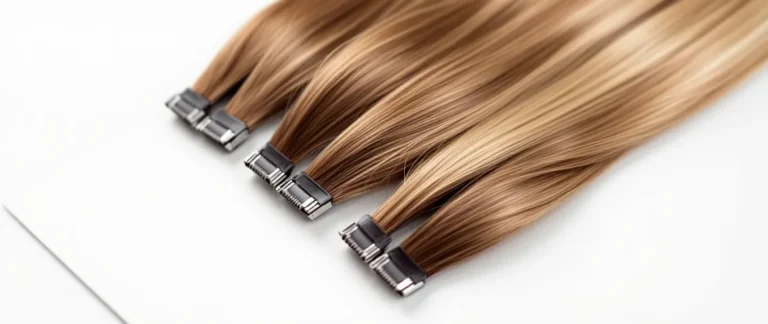
- Tape-in: Wefts cut to 4cm sections bonded with medical-grade tape.
Quality Control Checkpoints
A well-run factory has 4 QC gates in the manufacturing flow:
- Inbound QC: Checks moisture content and contamination of raw temple hair on arrival.
- Post-cleaning QC: Verifies cleanliness, checks for residual chemicals.
- Post-alignment QC: Spot-checks cuticle direction with friction test.
- Pre-dispatch QC: Full piece-level inspection — weight, length, weft integrity, defect scan.
Typical Timeline — 6-10 Weeks
| Stage | Duration |
|---|---|
| Temple auction + procurement logistics | 1-2 weeks |
| Length sorting | 1 week |
| Cleaning + drying | 1 week |
| Cuticle-alignment | 2-3 weeks (longest step) |
| Conditioning | 2-3 days |
| Bundling + packaging | 1-2 weeks |
Why Source From Hair Extensions By Nature?
Hair Extensions By Nature runs all 7 stages in-house at our Faridabad facility. Our temple-source supply chain is exclusive to TTD (Tirumala) and Palani authorized agents, with chain-of-custody from temple batch ID through final packaging. Alignment processing is done by 18 trained sorters, not outsourced. Every bundle ships with a processing timeline and batch-traceable certificate.
Frequently Asked Questions
Where does Indian temple hair come from?
Major South Indian Hindu temples where tonsure is a religious offering. Tirumala (TTD) is the largest single source at approximately 75,000 donations daily. Other significant sources: Palani, Srisailam, Srikalahasti, Tiruchendur.
How is raw temple hair processed?
Through a 7-stage workflow: collection, auction/procurement, length sorting, neutral-pH cleaning, cuticle-alignment separation, light plant-oil conditioning, and bundling. Full workflow is 6-10 weeks.
Is temple hair the same as Remy hair?
Not automatically. Temple hair is the raw material; Remy is a grade defined by cuticle alignment. Temple-sourced hair can be processed into Remy grade (cuticle-aligned) or non-Remy grade (cuticles stripped/flipped) depending on the factory’s process choice.
Is virgin temple hair chemically treated?
No. Virgin temple hair processing uses only neutral-pH shampoo for cleaning and light plant oils for conditioning. No bleach, no acid, no chemical smoothing, no heat re-texturing. Any of those treatments would forfeit the virgin classification.
Why does cuticle alignment take so long?
It is manual and done strand-by-strand. Experienced sorters process 500g-1kg per day. This is the single biggest cost driver of Remy vs non-Remy grade.
Can I trace my bundle to a specific temple batch?
At suppliers with proper chain-of-custody: yes. Ask for the bundle’s batch ID linking to temple donation record. Legitimate temple-source suppliers provide this on request.
What’s the minimum order for raw temple hair?
1-5kg for processors ordering unprocessed raw. 500g-1kg for finished Remy bundle buyers. Starter programs may accept smaller trial quantities at premium per-gram pricing.
Ready for Temple-Source Raw Hair?
info@hairextensionsbynature.com or quote request form.
Hair Extensions By Nature — Manufacturer and Exporter of Premium Indian Human Hair Extensions. Factory: Booth No 71, Sector 16 Huda Market, Faridabad, Haryana, India — 121002. Serving salons, distributors, and brands in 40+ countries.
Start Your Hair Extensions Dropship Business
Zero inventory. Premium Indian Remy hair. Ship worldwide under your brand. MOQ as low as 5 pieces.