Remy vs Virgin Hair
Remy vs Virgin Hair — 2026 Wholesale Buyer’s Difference Guide
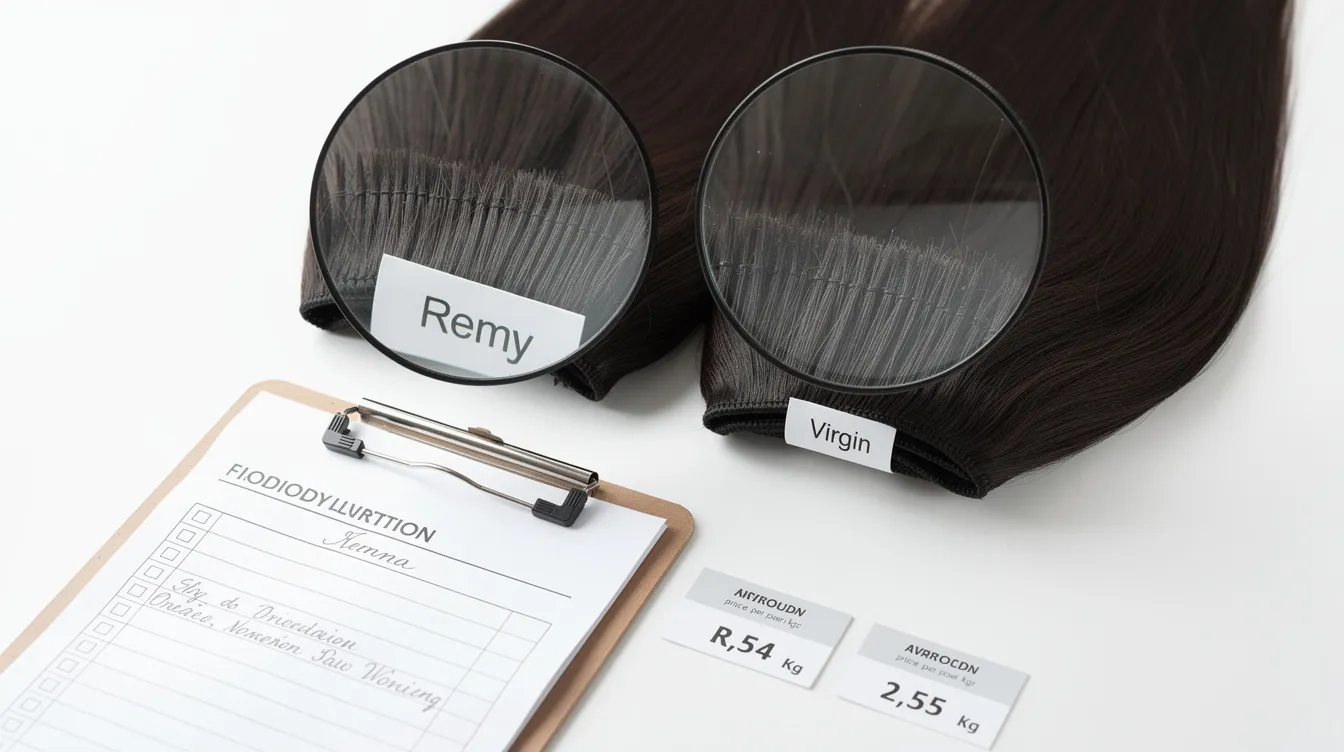
Remy hair refers to hair where all cuticles are intact and oriented in the same direction (root to tip) after collection and processing. Virgin hair refers to hair that has never been chemically processed, dyed, or permed. These are two independent properties. All virgin hair can be Remy, but not all Remy hair is virgin — Remy hair can be lightly color-processed and still retain Remy status, whereas virgin hair is by definition unprocessed. Virgin Remy hair is the premium wholesale grade; it costs 30 to 60 percent more than standard Remy at the Indian factory in 2026, with 22-inch machine weft ranging USD 270 to 350 per kg for virgin Remy vs USD 220 to 290 for non-virgin Remy.
This guide unpacks the terminology gap that causes most wholesale buyer confusion — and explains what to verify before accepting a supplier’s grade claim. Hair Extensions By Nature produces Remy, virgin Remy, and transparently-graded hair across the quality spectrum.
Want our quality grading guide? Covers Remy vs virgin vs double-drawn vs single-drawn with visual and tactile tests. Response in 4 business hours.
Two Independent Properties
The industry’s loose usage of “Remy” and “virgin” creates buyer confusion. They are independent quality properties:
| Grade combination | Cuticle aligned? | Chemically processed? | 2026 USD/kg 22″ weft |
|---|---|---|---|
| Virgin Remy | Yes | No | 270 – 350 |
| Remy (colored/treated) | Yes | Yes, gently | 220 – 290 |
| Virgin non-Remy | No | No | 140 – 210 (rare category) |
| Non-Remy processed | No | Yes, often heavily | 90 – 150 |
What Virgin Actually Means at the Factory
Virgin hair in 2026 industry practice is hair that has had:
- No chemical perm or straightening treatment.
- No bleaching or color-lift beyond the natural shade.
- No chemical coloring, including semi-permanent dye.
- No acid-bath cuticle-strip treatment.
Virgin hair can be washed, conditioned, and heat-styled during processing — those are not chemical treatments. The natural colors of virgin Indian hair are predominantly #1B (natural black), with some #2 and #4 (dark to medium brown) variations that occur naturally in donor populations.
What Remy Actually Means at the Factory
Remy hair is about the physical orientation of the cuticle:
- All strands in a bundle have their root end and tip end aligned.
- Cuticle layers on each strand face the same direction.
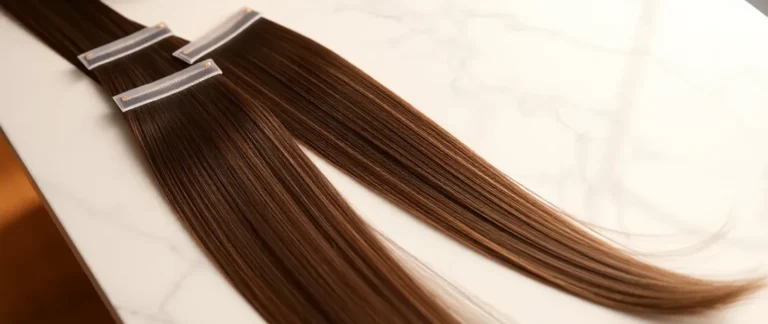
- The result: strands lie smooth against each other, reducing tangle and matting.
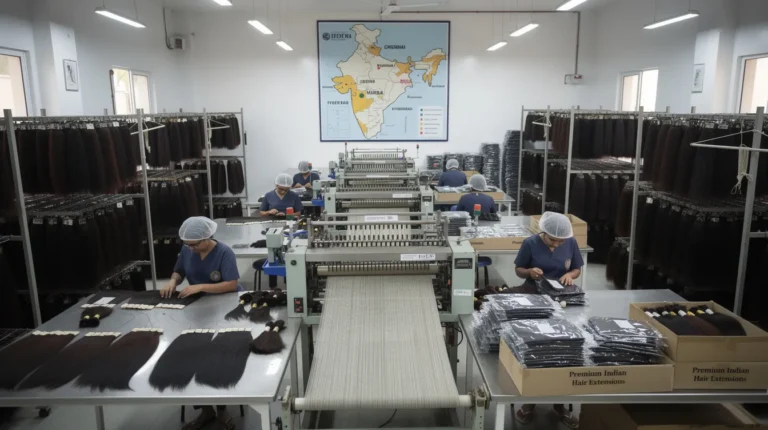
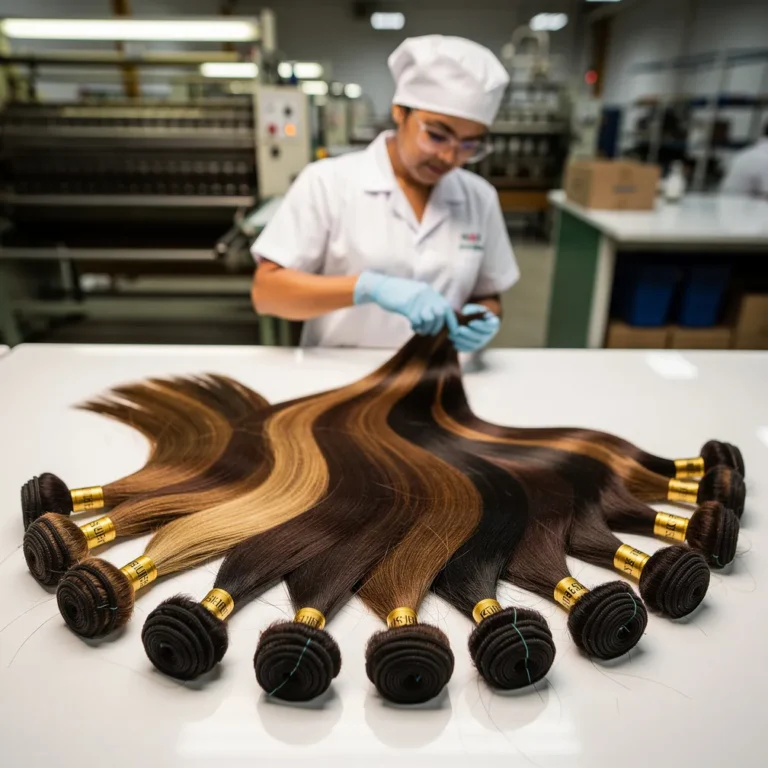
Authentic Remy processing starts at the source — ponytails from temple auctions are collected tied at the root, preserving natural alignment. Processing then washes, sorts by length, and weaves into wefts without scrambling the cuticle direction. Non-Remy hair is usually collected from hair salons, floor sweepings, or consumer hair-fall collections — none of which preserve cuticle alignment.
Why “Virgin Remy” Commands a Premium
Virgin Remy combines both properties. It is the only grade where:
- Hair responds to professional bleaching and coloring like bio-hair does.
- Natural luster persists through 50+ wash cycles.
- Curl patterns hold after styling.
- Supply is the most constrained (temple auction winners sort virgin Remy as the top grade).
The USD 270 to 350 per kg band for virgin Remy 22-inch weft reflects that supply constraint. At USD 350+, buyers should ask for extended proof of origin — auction receipts, lot traceability.
How to Verify the Grade You are Buying
Four practical verification tests:
- Cuticle direction test: Rub a strand between two fingers from root to tip, then reverse. Remy hair feels smooth in one direction and slightly rough in the other. Non-Remy feels uniform.
- Bleach response test: Apply a professional lightener to a small section. Virgin hair lifts evenly and reaches target shade without brittleness; non-virgin reaches target faster but with more dryness; acid-processed hair becomes straw-like.
- Water-rinse silicone test: Soak 10 g in clear water for 10 minutes. Virgin hair leaves the water clear; silicone-coated (often used on non-virgin to mimic virgin) clouds the water.
- Wash cycle test: 10 to 12 shampoo washes. Virgin Remy retains 90 percent of smoothness; non-Remy matts noticeably by wash 3 to 5.
Common Mislabeling Patterns
The industry’s favorite labeling exaggerations to watch for:
- “Remy” applied to non-Remy. Because the term has no legal definition, traders use it freely. Verify with the cuticle direction test.
- “Virgin” applied to lightly colored. Hair that has been color-treated even to match a natural shade is not technically virgin. Suppliers often stretch the definition.
- “Single donor” applied to mixed bundles. Single-donor ponytails are rare; most commercial Remy is multi-donor length-matched. Suppliers sometimes sell multi-donor as single-donor.
- “Grade 10A / 12A / 13A” marketing. These grade numbers are marketing invention, not industry standard. Ignore them and focus on the underlying Remy-virgin axis.
Why Source From Hair Extensions By Nature?
Hair Extensions By Nature labels grades transparently. Our virgin Remy is auction-sourced, traceable to specific temple lots, cuticle-aligned in our Faridabad processing. Our non-virgin Remy (colored to match salon palette requirements) retains cuticle alignment through gentle processing — we do not use acid baths or silicone coatings. We publish per-kg pricing by grade on our price sheet rather than using made-up letter-grade marketing.
Frequently Asked Questions
Can Remy hair be colored and still be Remy?
Yes, if the coloring is done gently without acid stripping or aggressive peroxide. Cuticle alignment is preserved through standard salon-grade coloring processes. The color change does not affect Remy status; it affects virgin status.
Is virgin Remy the highest quality?
In terms of grading, yes. Virgin Remy is the top commercial grade in the Indian supply chain. Single-donor virgin Remy (intact ponytail) is a further premium above mixed-donor virgin Remy.
What does “A grade” mean (10A, 11A, 12A, 13A)?
Nothing standardized. A-grade labeling is industry marketing invention. It does not correspond to any industry certification body. Ignore A grades and focus on Remy vs virgin vs drawn type.
How can I tell if hair has been acid-bath processed?
Three signs. Natural sheen is replaced by artificial silicone-coated gloss. Water-rinse test clouds the water. Bleach response is brittle and uneven. Acid-processed hair is sometimes labeled as non-Remy and sometimes mislabeled as Remy; the bleach response is the most definitive test.
Why is virgin Remy rare in blonde shades?
Because blonde hair requires color lifting, which by definition disqualifies the hair from virgin status. Blonde Remy is always colored — which is fine; just be clear it is Remy non-virgin rather than virgin Remy.
What percentage of Indian hair is virgin Remy?
Of TTD auction lots, roughly 40 to 55 percent qualifies as virgin Remy grade. Of finished wholesale product sold globally as “Remy,” perhaps 25 to 35 percent is virgin Remy. The rest is lightly processed.
Should I pay for virgin Remy or is regular Remy enough?
Depends on buyer market. Luxury salons, bridal specialists, medical wig distributors benefit from virgin Remy’s bleach response and longevity. Volume salon markets can standardize on non-virgin Remy with lower wholesale cost and still deliver excellent quality to end customers.
Ready to Order by Grade?
info@hairextensionsbynature.com or quote request form.
Hair Extensions By Nature — Manufacturer and Exporter of Premium Indian Human Hair Extensions. Factory: Booth No 71, Sector 16 Huda Market, Faridabad, Haryana, India — 121002. Serving salons, distributors, and brands in 40+ countries.
Start Your Hair Extensions Dropship Business
Zero inventory. Premium Indian Remy hair. Ship worldwide under your brand. MOQ as low as 5 pieces.