Hair Extension Return Policies
Hair extension return policies in wholesale B2B trade work differently from consumer retail returns, and buyers who expect a manufacturer to accept returns the same way a clothing retailer does will be consistently disappointed. The standard in international hair extension wholesale is not a return policy — it is a quality guarantee. Legitimate manufacturers stand behind the quality of their product and will replace or provide credit for units with verifiable manufacturing defects. Understanding exactly what this means, what to negotiate before placing your first order, and how to document and raise quality claims effectively is one of the most practically valuable skills a wholesale buyer can develop. This guide covers the industry standard, what you can and should negotiate, and how dispute resolution actually works. For more details, see our guide on Hair Extension Textures Explained. For more details, see our guide on Hair Extension Color Matching Guide for Wholesale Buyers.
At Hair Extensions By Nature, we manufacture and export Remy hair extensions from Faridabad, India, and we manage quality claims from our international buyers as a normal part of our business relationship. This guide reflects how we handle quality issues and the standards we believe all reputable manufacturers should uphold.
Why Traditional Returns Are Not Standard in International Hair Extension Wholesale
Before discussing what to negotiate, it helps to understand why the international B2B wholesale context makes traditional returns structurally impractical.
First, most hair extension orders are produced or assembled to specification — your specific texture, length, color, and method type. Once manufactured, these products cannot simply be relisted and resold to another buyer as new. Second, return shipping from the buyer’s country back to India costs nearly as much as the product itself for smaller orders. A $30 bundle of extensions is not worth $50–$80 in international return courier fees. Third, customs and import documentation add complexity and cost to any return shipment — the receiving party in India incurs customs fees on product returned from abroad.
These structural realities mean that blanket “return within 30 days” policies are not economically viable in international B2B hair extension trade, and any manufacturer who claims to offer them without qualification is likely not telling the full story.
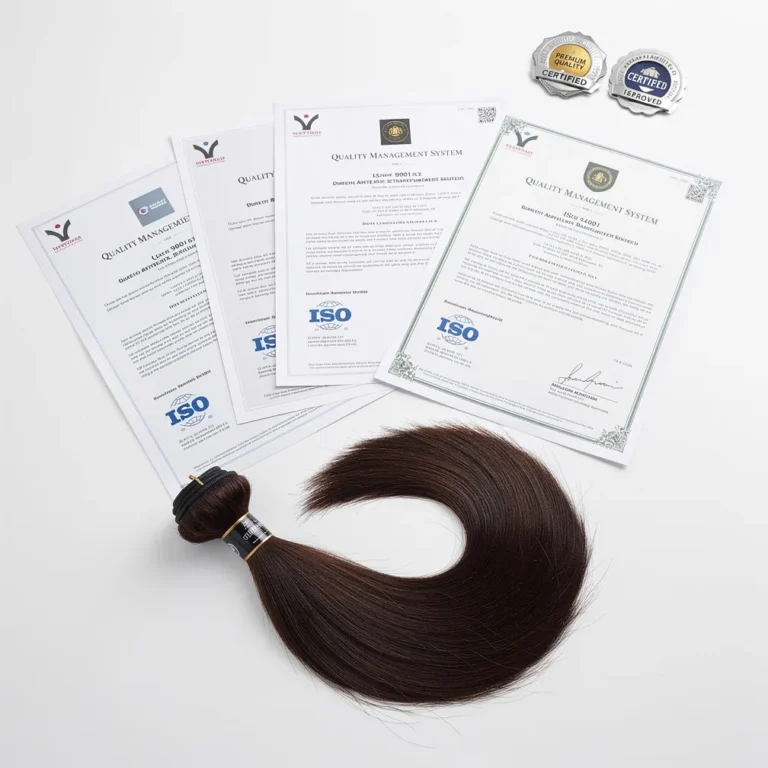
What is viable — and what responsible manufacturers offer — is a quality guarantee backed by defined quality standards, documented acceptance criteria, and clear remediation terms.
What a Quality Guarantee Actually Means
A quality guarantee from an Indian hair extension manufacturer typically covers:
- Material accuracy: Products are what they claim to be — 100% Remy human hair if that is what was ordered, the specified texture and length within acceptable tolerance
- Construction quality: Weft seams are secure, tips are properly bonded, clips are functional, and wigs are correctly constructed to specification
- Weight accuracy: Bundle weights are within an acceptable tolerance of the specified weight (typically ±5–10%)
- Color accuracy: Color matches the specification within an accepted variation range
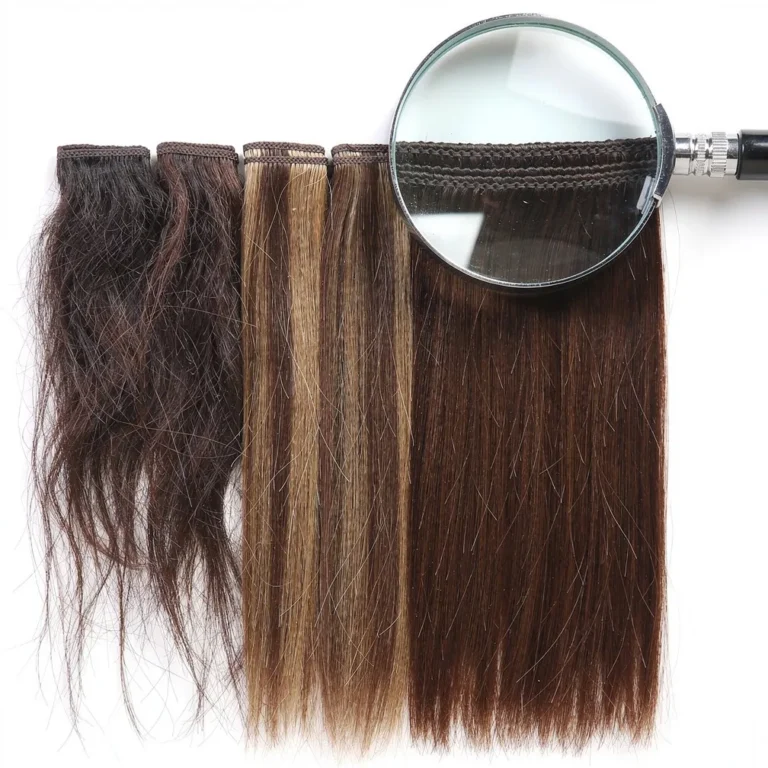
- Manufacturing defects: Any unit that has a clear manufacturing defect (broken tip, loose weft, incorrect construction) is covered
A quality guarantee does not typically cover:
- Change of mind or change in business direction
- Market conditions changing after the order was placed
- Damage caused by the buyer’s storage, handling, or processing
- End-consumer complaints related to improper installation or aftercare
- Color interpretation differences that fall within reasonable variation
Contact Hair Extensions By Nature to discuss our quality guarantee terms before placing your order →
What to Negotiate Before Placing Your First Order
The time to establish return and quality guarantee terms is before you place your commercial order — not after a problem arises. The following are the specific terms you should agree on in writing (even if just via WhatsApp or email thread) before payment.
1. Define Acceptable Quality Standards
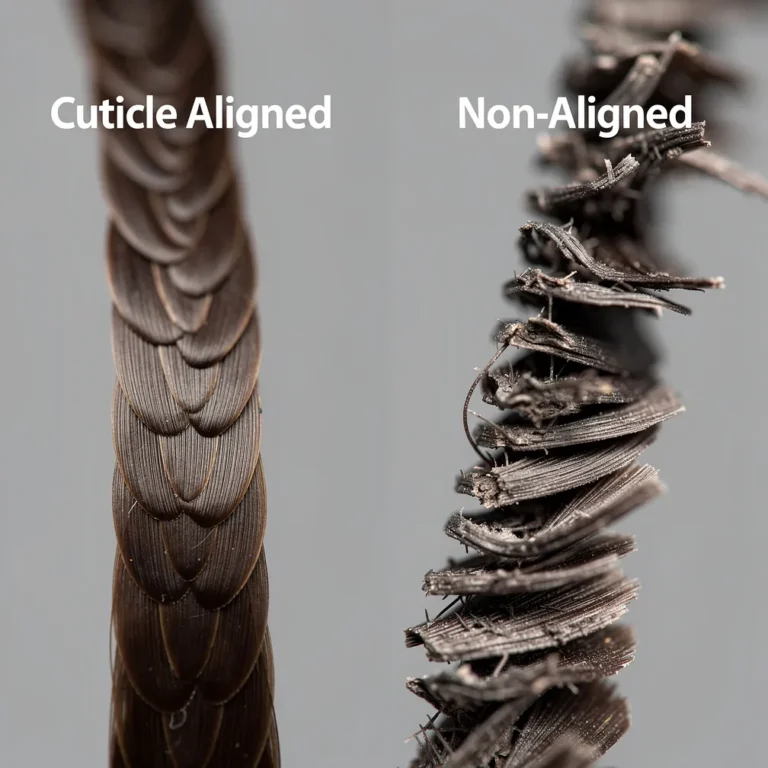
Ask the manufacturer to specify what quality standards apply to your order. For Remy hair, this means cuticle-aligned, single-donor hair free of synthetic mixing. For specific weights, it means stating acceptable tolerance (e.g., ±5g per 100g bundle). For color, it means referencing a color swatch or code that forms the specification.
The more explicitly you define quality upfront, the clearer it is if the delivered product falls short. Vague quality claims (“premium quality,” “high grade”) are not enforceable. Specific criteria are.
2. Agree on an Acceptable Defect Rate
In professional manufacturing, a defect rate of zero is not realistic. Industry-standard acceptable defect rates for hair extension wholesale are typically 1–3% of units in a batch. If you order 100 bundles and 2 have construction defects, that is within normal tolerance. If 15 have defects, that is a quality failure.
Agreeing on an acceptable defect rate in advance means both parties have a clear framework for evaluating quality claims, rather than arguing subjectively about whether a batch was “good” or “bad.”
3. Establish Documentation Requirements
For any quality claim to be processed, the manufacturer will need evidence. Agree in advance on what documentation is required for a quality claim:
- Photographs of defective units showing the specific defect clearly
- Weight measurements if weight accuracy is in dispute
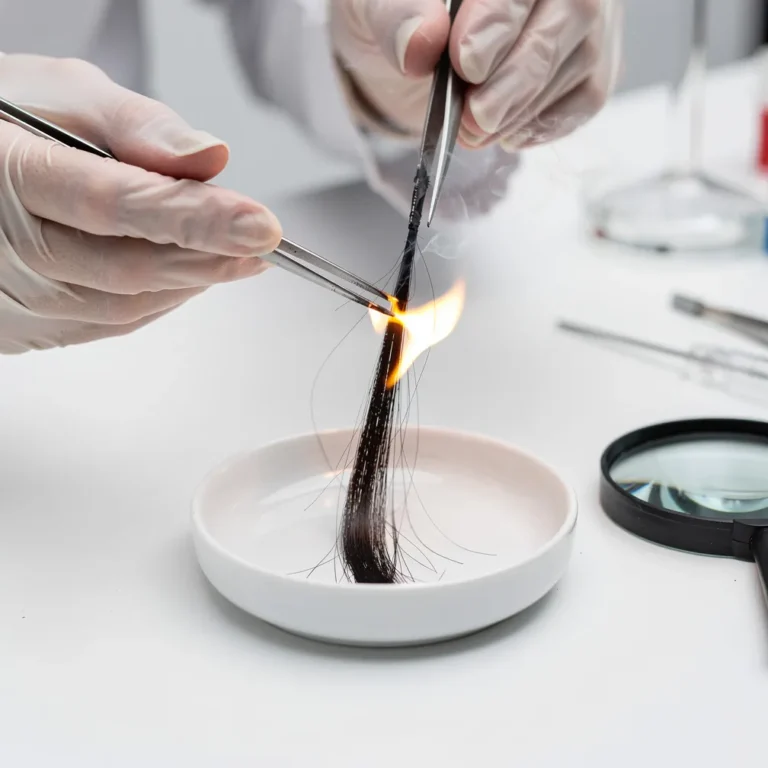
- Video of burn test results if material authenticity is in question
- Written description of the defect and quantity affected
Having this agreed upfront means that when you need to raise a claim, you know exactly what to document — and the manufacturer cannot dismiss a valid claim due to insufficient evidence.
4. Define the Remediation Options
Agree in advance on what remediation looks like for confirmed quality failures. The standard options are:
- Replacement units: Defective units are replaced in the next order at no charge
- Credit note: The value of confirmed defective units is credited toward the next order
- Price adjustment: For minor quality variations across a whole batch, a price discount may be negotiated
- Partial refund: For significant quality failures where the batch cannot be used, a partial refund may be negotiated — though this is the least common resolution in practice
Physical returns to India are rarely the practical resolution — the remediation is almost always forward-looking (replacement or credit) rather than backward-looking (return and refund).
Policy Comparison — What Different Manufacturers Typically Offer
| Policy Element | Strong Policy (Best Practice) | Standard Policy | Weak Policy (Red Flag) |
|---|---|---|---|
| Quality guarantee statement | Written, with specific criteria | Verbal commitment, general terms | None offered |
| Acceptable defect rate | Explicitly agreed (e.g., ≤3%) | Not specified but honored | No acknowledgment of defects possible |
| Documentation requirement | Clearly specified in advance | Photos required, acknowledged | No process for claims |
| Remediation offered | Replacement OR credit, buyer’s choice | Replacement in next order | No remedy offered |
| Timeline for resolution | Committed timeline (e.g., 7–14 days) | Resolved in next order cycle | Indefinite or no response |
| Pre-shipment inspection | Offered as standard | Available on request | Not available |
| Pre-shipment photos | Provided for all orders | Available on request | Not offered |
How Dispute Resolution Actually Works in Practice
The vast majority of quality disputes in hair extension wholesale are resolved through direct communication — not legal action or formal arbitration. The process typically looks like this:
Step 1 — Identify and document the issue. When you receive an order and identify quality concerns, photograph them immediately. Document the specific defect, which units are affected, and how many units in the batch are impacted. Weigh bundles if weight accuracy is in question.
Step 2 — Communicate promptly. Contact the manufacturer within 7–14 days of receiving the order. Most manufacturers have an unwritten window within which they expect quality concerns to be raised — claiming a quality issue three months after delivery is much harder to resolve than raising it within two weeks. Use WhatsApp or email and share your documentation.
Step 3 — Allow the manufacturer to respond. A reputable manufacturer will acknowledge your documentation and engage with the specific issue. Give them 3–5 business days to review and respond, accounting for time zone differences.
Step 4 — Agree on remediation. For confirmed defects, agree on the replacement or credit arrangement. This is typically incorporated into your next order — the defective unit quantity is provided at no charge alongside your next commercial order.
Step 5 — Escalate if necessary. If a manufacturer refuses to engage with documented quality failures, your escalation options depend on your payment method. PayPal allows dispute filing for eligible transactions. For T/T wire transfers, escalation is limited — which is why the advance/balance payment structure (only releasing full payment after pre-shipment confirmation) is important risk management.
Discuss quality standards and guarantee terms with Hair Extensions By Nature before ordering →
Pre-Shipment Inspection — The Best Risk Mitigation Tool
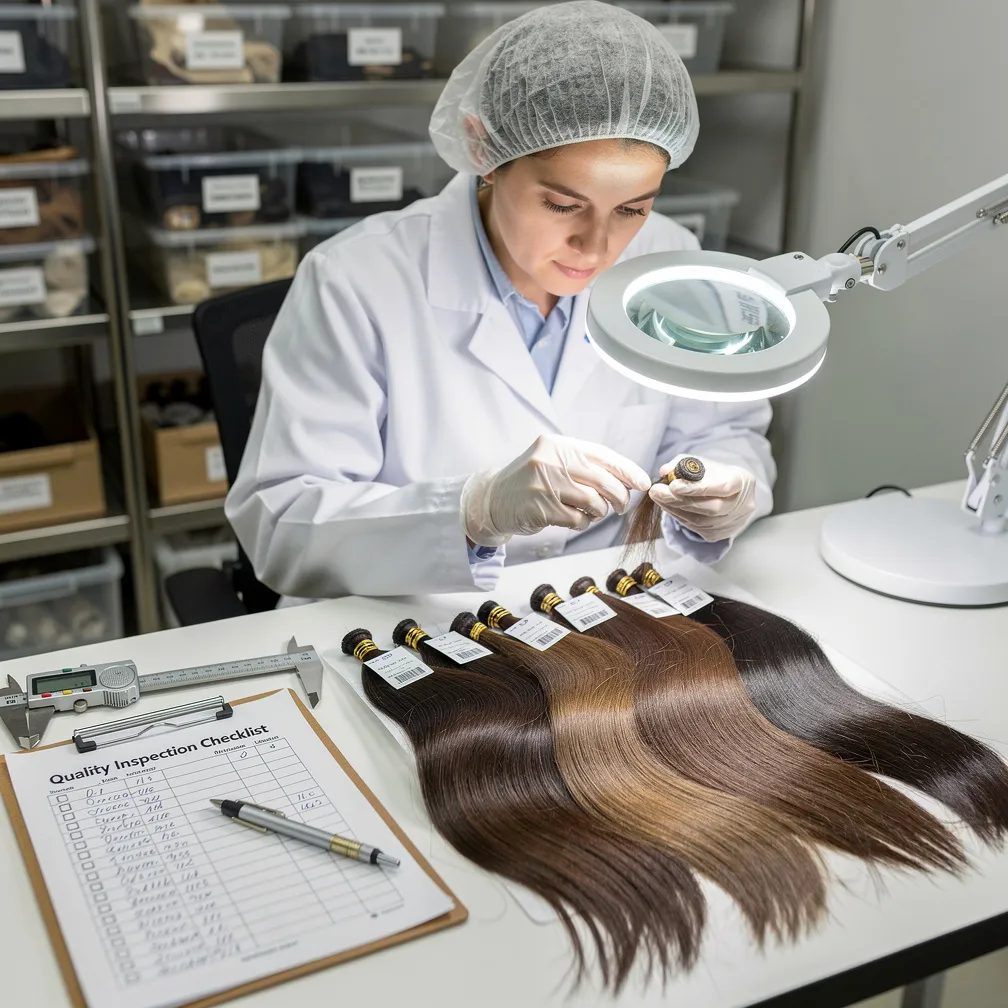
The most effective way to prevent quality disputes is pre-shipment inspection — reviewing the quality of your order before it ships, while it is still at the manufacturer’s facility. This can take several forms:
Pre-shipment photographs: The manufacturer photographs the packed order, showing product units, labels, and packing before shipping. This does not allow for physical quality testing but confirms the order is complete and matches specification visually. This is available from most professional manufacturers and should be requested as standard.
Video inspection: For larger orders, the manufacturer can conduct a video call or send a video showing products being tested — running fingers through bundles, showing weft construction, demonstrating texture. This is more informative than photographs and is easily arranged via WhatsApp video.
Third-party inspection: For very large orders, buyers can hire a third-party inspection service (companies like SGS, Bureau Veritas, or local Indian inspection services) to physically inspect the order at the factory before shipment. This is standard practice for orders above $10,000–$20,000 and provides the highest level of pre-shipment quality assurance.
Red Flags — Signs a Manufacturer Will Not Honor Quality Claims
Evaluate your potential supplier’s quality commitment during the pre-order process. Watch for these warning signs:
- Refuses to discuss quality standards or says “all orders are 100% perfect” (no manufacturer produces zero defects)
- Cannot provide pre-shipment photographs when asked
- Does not respond to detailed quality questions or gives vague, non-specific answers
- Has no documented quality control process or cannot describe it
- Requests 100% advance payment with no milestone for quality verification
- Previous buyers’ reviews mention unresolved quality disputes or non-responsive complaint handling
A manufacturer who is transparent about their quality standards and process — including how they handle the inevitable occasional defect — is demonstrating the professionalism that sustains long-term buyer relationships. Perfection is not the standard; honesty and responsiveness are.
For the complete supplier verification and ordering process, including how to verify a manufacturer’s credentials before placing any payment, visit our complete guide to sourcing hair extensions from India.
Contact Hair Extensions By Nature
We stand behind the quality of every order we ship and have clear, transparent quality guarantee terms for all our wholesale buyers.
- WhatsApp / Phone: +91 9289358222
- Email: info@hairextensionsbynature.com
- Factory: Booth No 71, Sector 16 Huda Market, Faridabad, Haryana, India – 121002
Frequently Asked Questions — Hair Extension Return Policies for Wholesale Buyers
Order with confidence — contact Hair Extensions By Nature to discuss our quality guarantee terms →