Hair Extension Density Guide
Hair Extension Density Guide — 130% to 250% for Wholesale Buyers [2026]
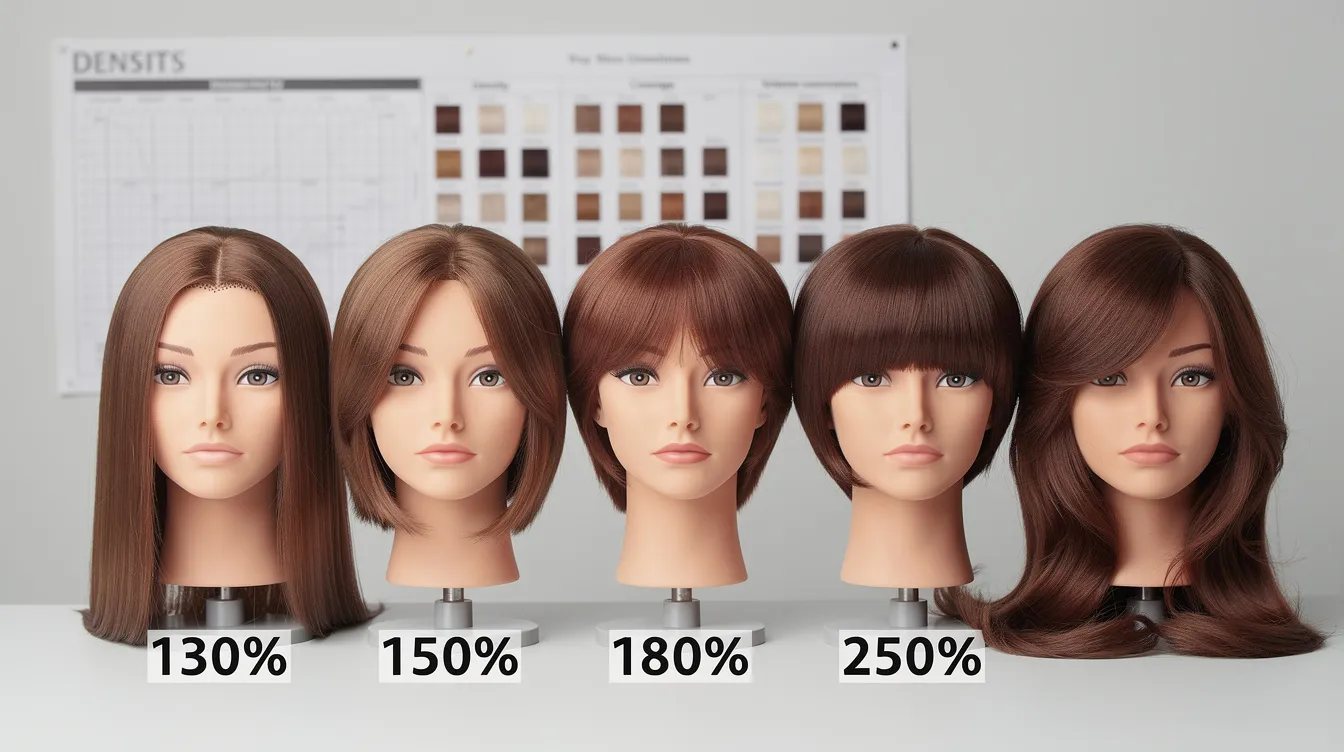
Hair extension and wig densities express hair volume relative to natural full-head coverage (100 percent). The five commercial density tiers used in wholesale are 130 percent, 150 percent, 180 percent, 200 percent, and 250 percent. 130 percent density is lightweight — 30 percent more hair mass than average natural hair — suited to mature customers and medical/cranial-prosthesis wigs. 150 percent is the global wholesale volume sweet spot and represents 60 to 70 percent of wig wholesale volume across markets. 180 percent delivers a fuller-fashion look for trend-forward consumers. 200 and 250 percent serve African and Caribbean markets plus maximalist fashion preferences. Each 30 percent density increase adds USD 25 to 80 to wholesale cost per wig due to additional hair content. This guide is the wholesale buyer’s density decision framework.
Hair Extensions By Nature produces wigs across all five density tiers. We recommend density mix based on the buyer’s target market rather than a one-size-fits-all standard.
Planning your density portfolio? Request our Density × Market Matrix showing recommended percentage splits by customer segment.
The Five Commercial Density Tiers
| Density | Visual Effect | Hair Mass (22″ wig) | Best-Fit Customer |
|---|---|---|---|
| 130% | Light, natural thin | ~90 g | Mature, medical, fine-hair clients |
| 150% | Natural full | ~110 g | Mainstream volume wholesale |
| 180% | Full, fashion | ~135 g | Fashion-forward, social-media, influencer market |
| 200% | Very full, glamour | ~155 g | African market mainstream, glamour salons |
| 250% | Maximum fullness, statement | ~195 g | African market premium, performance/pageant, maximalist |
Density by Customer Market
Recommended density mix by customer segment:
- US mainstream salon market: 150 percent 60 percent of stock, 180 percent 25 percent, 130 percent 10 percent, 200 percent 5 percent.
- UK and EU salon: 150 percent 55 percent, 180 percent 30 percent, 130 percent 10 percent, 200 percent 5 percent.
- African market (Nigeria, Ghana, SA): 200 percent 45 percent, 250 percent 25 percent, 180 percent 20 percent, 150 percent 10 percent.
- Caribbean market (Jamaica, Trinidad, Barbados): 200 percent 50 percent, 180 percent 25 percent, 250 percent 15 percent, 150 percent 10 percent.
- GCC premium salon: 150 percent 40 percent, 180 percent 40 percent, 200 percent 15 percent, 130 percent 5 percent.
- Medical wig distributors: 130 percent 60 percent, 150 percent 35 percent, 180 percent 5 percent.
Density Cost Impact
Each 30-percentage-point density increase adds hair mass that drives wholesale cost. For a 22-inch lace-front wig in Remy:
| Density | Wholesale USD/piece |
|---|---|
| 130% | 160 – 320 |
| 150% | 180 – 380 |
| 180% | 220 – 450 |
| 200% | 260 – 510 |
| 250% | 320 – 600 |
Density × Length Interaction
Density and length amplify each other visually. A 30-inch 150-percent wig looks longer than a 30-inch 250-percent wig even though actual length is identical, because higher density visually shortens perceived length. For wholesale portfolio planning:
- Stock 180-200 percent in longer lengths (24-30 inch) to prevent length from looking thin.
- Stock 130-150 percent in shorter lengths (16-20 inch) where natural-thin look is preferred.
MOQ by Density
At most Indian wig manufacturers:
- 150 percent, 180 percent: Standard MOQ applies (5 pieces lace front, 3 pieces full lace).
- 130 percent, 200 percent, 250 percent: 2x MOQ usually applies because these are lower-volume production runs.
Why Source From Hair Extensions By Nature?
Hair Extensions By Nature produces wigs across all five density tiers using cuticle-aligned Remy hair. Our standard wig catalog defaults to 150 and 180 percent. 130, 200, and 250 percent are available with 2x MOQ. We label density clearly on each piece — no density-by-eye estimation in our quality control.
Frequently Asked Questions
What density is most natural-looking for the average customer?
150 percent closely matches naturally full average hair. 180 percent looks somewhat fuller than natural but still plausible. Above 200 percent is clearly stylized.
Is higher density always better?
No. Higher density is heavier to wear (a 250 percent wig at 195 g is 2x the weight of a 130 percent wig), looks less natural in markets where consumer preference is natural-thin (mature, medical), and costs more. Match density to market preference.
What density for African market wholesale?
200 percent is mainstream; 250 percent is premium. 150 percent is undersized for most African consumer preferences.
What density for medical wigs?
130 percent dominates medical because chemotherapy patients prefer lighter weight, and the natural-thin look matches the expected recovery period. 150 percent is second-most-common for medical.
Can I order a custom density like 170 or 220 percent?
Yes with custom runs. Standard production is in 30 percent increments (130, 150, 180, 200, 250). Custom in-between densities add 15 to 20 percent cost and 2-3x MOQ.
Does density affect styling longevity?
Higher-density wigs hold styles longer but heat-style slower (more hair to heat through). Lower density styles quickly but loses curl faster.
Should I photograph my catalog at 150 percent or 180 percent?
180 percent photographs more impressively in retail catalogs. 150 percent is more true-to-delivery for most stock. Many brands shoot catalog at 180 percent and disclose actual stock density on the spec sheet to avoid expectation mismatch.
Ready to Build a Density Portfolio?
Request Density Portfolio Plan →
info@hairextensionsbynature.com or quote request form.
Hair Extensions By Nature — Manufacturer and Exporter of Premium Indian Human Hair Extensions. Factory: Booth No 71, Sector 16 Huda Market, Faridabad, Haryana, India — 121002. Serving salons, distributors, and brands in 40+ countries.
Start Your Hair Extensions Dropship Business
Zero inventory. Premium Indian Remy hair. Ship worldwide under your brand. MOQ as low as 5 pieces.