Hair Extension Pricing Japan
Hair Extension Wholesale Pricing in Japan — 2026 Importer Guide
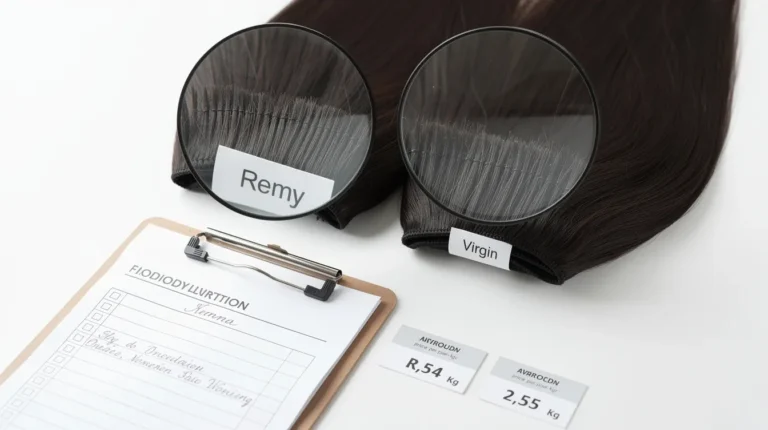
Hair extension wholesale pricing into Japan in 2026 runs 25-45 percent above equivalent US or EU pricing due to Japan’s premium-quality demand, import compliance overhead with MHLW (Ministry of Health, Labour and Welfare), and distribution consolidation through 3-5 primary Tokyo and Osaka wholesalers. Indicative 2026 Japan wholesale per kg: Mixed-source Remy 22-inch straight JPY 135,000-175,000 (USD 900-1,170 at 150 JPY/USD). Virgin Remy 22-inch JPY 210,000-290,000 (USD 1,400-1,930). Single-donor Remy 22-inch JPY 330,000-440,000 (USD 2,200-2,940). Japanese salons retail at 3-5x wholesale — retail USD 280-400 per 22-inch bundle is typical. Import compliance requires product to meet MHLW cosmetic/personal-care ingredient standards; shipments use commercial-invoice declarations under HS 6703 classification. This guide maps 2026 Japan pricing by grade, compliance requirements, distribution structure, and what Japanese salon buyers actually prioritize versus global norms.
Hair Extensions By Nature serves 4 Japanese wholesale distributors in Tokyo and Osaka with quarterly shipments. Our Japan-compliant documentation pack is available on request for buyers evaluating import logistics.
Evaluating Japan market entry? Request our Japan Import Brief with pricing, MHLW compliance, and distributor framework.
2026 Japan Wholesale Pricing — Per Kg Benchmarks
| Grade | 22-inch JPY/kg | 22-inch USD/kg | Premium vs US/EU |
|---|---|---|---|
| Mixed-source Remy | 135,000-175,000 | 900-1,170 | +30-35 percent |
| Virgin Remy | 210,000-290,000 | 1,400-1,930 | +25-30 percent |
| Single-donor Remy | 330,000-440,000 | 2,200-2,940 | +25-30 percent |
| Raw temple (for processors) | 68,000-90,000 | 450-600 | +20-25 percent |
Why Japan Pricing Is Higher — 4 Drivers
- Premium-quality standard: Japanese salon and consumer expectations are for defect-free, consistent, high-finish product. Lower-tier SKUs sold elsewhere rarely clear Japan QC.
- Import compliance: MHLW declarations, lab testing on first-time imports, labeling in Japanese — adds 5-10 percent to landed cost.
- Distribution consolidation: 3-5 primary wholesalers control 70+ percent of Japan salon distribution. Consolidated distribution supports higher margin preservation.
- Yen strength and purchasing power: Japan salon clients pay USD 280-400 retail per bundle without price-sensitivity pushback typical of Western mid-market.
MHLW Import Compliance — What’s Required
Japan’s Ministry of Health, Labour and Welfare regulates cosmetic and personal-care product imports. Hair extensions fall partially under this framework when treated products are involved. Compliance requirements:
- Commercial invoice with HS 6703 classification and detailed product description in English.
- Packing list with per-item weight and country of origin.
- Certificate of Origin (useful for GSP and FTA claims where applicable).
- For chemically-treated or colored hair: ingredient declaration for processing chemicals used.
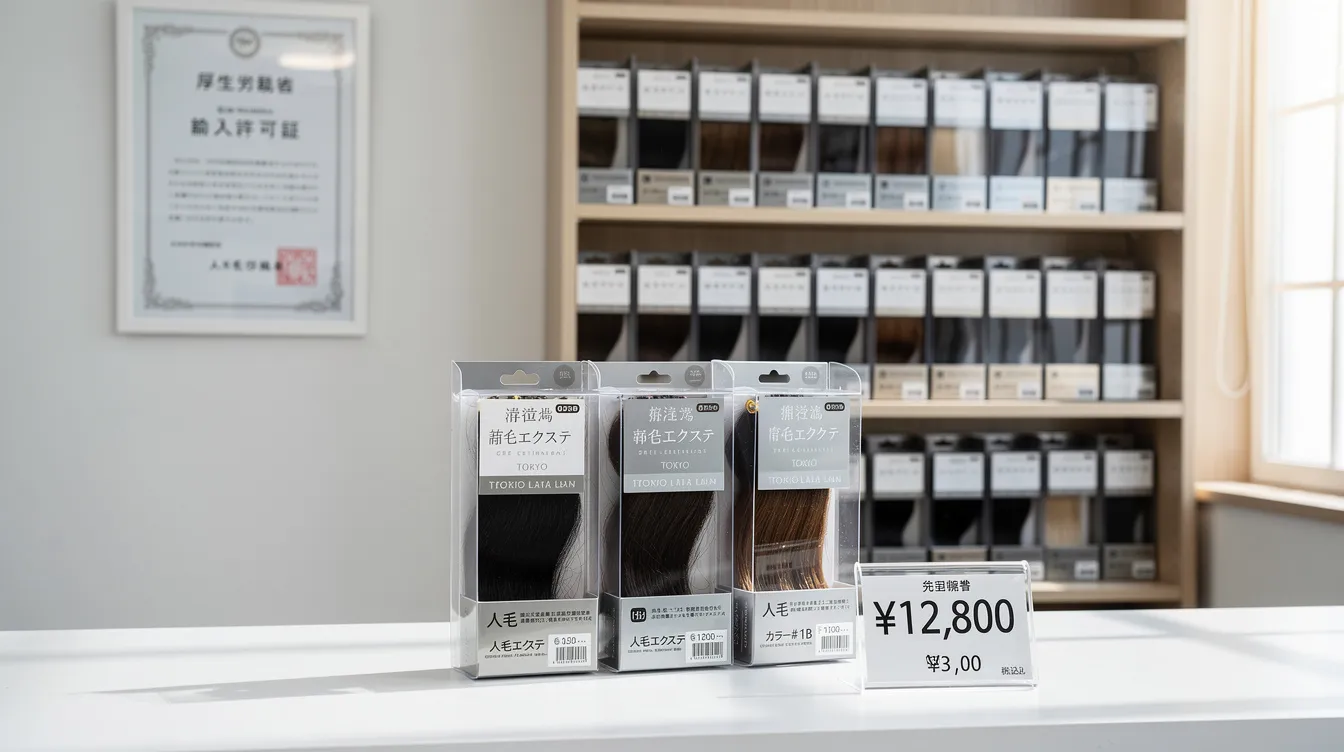
- Japanese-language product labeling on final retail packaging (can be applied post-import by wholesaler).
- First-time importer may face lab testing for heavy metals and formaldehyde residues.
Virgin / unprocessed raw temple hair typically bypasses most MHLW scrutiny since it is effectively unprocessed biological material. Processed/colored hair triggers more documentation.
Duty and Tax Structure
| Component | Rate |
|---|---|
| Import duty on HS 6703.00 | 0 percent (India under Asia FTA) |
| Consumption tax (VAT equivalent) | 10 percent |
| Customs clearance fee | JPY 1,500-3,000 per shipment |
| Freight handling | JPY 800-1,500 per kg |
Total import overhead above FOB India: approximately 12-15 percent of product value.
Distribution Structure — Tokyo and Osaka
Japan hair extension distribution is concentrated:
- Tokyo — Shibuya and Harajuku salon district: Highest density of premium salons; 2-3 primary wholesale distributors cover this cluster.
- Tokyo — Ginza district: Luxury salons serving high-net-worth clientele; single-donor and custom-spec SKUs dominate.
- Osaka — Umeda salon cluster: Japan’s second-largest market; 1-2 primary distributors.
- Regional (Nagoya, Fukuoka, Sapporo): Served primarily via Tokyo distributors rather than direct import.
What Japanese Buyers Prioritize (vs Global Norms)
- Defect tolerance: Zero. A 2-percent defect rate acceptable in US/EU is unacceptable in Japan. Japan QC is piece-by-piece visual inspection.
- Length accuracy: ±0.5 inch tolerance (versus ±1 inch in US/EU). Japan salons re-weigh and re-measure on receipt.
- Weft shed: Less than 2 strands per minute at 100g tension (vs 3-7 strands in US/EU).
- Packaging presentation: Primary packaging must be retail-ready. Japanese salons do not re-package before retail.
- Consistent color lot: Reorders must match previous lot within ±0.5 shade on Wella/Japanese color chart.
Practical Advice for Japan Market Entry
- Start with a pilot shipment of 2-5 kg to one distributor before scaling.
- Over-invest in QC documentation and per-piece inspection for Japan shipments.
- Build Japanese-language product labels or provide label artwork to distributor.
- Prepare MHLW-compliant documentation pack (one-time effort, reusable per SKU).
- Commit to lot-match reorder protocol — Japanese buyers often pilot with 5 kg, scale to 30-50 kg quarterly if consistency holds.
Why Source to Japan Through Hair Extensions By Nature?
Hair Extensions By Nature has supplied 4 Tokyo and Osaka distributors since 2023. Japan-specific QC adds per-piece visual inspection layer. MHLW documentation pack reusable across shipments. Lot-match reorder tolerance ±0.5 shade on Wella chart standard for Japan contracts. Japanese-language product labels available as add-on service.
Frequently Asked Questions
What is the wholesale price of hair extensions in Japan?
2026 Japan wholesale runs 25-45 percent above US/EU pricing. Mixed Remy 22-inch JPY 135,000-175,000 per kg (USD 900-1,170). Virgin Remy JPY 210,000-290,000 per kg (USD 1,400-1,930). Single-donor JPY 330,000-440,000 per kg (USD 2,200-2,940).
Why are hair extensions expensive in Japan?
Four drivers: premium quality standard (zero defect tolerance), MHLW import compliance overhead, distribution consolidation through 3-5 primary wholesalers, and strong consumer purchasing power that supports premium retail pricing.
What is MHLW compliance for hair extensions?
Japan’s Ministry of Health, Labour and Welfare regulates cosmetic and personal-care imports. Requirements: commercial invoice with HS 6703, packing list, Certificate of Origin, ingredient declaration for treated hair, Japanese-language product labels. First-time importers may face lab testing for heavy metals and formaldehyde.
What is the Japan import duty on hair extensions?
0 percent under India-Japan trade framework (HS 6703.00). Consumption tax 10 percent. Customs clearance fee JPY 1,500-3,000 per shipment. Freight handling JPY 800-1,500 per kg. Total import overhead ~12-15 percent above FOB India.
Where are the primary Japan hair distribution hubs?
Tokyo (Shibuya/Harajuku salon district for premium, Ginza for luxury) and Osaka (Umeda cluster). Regional markets (Nagoya, Fukuoka, Sapporo) typically served via Tokyo distributors, not direct import.
What do Japanese buyers prioritize differently?
Zero defect tolerance. ±0.5 inch length accuracy. Less than 2 strands per minute weft shed. Retail-ready primary packaging. Color-lot consistency within ±0.5 shade on reorders.
How should I enter the Japan market?
Pilot shipment 2-5 kg to one distributor. Over-invest in QC and documentation. Build MHLW-compliant documentation pack once, reuse per shipment. Commit to lot-match reorder protocol. Scale to 30-50 kg quarterly after consistency validated.
Ready for Japan Market Entry?
info@hairextensionsbynature.com or quote request form.
Hair Extensions By Nature — Manufacturer and Exporter of Premium Indian Human Hair Extensions. Factory: Booth No 71, Sector 16 Huda Market, Faridabad, Haryana, India — 121002. Serving salons, distributors, and brands in 40+ countries.
Start Your Hair Extensions Dropship Business
Zero inventory. Premium Indian Remy hair. Ship worldwide under your brand. MOQ as low as 5 pieces.