How Hair Extensions Are Colored and Processed
How Hair Extensions Are Colored and Processed — Technical Guide [2026]
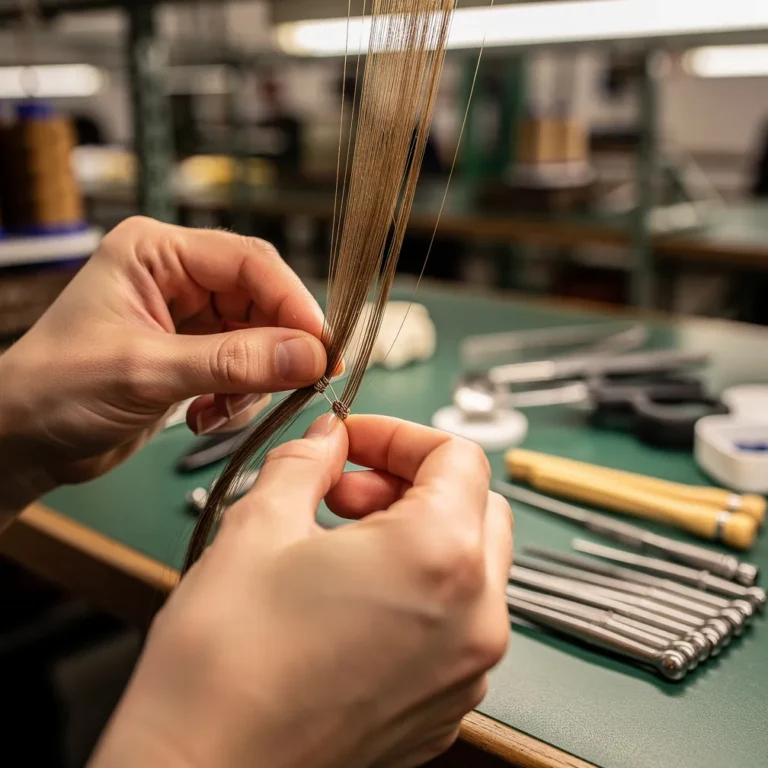
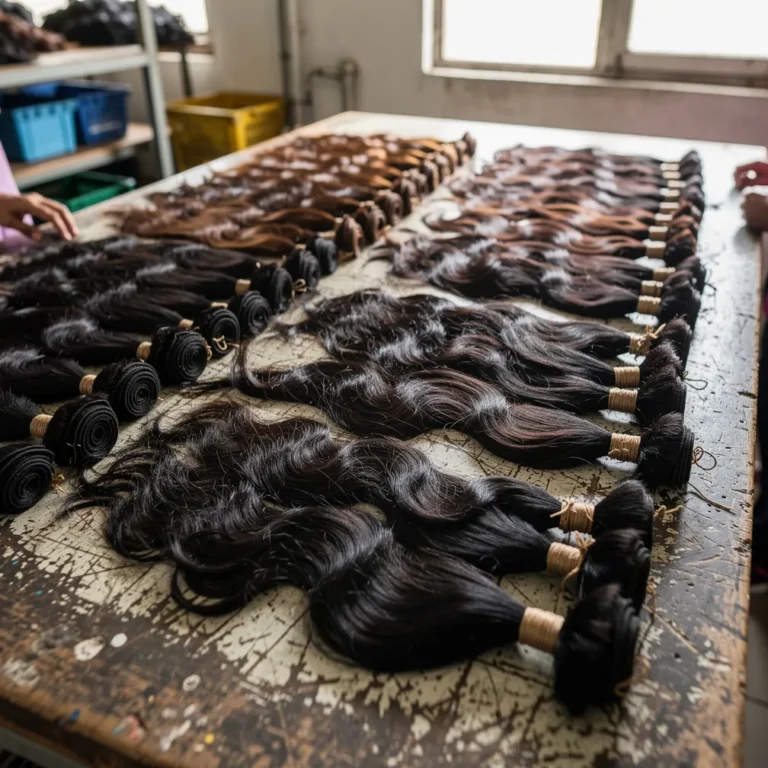
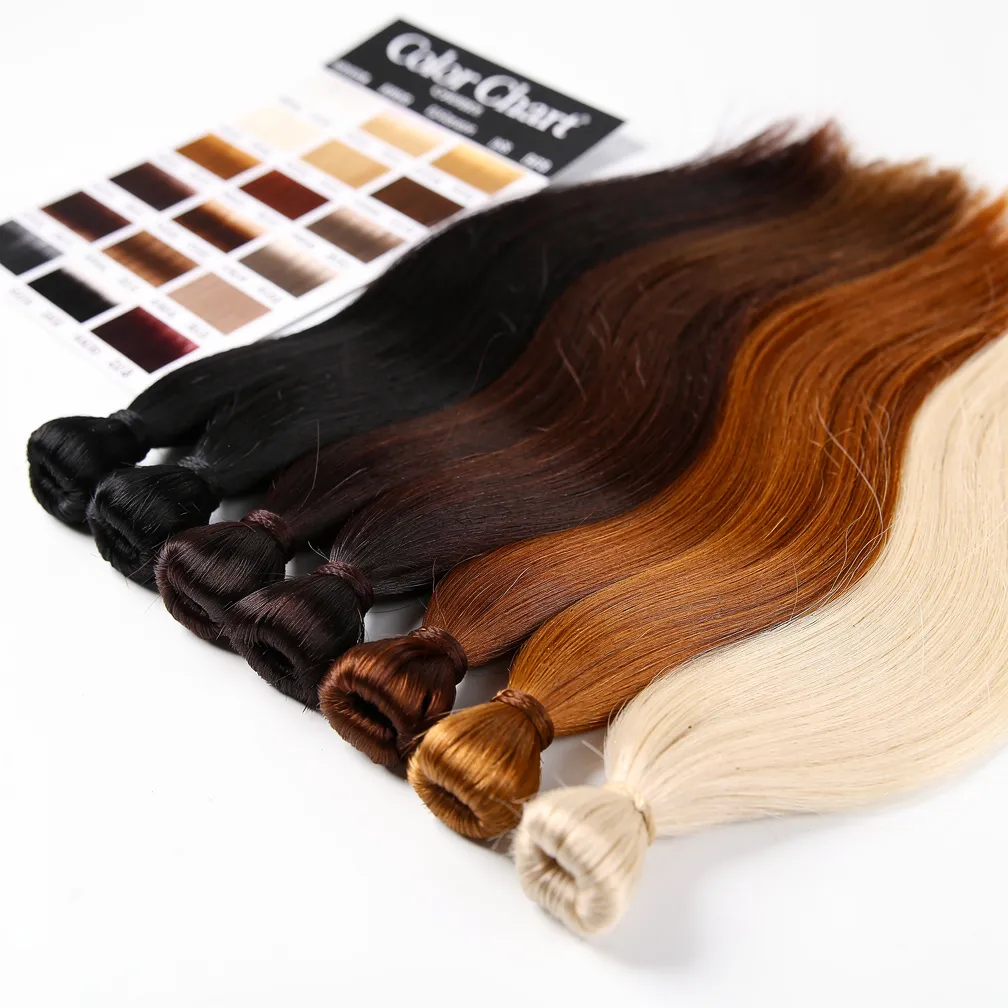
Hair extensions are colored through a controlled, multi-step process that begins with bleaching (if the target color is lighter than the natural shade), followed by dyeing with professional-grade permanent or semi-permanent color formulas, and concluded with conditioning and neutralization treatments. Indian Remy hair — which starts at a natural black level 1-2 — must undergo careful lifting before accepting medium brown, light brown, or blonde tones. The quality of the coloring process directly determines the hair’s longevity, strength retention, and color consistency across batches — making it one of the most important technical capabilities to evaluate when choosing a wholesale manufacturer.
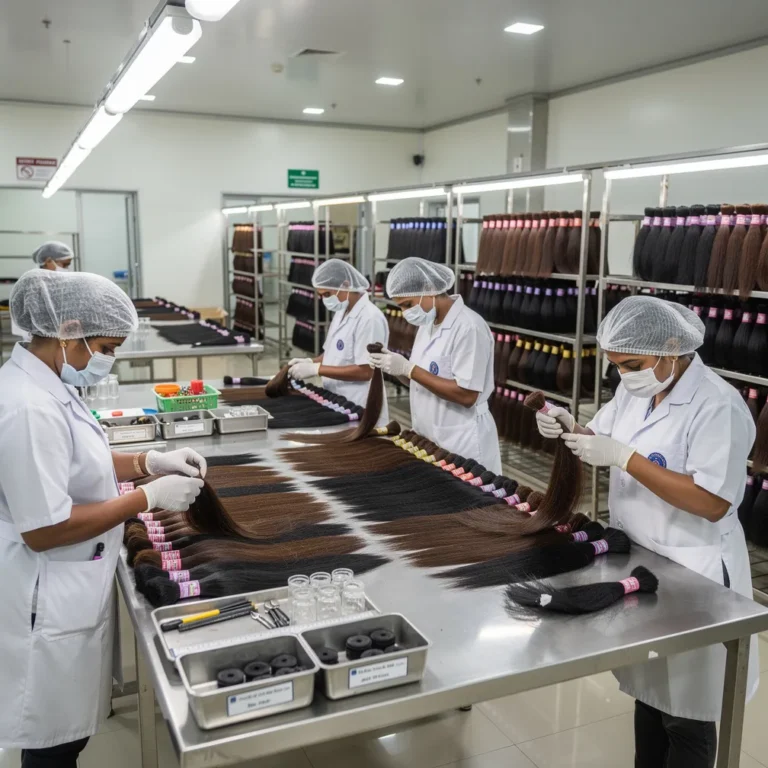
This technical guide is published by Hair Extensions By Nature, a direct manufacturer in Faridabad, India, where all color processing is performed in-house by trained colorists. We process custom colors for wholesale buyers across 30+ countries and share this knowledge so our partners can make informed product development decisions.
Need custom colors for your hair extension line? Hair Extensions By Nature offers full-spectrum color processing including natural shades, fashion colors, balayage, and ombre. WhatsApp us with your color specifications for a custom quotation.
Discuss Custom Colors on WhatsApp
Understanding the Hair Color Level System
Before discussing coloring methods, wholesale buyers need to understand the international color level system used by manufacturers. Hair color levels range from 1 (jet black) to 10 (lightest blonde), with each number representing approximately one level of lift:
| Level | Color Description | Bleach Lifts Required | Processing Impact |
|---|---|---|---|
| 1-2 | Jet black to natural black | None (natural Indian hair) | No damage — unprocessed |
| 3-4 | Dark brown to medium brown | 1 lift | Minimal — retains 90%+ strength |
| 5-6 | Light brown to dark blonde | 1-2 lifts | Moderate — retains 85-90% strength |
| 7-8 | Medium blonde to light blonde | 2-3 lifts | Significant — retains 75-85% strength |
| 9-10 | Very light blonde to platinum | 3+ lifts | High — retains 65-75% strength |
The key takeaway for buyers: every level of lift from Indian hair’s natural black requires processing that reduces hair strength. The lighter the target color, the more processing is required, and the shorter the product’s usable lifespan. This is why blonde extensions cost more and have different customer care requirements than darker shades.
Bleaching Methods and Best Practices
Bleaching (also called lightening or lifting) is the process of removing natural melanin pigment from the hair shaft to prepare it for a lighter color. This is the most technically demanding and potentially damaging step in color processing.
Quality manufacturers follow these best practices:
- Gradual lifting: Rather than attempting to reach the target level in a single session, experienced colorists perform multiple controlled lifts with recovery time between applications. This preserves cuticle integrity
- Developer strength management: Using 20-volume (6%) developer for gentle lifting rather than 40-volume (12%) which causes rapid but damaging oxidation
- Temperature control: Processing at room temperature or with mild heat. Excessive heat accelerates the reaction but causes disproportionate damage
- Timing precision: Bleach is removed at the exact right moment. Under-processing leaves the hair with orange or brassy undertones; over-processing causes irreversible structural damage
- Post-bleach treatment: Acidic rinses and protein treatments immediately after bleaching to close the cuticle and restore pH balance
Dyeing Methods: Permanent vs. Semi-Permanent
After bleaching (if required), color is applied using one of two primary methods:
| Characteristic | Permanent Color | Semi-Permanent Color |
|---|---|---|
| Mechanism | Penetrates the cortex; alters internal pigment | Coats the outer cuticle; surface-level color |
| Longevity | Lasts the life of the hair extension | Fades over 15-25 washes |
| Cuticle Impact | Opens cuticle during processing | Minimal cuticle disruption |
| Color Accuracy | Highly accurate and consistent | Can vary between batches |
| Best For | Standard color ranges, professional lines | Fashion colors, temporary effects |
| Cost | Standard processing cost | Slightly lower per batch |
Most wholesale buyers opt for permanent color because it provides consistent, long-lasting results that their end customers expect. Semi-permanent color is typically reserved for fashion shades (pastels, vivids) where temporary color is acceptable or desirable.
Ammonia-Free and Low-Chemical Processing
Consumer demand for “ammonia-free” and “low-chemical” hair products has increased significantly in 2026, and wholesale buyers are increasingly asking manufacturers about their chemical formulations. Here is what you need to know:
Ammonia’s role: Ammonia is an alkaline agent that opens the hair cuticle to allow color molecules to penetrate the cortex. It is highly effective but harsh — it causes cuticle swelling, protein loss, and can produce a strong odor during processing.
Ammonia-free alternatives: Monoethanolamine (MEA) and other alkaline substitutes open the cuticle more gently. They cause 30-40% less cuticle damage compared to ammonia-based formulas, though they may require slightly longer processing times to achieve the same depth of color penetration.
Practical implications for buyers: Hair processed with ammonia-free formulas retains more cuticle integrity, resulting in hair that tangles less, accepts styling better, and has a longer usable lifespan. The processing cost difference is minimal (typically $5-10 per kg), making ammonia-free a worthwhile specification for any brand positioning itself as quality-focused.
At Hair Extensions By Nature, we use ammonia-free coloring systems as our standard process for all wholesale color orders. Buyers do not need to request this separately — it is built into our production protocol.
Color Matching and Batch Consistency
One of the biggest challenges in hair extension manufacturing is maintaining color consistency across batches. Natural hair absorbs color differently based on its porosity, thickness, and prior condition — meaning two batches of identically processed hair can end up with slight color variations.
Quality manufacturers address this through:
- Standardized formulas: Documented color recipes with precise measurements of developer, color, and processing time for each target shade
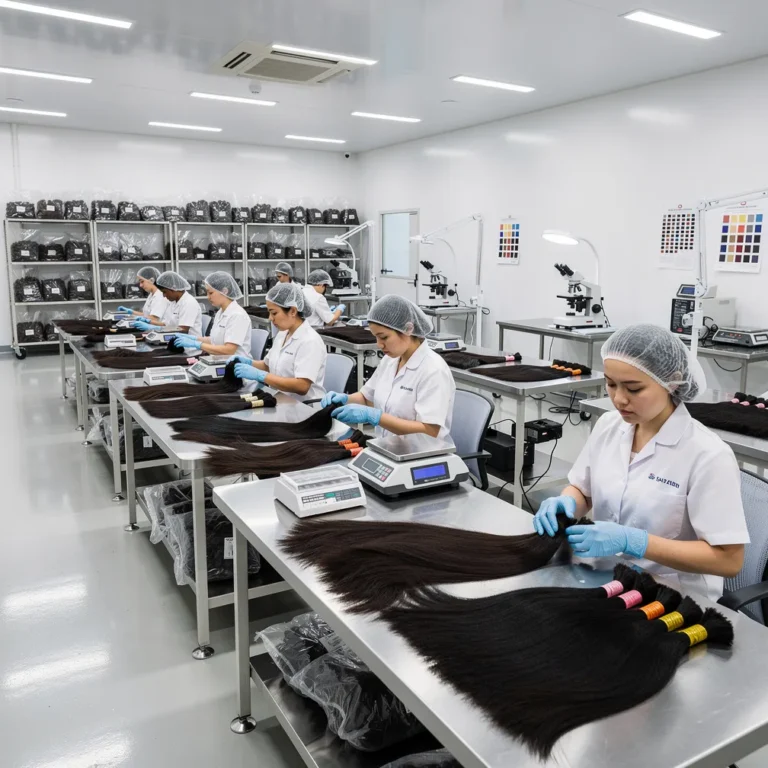
- D65 lighting inspection: Color matching under daylight-equivalent (D65) lighting conditions, which is the international standard for color evaluation
- Color ring references: Physical color swatches maintained for every shade in the catalog, updated with each production run
- Batch blending: Mixing hair from multiple small batches within a single order to smooth out color variation across the total quantity
- Pre-production samples: For custom colors, producing and approving a sample swatch before processing the full order
Buyers ordering custom colors should always request a pre-production color sample and approve it before the full batch is processed. This adds 3-5 days to the timeline but prevents costly color mismatches on large orders.
Processing Timeline for Colored Extensions
Color processing adds time to the standard manufacturing timeline. Here is what buyers should expect:
| Color Type | Additional Processing Time | Total Lead Time |
|---|---|---|
| Natural black (no color) | 0 days | 7-10 days |
| Dark brown (level 3-4) | 1-2 days | 10-12 days |
| Medium brown / dark blonde (level 5-6) | 2-3 days | 12-15 days |
| Blonde (level 7-8) | 3-4 days | 15-18 days |
| Platinum / very light (level 9-10) | 4-5 days | 18-21 days |
| Balayage / ombre (multi-tone) | 3-5 days | 15-21 days |
Ready to develop your color range? Hair Extensions By Nature processes custom colors using ammonia-free formulas with D65 color matching. Send us your target color references (ring numbers, photos, or physical swatches) and we will produce a sample for your approval.
Why Source From Hair Extensions By Nature
Hair Extensions By Nature (legal entity: Hair Envy LLP) performs all color processing in-house at our Faridabad, Haryana facility using ammonia-free coloring systems. Our in-house colorists produce the full spectrum from natural black through platinum blonde, including balayage, ombre, and custom fashion colors. Every color order includes a pre-production sample approval step, D65 lighting verification, and batch consistency documentation.
We support wholesale buyers developing custom color ranges with technical guidance on color selection, processing implications, and customer care recommendations for each shade category. Contact us at +91 9289358222 (WhatsApp) or info@hairextensionsbynature.com. Visit us at Booth No 71, Sector 16 Huda Market, Faridabad, Haryana, India – 121002.
Frequently Asked Questions
Does coloring damage hair extensions?
All color processing causes some degree of structural change to the hair. However, when performed correctly using quality formulas and controlled processing times, color-treated Remy hair retains 80-90% of its original strength for darker shades and 65-80% for blonde tones. Ammonia-free formulas reduce damage by 30-40% compared to traditional ammonia-based products.
Can Indian hair extensions be colored blonde?
Yes. Indian hair, which is naturally black (level 1-2), can be successfully processed to blonde shades (level 7-10). This requires 2-3 controlled bleach lifts followed by toning. The hair retains sufficient strength for normal use when processed by experienced colorists using quality products. Blonde processing adds 3-5 days to production timelines and costs more than darker shades.
What is ammonia-free hair extension coloring?
Ammonia-free coloring uses alternative alkaline agents like monoethanolamine (MEA) instead of ammonia to open the hair cuticle for color penetration. This gentler approach causes 30-40% less cuticle damage, resulting in smoother, longer-lasting extensions. The cost difference is minimal, and quality-focused manufacturers like Hair Extensions By Nature use ammonia-free systems as standard.
How do manufacturers ensure color consistency between batches?
Quality manufacturers use standardized documented formulas, D65 daylight-equivalent lighting for inspection, physical color ring references, batch blending techniques, and pre-production sample approvals. Buyers should always request and approve a color sample before full production, especially for custom shades. This adds 3-5 days but prevents costly mismatches.
What is the minimum order for custom colored hair extensions?
Custom color orders typically require a minimum of 3-5 kg per color to ensure batch efficiency and consistent results. Standard catalog colors may be available at lower minimums depending on current inventory. Pre-production color samples can usually be produced from smaller quantities for buyer approval before the full batch is processed.
Start Your Hair Extensions Dropship Business
Zero inventory. Premium Indian Remy hair. Ship worldwide under your brand. MOQ as low as 5 pieces.